
JosA(c) Magone – författare
824 kr
Läs direkt efter köp
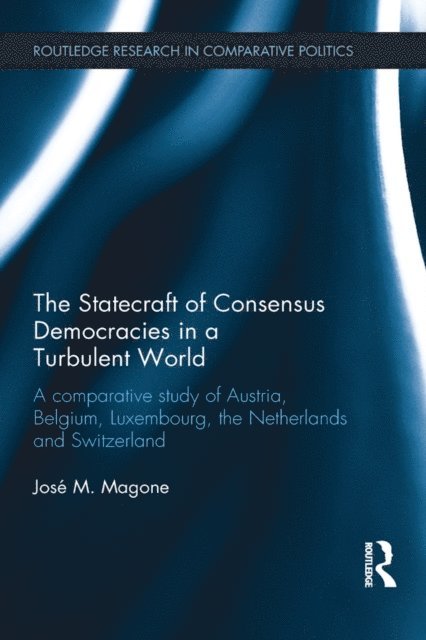
Drawing on the work of Arend Lijphart, this book focuses on consensus democracies. These democracies entail a complex set of democratic institutional and conventional arrangements and can be regarded as a product of path-dependent development towards a national culture of compromise and bargaining.
Taking a multi-dimensional and multi-spatial approach, this book examines the West central European consensus democracies of Austria, Belgium, Luxembourg, Netherlands and Switzerland, over the past 40 years. Magone examines how these democracies have been transformed by Europeanization thrusts and global turbulence yet are able to maintain political stability. It provides historical context including the different phases of transformation: the golden period (1945-1979); disorganised capitalism (1979-1993); and re-equilibration (1993-). It includes chapters on political culture, government, parliament, the rise of populism and political parties, subnational government, and the political economy and concludes deliberating on the relevance of consensus democracies’ experiences for the future of European and global governance.
Based on original research, this book will be of strong interest to students and scholars of comparative politics, European government, West European politics, the politics of small states in Europe, and those with a particular interest in the politics of Austria, Belgium, the Netherlands, Luxembourg and Switzerland.
824 kr
Läs direkt efter köp
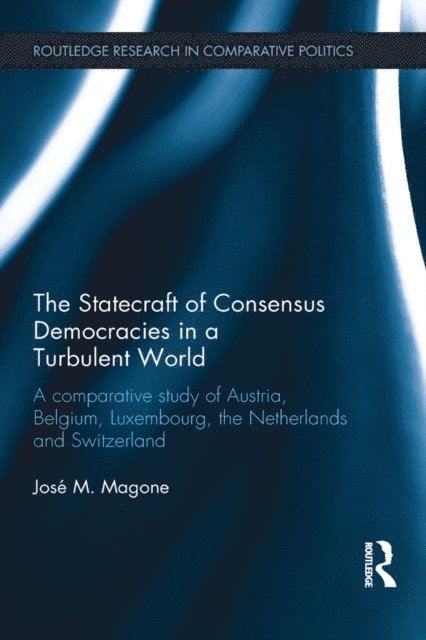
Drawing on the work of Arend Lijphart, this book focuses on consensus democracies. These democracies entail a complex set of democratic institutional and conventional arrangements and can be regarded as a product of path-dependent development towards a national culture of compromise and bargaining.
Taking a multi-dimensional and multi-spatial approach, this book examines the West central European consensus democracies of Austria, Belgium, Luxembourg, Netherlands and Switzerland, over the past 40 years. Magone examines how these democracies have been transformed by Europeanization thrusts and global turbulence yet are able to maintain political stability. It provides historical context including the different phases of transformation: the golden period (1945-1979); disorganised capitalism (1979-1993); and re-equilibration (1993-). It includes chapters on political culture, government, parliament, the rise of populism and political parties, subnational government, and the political economy and concludes deliberating on the relevance of consensus democracies’ experiences for the future of European and global governance.
Based on original research, this book will be of strong interest to students and scholars of comparative politics, European government, West European politics, the politics of small states in Europe, and those with a particular interest in the politics of Austria, Belgium, the Netherlands, Luxembourg and Switzerland.
891 kr
Läs direkt efter köp
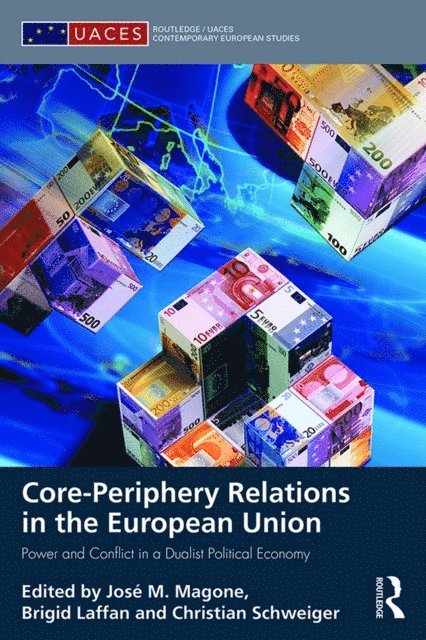
Successive Enlargements to the European Union membership have transformed it into an economically, politically and culturally heterogeneous body with distinct vulnerabilities in its multi-level governance.
This book analyses core-periphery relations to highlight the growing cleavage, and potential conflict, between the core and peripheral member-states of the Union in the face of the devastating consequences of Eurozone crisis. Taking a comparative and theoretical approach and using a variety of case studies, it examines how the crisis has both exacerbated tensions in centre-periphery relations within and outside the Eurozone, and how the European Union’s economic and political status is declining globally.
This text will be of key interest to students and scholars of European Union studies, European integration, political economy, public policy, and comparative politics.
891 kr
Läs direkt efter köp
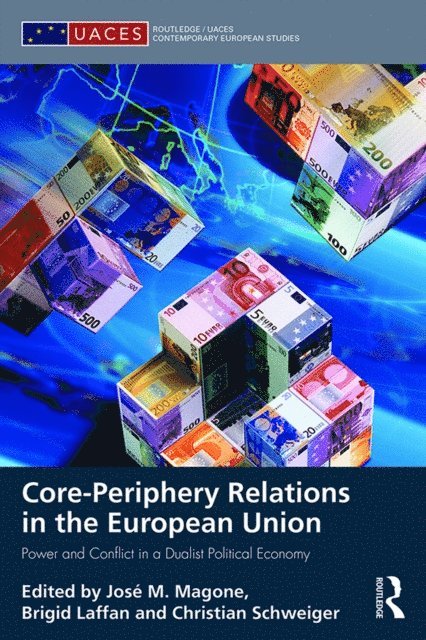
Successive Enlargements to the European Union membership have transformed it into an economically, politically and culturally heterogeneous body with distinct vulnerabilities in its multi-level governance.
This book analyses core-periphery relations to highlight the growing cleavage, and potential conflict, between the core and peripheral member-states of the Union in the face of the devastating consequences of Eurozone crisis. Taking a comparative and theoretical approach and using a variety of case studies, it examines how the crisis has both exacerbated tensions in centre-periphery relations within and outside the Eurozone, and how the European Union’s economic and political status is declining globally.
This text will be of key interest to students and scholars of European Union studies, European integration, political economy, public policy, and comparative politics.
925 kr
Läs direkt efter köp
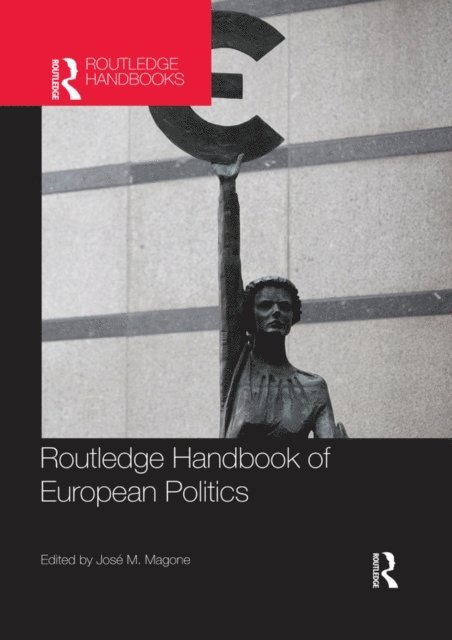
Since the Treaty of the European Union was ratified in 1993, the European Union has become an important factor in an ever-increasing number of regimes of pooled sovereignty. This Handbook seeks to present a valuable guide to this new and unique system in the twenty-first century, allowing readers to obtain a better understanding of the emerging multilevel European governance system that links national polities to Europe and the global community.
Adopting a pan-European approach, this Handbook brings together the work of leading international academics to cover a wide range of topics such as:
the historical and theoretical background
the political systems and institutions of both the EU and its individual member nations
political parties and party systems
political elites
civil society and social movements in European politics
the political economy of Europe
public administration and policy-making
external policies of the EU.
This is an invaluable and comprehensive resource for students, scholars, researchers and practitioners of the European Union, European politics and comparative politics.
925 kr
Läs direkt efter köp
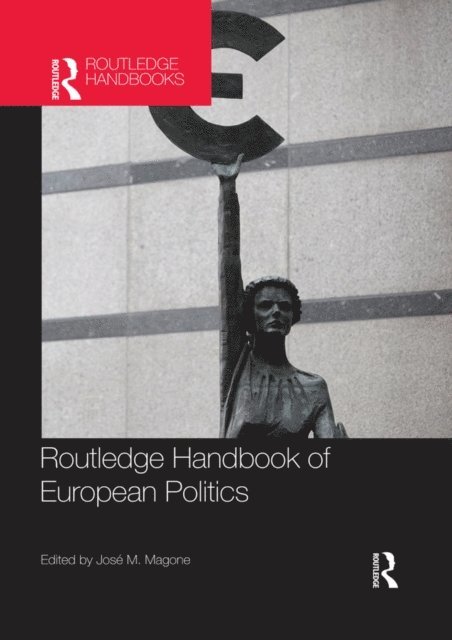
Since the Treaty of the European Union was ratified in 1993, the European Union has become an important factor in an ever-increasing number of regimes of pooled sovereignty. This Handbook seeks to present a valuable guide to this new and unique system in the twenty-first century, allowing readers to obtain a better understanding of the emerging multilevel European governance system that links national polities to Europe and the global community.
Adopting a pan-European approach, this Handbook brings together the work of leading international academics to cover a wide range of topics such as:
the historical and theoretical background
the political systems and institutions of both the EU and its individual member nations
political parties and party systems
political elites
civil society and social movements in European politics
the political economy of Europe
public administration and policy-making
external policies of the EU.
This is an invaluable and comprehensive resource for students, scholars, researchers and practitioners of the European Union, European politics and comparative politics.