
José María Miranda Boto – författare
Visar alla böcker från författaren José María Miranda Boto. Handla med fri frakt och snabb leverans.
4 produkter
4 produkter
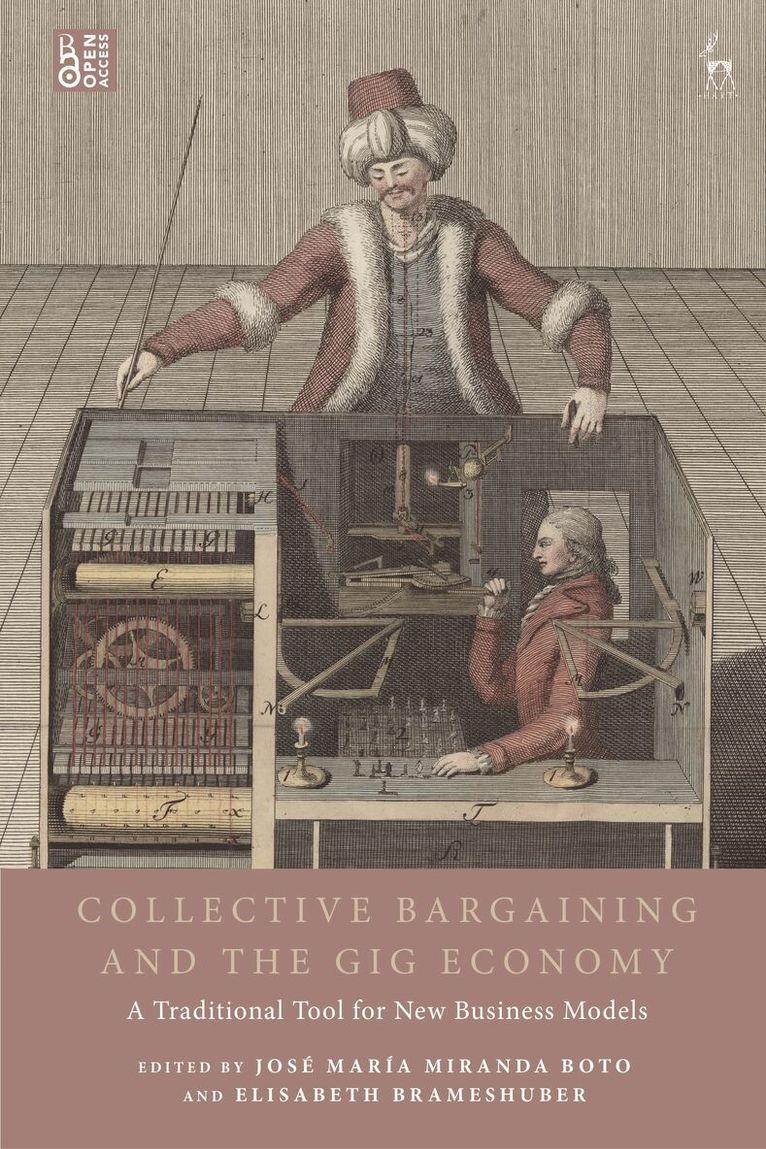
Collective Bargaining and the Gig Economy
A Traditional Tool for New Business Models
Inbunden, Engelska, 2022
1 174 kr
Skickas inom 10-15 vardagar
This open access book investigates the role of collective bargaining in the gig economy.Despite the variety of situations covered by the term “gig economy”, collective agreements for employees and non-employees are being concluded in various countries, either at company or at branch level. Offline workers such as riders, food deliverers, drivers or providers of cleaning services are slowly gaining access to the series of negotiated rights that, in the past, were only available to employees.The chapters analyse recent high-profile decisions including Uber in France’s Court de Cassation, Glovo in the Spanish Supreme Court, and Uber in the UK Supreme Court. They evaluate the bargaining agents in different Member States of the EU, to determine whether established actors are participating in the dynamics of the gig economy or if they are being substituted, totally or partially, by new agents. Interesting best practices are drawn from the comparison, also as regards the contents of collective bargaining, raising awareness in those countries that are being left behind in the dynamics of the gig economy.The book collects the results of the COGENS (VS/2019/0084) research project, funded by the European Union, that gathered scholars and stakeholders from 17 countries. It will be an invaluable resource for scholars, trade unionists and policy makers.The eBook editions of this book are available open access under a CC BY-NC-ND 4.0 licence on bloomsburycollections.com.
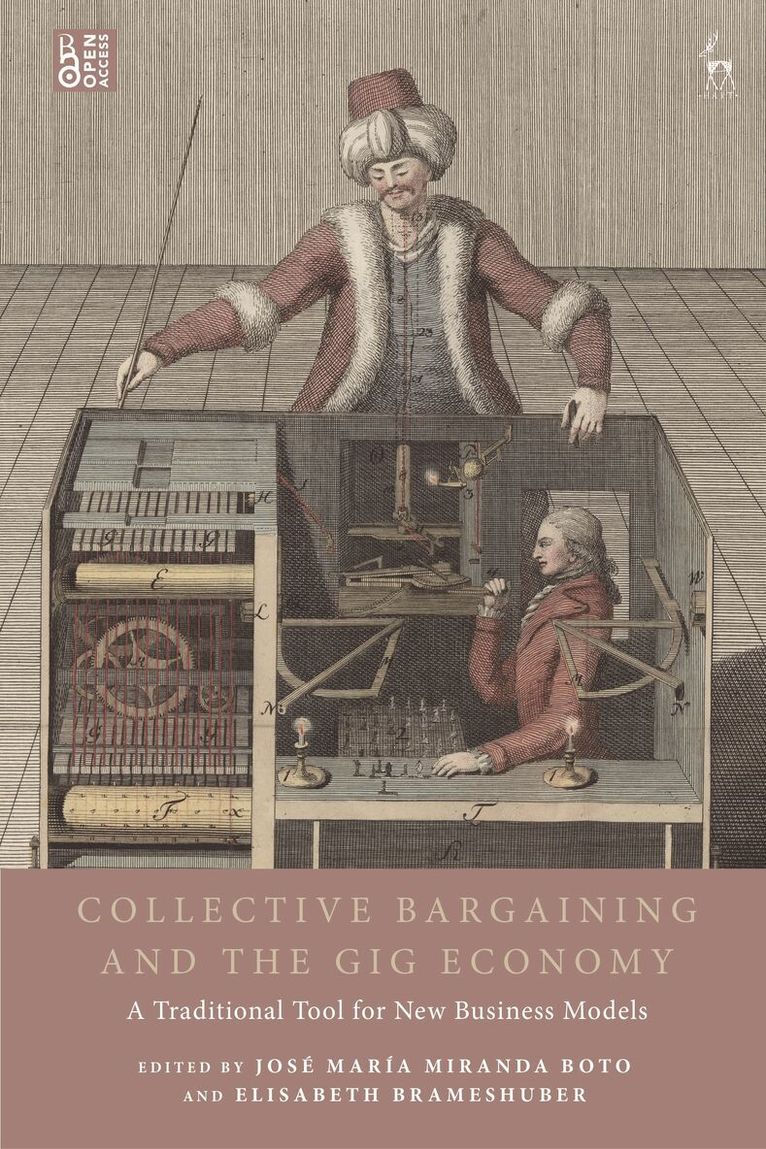
Collective Bargaining and the Gig Economy
A Traditional Tool for New Business Models
Häftad, Engelska, 2023
547 kr
Skickas inom 10-15 vardagar
This open access book investigates the role of collective bargaining in the gig economy.Despite the variety of situations covered by the term “gig economy”, collective agreements for employees and non-employees are being concluded in various countries, either at company or at branch level. Offline workers such as riders, food deliverers, drivers or providers of cleaning services are slowly gaining access to the series of negotiated rights that, in the past, were only available to employees.The chapters analyse recent high-profile decisions including Uber in France’s Court de Cassation, Glovo in the Spanish Supreme Court, and Uber in the UK Supreme Court. They evaluate the bargaining agents in different Member States of the EU, to determine whether established actors are participating in the dynamics of the gig economy or if they are being substituted, totally or partially, by new agents. Interesting best practices are drawn from the comparison, also as regards the contents of collective bargaining, raising awareness in those countries that are being left behind in the dynamics of the gig economy.The book collects the results of the COGENS (VS/2019/0084) research project, funded by the European Union, that gathered scholars and stakeholders from 17 countries. It will be an invaluable resource for scholars, trade unionists and policy makers.The eBook editions of this book are available open access under a CC BY-NC-ND 4.0 licence on bloomsburycollections.com.

Information and Consultation Rights in the Digital Workplace
EU Legal Perspectives
Inbunden, Engelska, 2027
1 209 kr
Kommande
This open access book brings together leading European labour law scholars to explore how workers’ representatives’ rights are evolving in the context of the digital transformation of work. Rooted in EU and national legal frameworks, the book examines how information and consultation (I&C) rights must adapt to the challenges posed by platform work, algorithmic management, cross-border telework, and digitalisation more broadly.Structured around 4 key themes—Who is entitled to I&C rights; Where these rights apply in transnational and virtual workplaces; How they are exercised in the context of AI, occupational safety, and industrial democracy; and What new rights are emerging in response to digital risks—the book offers a comprehensive and comparative analysis of labour law in the digital age. It pays particular attention to the role of workers’ representatives in shaping and implementing emerging rights such as the right to disconnect.Drawing on the findings of the DIGILARE research project (EU grant 101126503), the volume provides actionable legal and policy insights for EU institutions, national lawmakers, social partners, and practitioners. It proposes reforms to strengthen democratic participation, enhance transparency in algorithmic decision-making, and safeguard workers’ autonomy in increasingly fragmented and remote work environments.The ebook editions of this book are available open access under a CC BY-NC-ND 4.0 licence on bloomsburycollections.com.
313 kr
Skickas inom 5-8 vardagar