Joseph A. Olsen – författare
Visar alla böcker från författaren Joseph A. Olsen. Handla med fri frakt och snabb leverans.
6 produkter
6 produkter
Inbunden, Engelska, 2018
1 746 kr
Skickas inom 7-10 vardagar
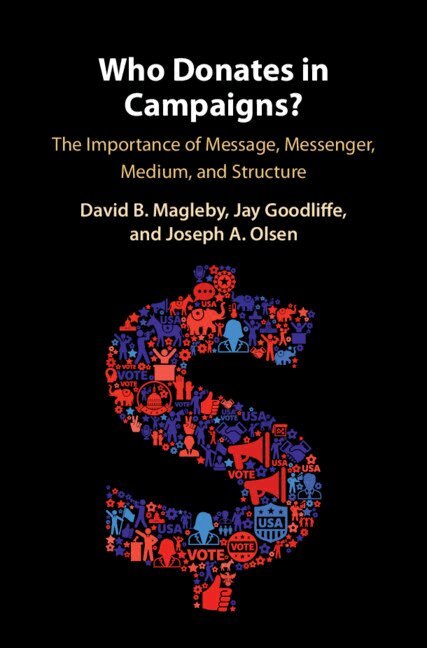
While much is known about who votes in American elections, much less is known about who donates. In this book, the authors utilize a unique and historically unprecedented data set of donors from the 2008 and 2012 presidential elections to answer longstanding questions: what is the relationship between donors and candidates? How do candidates attract and respond to contributors? How do campaign strategies reflect changing campaign finance laws and the development of the internet? With unprecedented cooperation from the Obama, McCain, and Romney campaigns, the authors investigate presidential campaign donors at all giving levels to produce the most systematic and complete analysis of donors to presidential nominees to date. As elections are decided increasingly by donors' dollars, Who Donates to Campaigns? provides relevant research on the broader trends in partisan polarization and, more generally, on how campaigns can engage more citizens in political participation.
Häftad, Engelska, 2020
609 kr
Skickas inom 7-10 vardagar
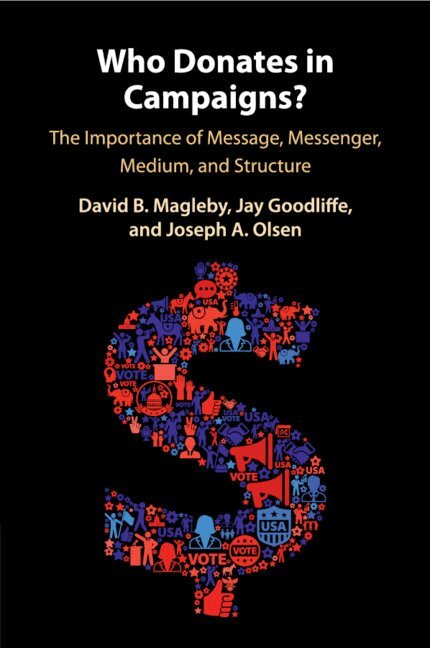
While much is known about who votes in American elections, much less is known about who donates. In this book, the authors utilize a unique and historically unprecedented data set of donors from the 2008 and 2012 presidential elections to answer longstanding questions: what is the relationship between donors and candidates? How do candidates attract and respond to contributors? How do campaign strategies reflect changing campaign finance laws and the development of the internet? With unprecedented cooperation from the Obama, McCain, and Romney campaigns, the authors investigate presidential campaign donors at all giving levels to produce the most systematic and complete analysis of donors to presidential nominees to date. As elections are decided increasingly by donors' dollars, Who Donates to Campaigns? provides relevant research on the broader trends in partisan polarization and, more generally, on how campaigns can engage more citizens in political participation.
Inbunden, Engelska, 2026
1 311 kr
Skickas inom 5-8 vardagar
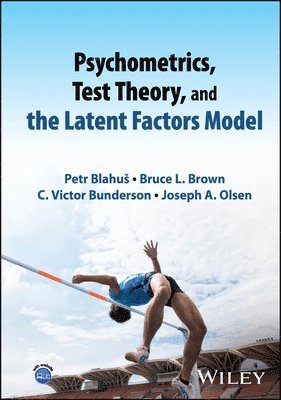
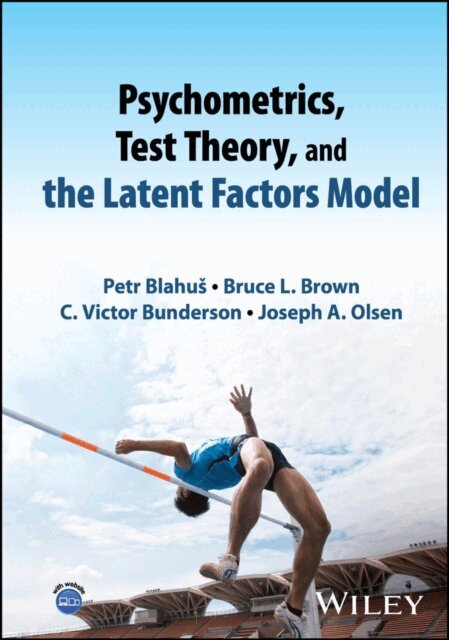
A combination of psychometric theory, history, philosophy, and practice, with recent advances in analytical methods, metrology, and design. Psychometrics, Test Theory, and the Latent Factors Model began as a strong manuscript by Petr Blahuš, based upon his lifelong passion of applying the latent factors model to kinesiology and biomechanics. Before his death he entrusted it to three co-authors who completed the book with in-chapter explanations, accessible mathematical appendices, and computational guides. It was also expanded to include important advances since 2010 in psychometric methods, contemporary developments in metrology, and the science of domain-specific design. Comprehensive in scope, the text contains computational guides for the use of Stata, M-plus, and SPSS in Factor Analysis, Classical Test Theory, and Item-Response Theory. The authors highlight the practicality of software integration in order to successfully produce psychometrically sound research. Written by an international and decades-spanning team of experienced psychometricians, the text anticipates a future psychometric science that could earn its place in the international metrology community. The book is filled with suggestions, tips, and practical guidance about best practices and efficient strategies for modeling and model selection. In addition, the book includes important cautions and warnings about misuse and misinterpretations of common, but limited, analytical techniques. The book is historically informed, philosophically grounded, mathematically justified, and methodologically current. This important text: Applies intuitive reasoning and common examples to aid in the understanding of advanced technical concepts.Includes the conceptual, statistical, and philosophical background of psychometrics.Features recent advances and opposing views in psychometric theory.Contains concrete examples from current research, including cognitive tests and neurological data.Opens the vista for a future of testing with greatly increased use of well-constructed, learner-centered performance scales using computer-adaptive testing with feedback over multiple attempts.Psychometrics, Test Theory, and the Latent Factors Model is intended for forward-looking students and teachers in the behavioral, educational, health, and social sciences.
E-bok
PDF, Engelska, 20251 465 kr
Läs direkt efter köp
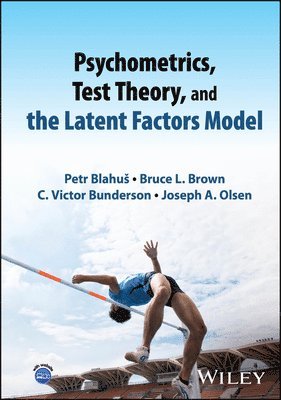
A combination of psychometric theory, history, philosophy, and practice, with recent advances in analytical methods, metrology, and design. Psychometrics, Test Theory, and the Latent Factors Model began as a strong manuscript by Petr Blahu , based upon his lifelong passion of applying the latent factors model to kinesiology and biomechanics. Before his death he entrusted it to three co-authors who completed the book with in-chapter explanations, accessible mathematical appendices, and computational guides. It was also expanded to include important advances since 2010 in psychometric methods, contemporary developments in metrology, and the science of domain-specific design. Comprehensive in scope, the text contains computational guides for the use of Stata, M-plus, and SPSS in Factor Analysis, Classical Test Theory, and Item-Response Theory. The authors highlight the practicality of software integration in order to successfully produce psychometrically sound research. Written by an international and decades-spanning team of experienced psychometricians, the text anticipates a future psychometric science that could earn its place in the international metrology community. The book is filled with suggestions, tips, and practical guidance about best practices and efficient strategies for modeling and model selection. In addition, the book includes important cautions and warnings about misuse and misinterpretations of common, but limited, analytical techniques. The book is historically informed, philosophically grounded, mathematically justified, and methodologically current. This important text: Applies intuitive reasoning and common examples to aid in the understanding of advanced technical concepts. Includes the conceptual, statistical, and philosophical background of psychometrics. Features recent advances and opposing views in psychometric theory. Contains concrete examples from current research, including cognitive tests and neurological data. Opens the vista for a future of testing with greatly increased use of well-constructed, learner-centered performance scales using computer-adaptive testing with feedback over multiple attempts. Psychometrics, Test Theory, and the Latent Factors Model is intended for forward-looking students and teachers in the behavioral, educational, health, and social sciences.
E-bok
Engelska, 20251 465 kr
Läs direkt efter köp
A combination of psychometric theory, history, philosophy, and practice, with recent advances in analytical methods, metrology, and design. Psychometrics, Test Theory, and the Latent Factors Model began as a strong manuscript by Petr Blahu , based upon his lifelong passion of applying the latent factors model to kinesiology and biomechanics. Before his death he entrusted it to three co-authors who completed the book with in-chapter explanations, accessible mathematical appendices, and computational guides. It was also expanded to include important advances since 2010 in psychometric methods, contemporary developments in metrology, and the science of domain-specific design. Comprehensive in scope, the text contains computational guides for the use of Stata, M-plus, and SPSS in Factor Analysis, Classical Test Theory, and Item-Response Theory. The authors highlight the practicality of software integration in order to successfully produce psychometrically sound research. Written by an international and decades-spanning team of experienced psychometricians, the text anticipates a future psychometric science that could earn its place in the international metrology community. The book is filled with suggestions, tips, and practical guidance about best practices and efficient strategies for modeling and model selection. In addition, the book includes important cautions and warnings about misuse and misinterpretations of common, but limited, analytical techniques. The book is historically informed, philosophically grounded, mathematically justified, and methodologically current. This important text: Applies intuitive reasoning and common examples to aid in the understanding of advanced technical concepts. Includes the conceptual, statistical, and philosophical background of psychometrics. Features recent advances and opposing views in psychometric theory. Contains concrete examples from current research, including cognitive tests and neurological data. Opens the vista for a future of testing with greatly increased use of well-constructed, learner-centered performance scales using computer-adaptive testing with feedback over multiple attempts. Psychometrics, Test Theory, and the Latent Factors Model is intended for forward-looking students and teachers in the behavioral, educational, health, and social sciences.
Häftad, Engelska, 2006
548 kr
Skickas inom 5-8 vardagar
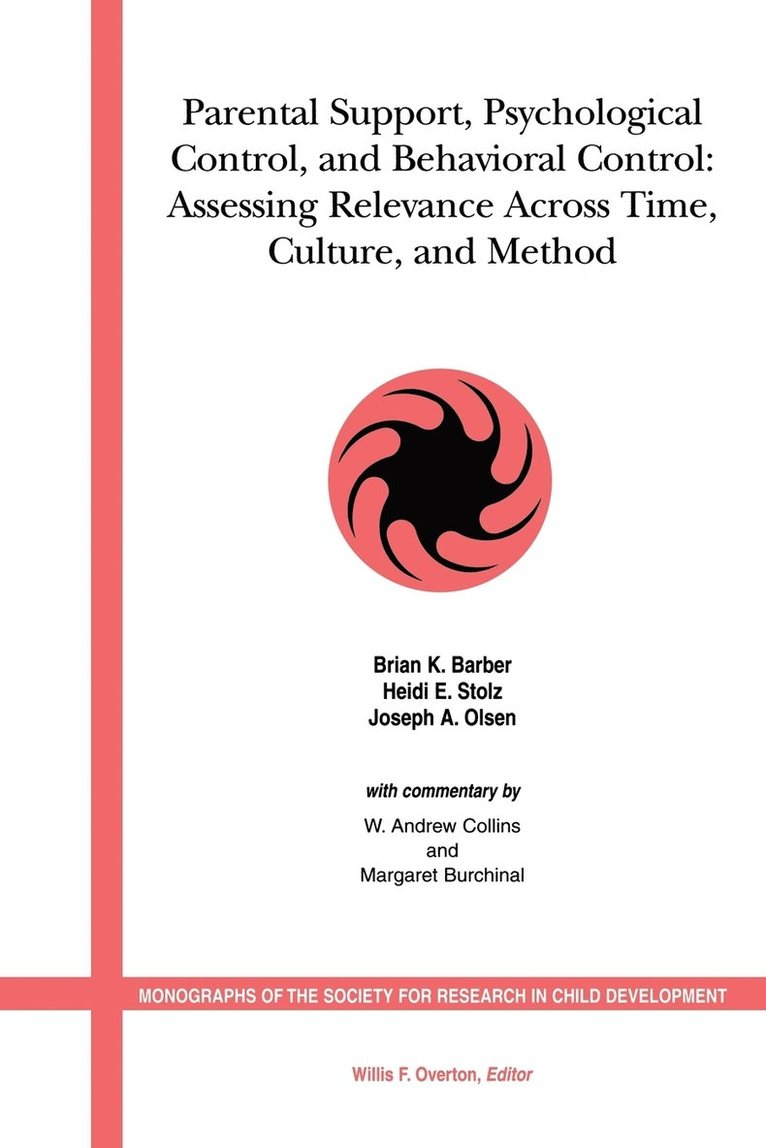
What can parents, and others interested in adolescents, do to facilitate their healthy development? In many decades of work, researchers have continually identified three central dimensions of parenting: support, behavioral control, and psychological control, all of which have been associated consistently with either positive or negative indicators of adolescent functioning. Notwithstanding its volume, the research has been non specific as to the effects of these dimensions and has otherwise been limited by a predominant concentration on western families. This monograph reported on research that addressed these limitations by testing specific effects of the parenting dimensions and by doing with multiple analytic techniques on data from adolescents in 11 cultures across the world. In al sites, it was found that support was associated with higher adolescent social competence and lower depression; psychological control with higher depression and antisocial behavior; and behavioral control with lower antisocial behavior. Recommendations included considering that these dimensions are the parental contribution to relationship types or socialization conditions that, when achieved, (with parents or other significant person) are responsible for the effects.