Joseph D. Sloan – författare
380 kr
Skickas inom 5-8 vardagar
305 kr
Skickas inom 5-8 vardagar
352 kr
Läs direkt efter köp
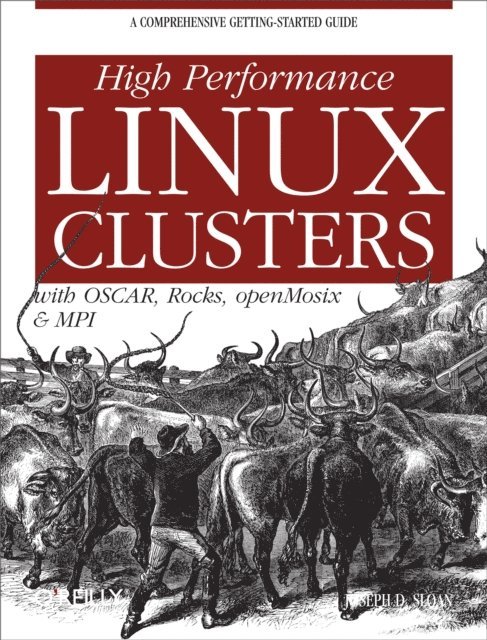
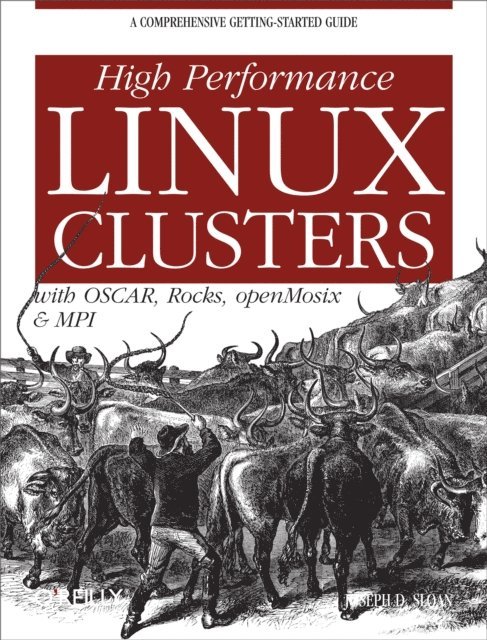
To the outside world, a "supercomputer" appears to be a single system. In fact, it''s a cluster of computers that share a local area network and have the ability to work together on a single problem as a team. Many businesses used to consider supercomputing beyond the reach of their budgets, but new Linux applications have made high-performance clusters more affordable than ever. These days, the promise of low-cost supercomputing is one of the main reasons many businesses choose Linux over other operating systems.This new guide covers everything a newcomer to clustering will need to plan, build, and deploy a high-performance Linux cluster. The book focuses on clustering for high-performance computation, although much of its information also applies to clustering for high-availability (failover and disaster recovery). The book discusses the key tools you''ll need to get started, including good practices to use while exploring the tools and growing a system. You''ll learn about planning, hardware choices, bulk installation of Linux on multiple systems, and other basic considerations. Then, you''ll learn about software options that can save you hours--or even weeks--of deployment time.Since a wide variety of options exist in each area of clustering software, the author discusses the pros and cons of the major free software projects and chooses those that are most likely to be helpful to new cluster administrators and programmers. A few of the projects introduced in the book include:
MPI, the most popular programming library for clusters. This book offers simple but realistic introductory examples along with some pointers for advanced use.OSCAR and Rocks, two comprehensive installation and administrative systemsopenMosix (a convenient tool for distributing jobs), Linux kernel extensions that migrate processes transparently for load balancingPVFS, one of the parallel filesystems that make clustering I/O easierC3, a set of commands for administering multiple systemsGanglia, OpenPBS, and cloning tools (Kickstart, SIS and G4U) are also covered. The book looks at cluster installation packages (OSCAR & Rocks) and then considers the core packages individually for greater depth or for folks wishing to do a custom installation. Guidelines for debugging, profiling, performance tuning, and managing jobs from multiple users round out this immensely useful book.436 kr
Läs direkt efter köp
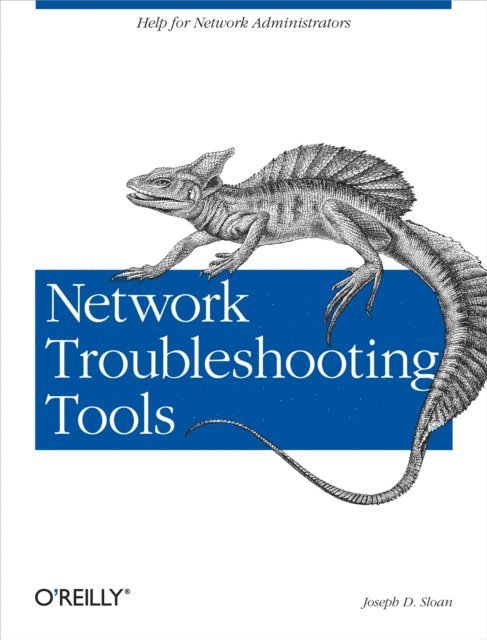
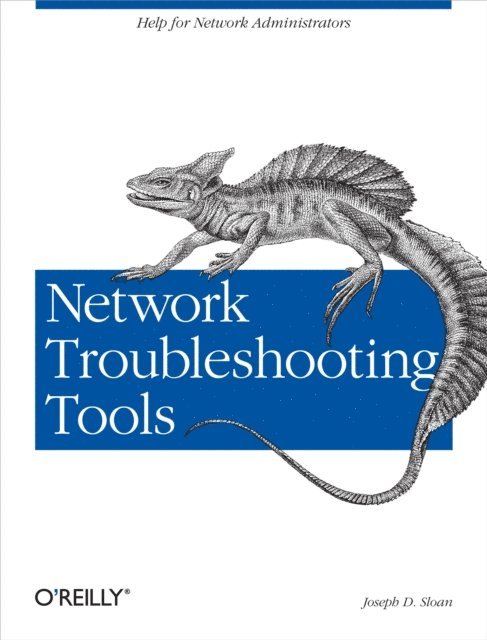
Over the years, thousands of tools have been developed for debugging TCP/IP networks. They range from very specialized tools that do one particular task, to generalized suites that do just about everything except replace bad Ethernet cables. Even better, many of them are absolutely free. There''s only one problem: who has time to track them all down, sort through them for the best ones for a particular purpose, or figure out how to use them?Network Troubleshooting Tools does the work for you--by describing the best of the freely available tools for debugging and troubleshooting. You can start with a lesser-known version of ping that diagnoses connectivity problems, or take on a much more comprehensive program like MRTG for graphing traffic through network interfaces. There''s tkined for mapping and automatically monitoring networks, and Ethereal for capturing packets and debugging low-level problems.This book isn''t just about the tools available for troubleshooting common network problems. It also outlines a systematic approach to network troubleshooting: how to document your network so you know how it behaves under normal conditions, and how to think about problems when they arise, so you can solve them more effectively.The topics covered in this book include:
Understanding your networkConnectivity testingEvaluating the path between two network nodesTools for capturing packetsTools for network discovery and mappingTools for working with SNMPPerformance monitoringTesting application layer protocolsSoftware sourcesIf you''re involved with network operations, this book will save you time, money, and needless experimentation.436 kr
Läs direkt efter köp
Over the years, thousands of tools have been developed for debugging TCP/IP networks. They range from very specialized tools that do one particular task, to generalized suites that do just about everything except replace bad Ethernet cables. Even better, many of them are absolutely free. There''s only one problem: who has time to track them all down, sort through them for the best ones for a particular purpose, or figure out how to use them?Network Troubleshooting Tools does the work for you--by describing the best of the freely available tools for debugging and troubleshooting. You can start with a lesser-known version of ping that diagnoses connectivity problems, or take on a much more comprehensive program like MRTG for graphing traffic through network interfaces. There''s tkined for mapping and automatically monitoring networks, and Ethereal for capturing packets and debugging low-level problems.This book isn''t just about the tools available for troubleshooting common network problems. It also outlines a systematic approach to network troubleshooting: how to document your network so you know how it behaves under normal conditions, and how to think about problems when they arise, so you can solve them more effectively.The topics covered in this book include:
Understanding your networkConnectivity testingEvaluating the path between two network nodesTools for capturing packetsTools for network discovery and mappingTools for working with SNMPPerformance monitoringTesting application layer protocolsSoftware sourcesIf you''re involved with network operations, this book will save you time, money, and needless experimentation.329 kr
Läs direkt efter köp
To the outside world, a "supercomputer" appears to be a single system. In fact, it''s a cluster of computers that share a local area network and have the ability to work together on a single problem as a team. Many businesses used to consider supercomputing beyond the reach of their budgets, but new Linux applications have made high-performance clusters more affordable than ever. These days, the promise of low-cost supercomputing is one of the main reasons many businesses choose Linux over other operating systems.This new guide covers everything a newcomer to clustering will need to plan, build, and deploy a high-performance Linux cluster. The book focuses on clustering for high-performance computation, although much of its information also applies to clustering for high-availability (failover and disaster recovery). The book discusses the key tools you''ll need to get started, including good practices to use while exploring the tools and growing a system. You''ll learn about planning, hardware choices, bulk installation of Linux on multiple systems, and other basic considerations. Then, you''ll learn about software options that can save you hours--or even weeks--of deployment time.Since a wide variety of options exist in each area of clustering software, the author discusses the pros and cons of the major free software projects and chooses those that are most likely to be helpful to new cluster administrators and programmers. A few of the projects introduced in the book include:
MPI, the most popular programming library for clusters. This book offers simple but realistic introductory examples along with some pointers for advanced use.OSCAR and Rocks, two comprehensive installation and administrative systemsopenMosix (a convenient tool for distributing jobs), Linux kernel extensions that migrate processes transparently for load balancingPVFS, one of the parallel filesystems that make clustering I/O easierC3, a set of commands for administering multiple systemsGanglia, OpenPBS, and cloning tools (Kickstart, SIS and G4U) are also covered. The book looks at cluster installation packages (OSCAR & Rocks) and then considers the core packages individually for greater depth or for folks wishing to do a custom installation. Guidelines for debugging, profiling, performance tuning, and managing jobs from multiple users round out this immensely useful book.