Joseph H. H. Weiler – författare
Visar alla böcker från författaren Joseph H. H. Weiler. Handla med fri frakt och snabb leverans.
6 produkter
6 produkter
Inbunden, Engelska, 2024
2 436 kr
Skickas inom 10-15 vardagar
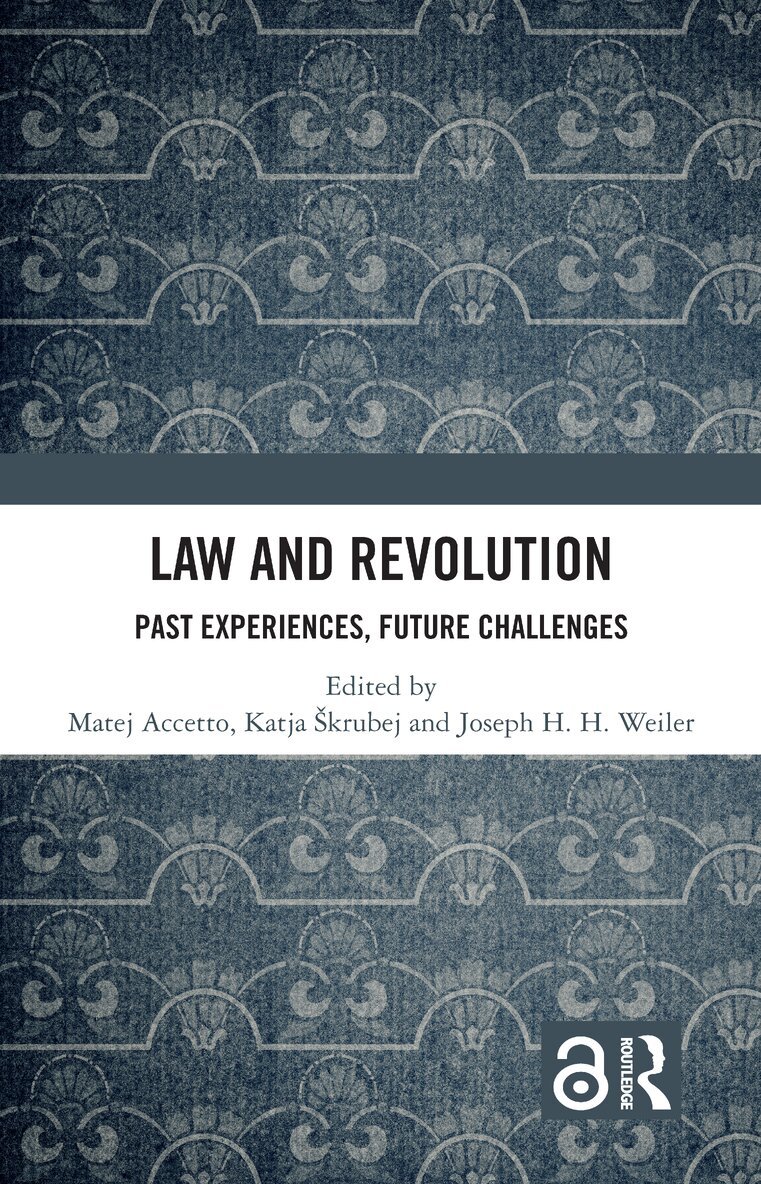
The last one hundred years have seen a number of events that could be perceived as disruptive challenges to the normal operation of the legal order. Some have been disruptive innovations of technologies or business practices, others social changes or constitutional transformations, further buttressed by the impact of globalisation and interdependence affecting the development of international, transnational and global law. Coincidentally, this period of one hundred years has been bookended by two pandemics, themselves disruptive realities testing the resilience as well as the adaptability of the legal regimes. A hundred years ago, the founding dean of a newly established law faculty beginning its mission amid the ashes of the First World War and the disintegration of the only remaining European empire gave an opening lecture exploring the role of law and judges in the face of revolutionary societal changes. Drawing upon that important text, this edited volume explores similar challenges for law brought about by various disruptive realities. The collection looks at the past as well as the future. Following the text of the opening lecture by Pitamic, the contributions are grouped under five headings, dealing with the law and revolution in 1918, the challenges posed for law by the seemingly more gradual political or technological transformations, the effects of globalisation and the changing world, with the final contributions reassessing the law, its methodologies and traditional paradigms including, in the epilogue, the challenges posed for law the recent disruptive reality of the Covid-19 pandemic. The book will be of interest to academics, researchers and policy-makers working in the areas of legal history, jurisprudence, constitutional law, law and politics, and law and technology.The Open Access version of this book, available at http://www.taylorfrancis.com, has been made available under a Creative Commons Attribution-Non Commercial-No Derivatives (CC-BY-NC-ND) 4.0 license.
Häftad, Engelska, 2025
627 kr
Skickas inom 10-15 vardagar
The last one hundred years have seen a number of events that could be perceived as disruptive challenges to the normal operation of the legal order. Some have been disruptive innovations of technologies or business practices, others social changes or constitutional transformations, further buttressed by the impact of globalisation and interdependence affecting the development of international, transnational and global law. Coincidentally, this period of one hundred years has been bookended by two pandemics, themselves disruptive realities testing the resilience as well as the adaptability of the legal regimes. A hundred years ago, the founding dean of a newly established law faculty beginning its mission amid the ashes of the First World War and the disintegration of the only remaining European empire gave an opening lecture exploring the role of law and judges in the face of revolutionary societal changes. Drawing upon that important text, this edited volume explores similar challenges for law brought about by various disruptive realities. The collection looks at the past as well as the future. Following the text of the opening lecture by Pitamic, the contributions are grouped under five headings, dealing with the law and revolution in 1918, the challenges posed for law by the seemingly more gradual political or technological transformations, the effects of globalisation and the changing world, with the final contributions reassessing the law, its methodologies and traditional paradigms including, in the epilogue, the challenges posed for law the recent disruptive reality of the Covid-19 pandemic. The book will be of interest to academics, researchers and policy-makers working in the areas of legal history, jurisprudence, constitutional law, law and politics, and law and technology.The Open Access version of this book, available at http://www.taylorfrancis.com, has been made available under a Creative Commons Attribution-Non Commercial-No Derivatives (CC-BY-NC-ND) 4.0 license.
Del 9 - European University Institute: Series A
Change and Stability in International Law-Making
Inbunden, Engelska, 1988
1 418 kr
Skickas inom 5-8 vardagar
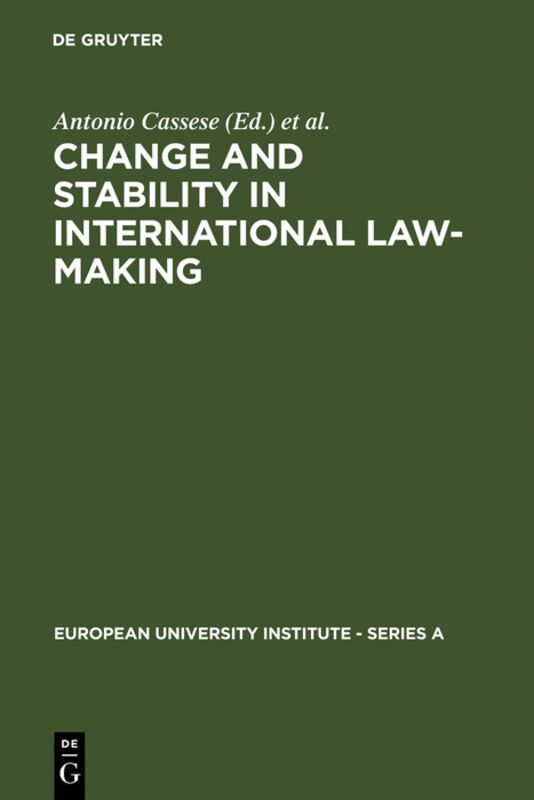
No detailed description available for "Change and Stability in International Law-Making".
E-bok
PDF, Engelska, 20101 229 kr
Läs direkt efter köp
No detailed description available for "e;Change and Stability in International Law-Making"e;.
E-bok
Spanska, 2025106 kr
Läs direkt efter köp
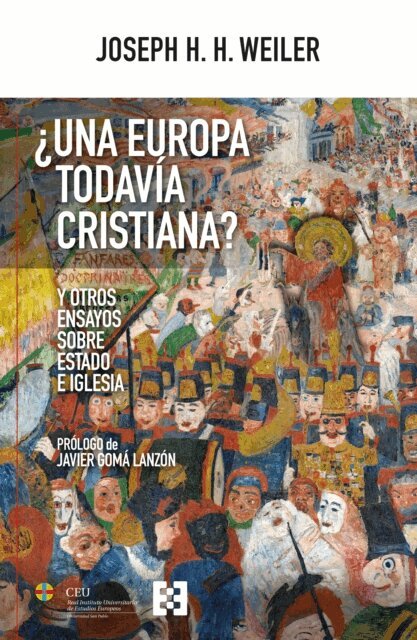
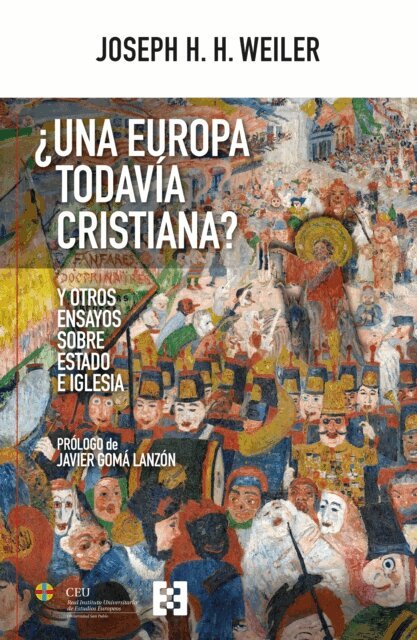
Europa sigue mirándose en el espejo sin reconocer su propio rostro. En ¿Una Europa todavía cristiana? reunimos el influyente ensayo Una Europa cristiana junto con nuevas reflexiones de J.H.H. Weiler sobre la relación entre Iglesia y Estado en el contexto europeo actual. Traducido a múltiples idiomas, Una Europa cristiana fue una obra clave en el debate suscitado por la propuesta de una Constitución Europea, y su relevancia no ha hecho sino aumentar con el paso del tiempo.En este nuevo libro, Weiler, profesor en NYU y Harvard y galardonado con el Premio Ratzinger en 2022, profundiza en cuestiones como la pretendida neutralidad de la laicidad, el papel del cristianismo en la identidad europea y las consecuencias de su desconocimiento. Weiler va más allá de la simplista idea de una Europa «cristofóbica», su análisis es fino e inquietante: ya no se trata tanto de un rechazo consciente a la fe, de una indiferencia nacida de la ignorancia, sino de olvido. Para muchos europeos, la Iglesia ya no es más que un decorado para bodas elegantes, y la religión, una pieza de museo. Pero, ¿qué implica esta amnesia para el futuro de Europa?¿Una Europa todavía cristiana? invita al lector a replantearse el significado de la tradición cristiana en la configuración del presente y el futuro de Europa.
E-bok
PDF, Spanska, 2025106 kr
Läs direkt efter köp
Europa sigue mirándose en el espejo sin reconocer su propio rostro. En ¿Una Europa todavía cristiana? reunimos el influyente ensayo Una Europa cristiana junto con nuevas reflexiones de J.H.H. Weiler sobre la relación entre Iglesia y Estado en el contexto europeo actual. Traducido a múltiples idiomas, Una Europa cristiana fue una obra clave en el debate suscitado por la propuesta de una Constitución Europea, y su relevancia no ha hecho sino aumentar con el paso del tiempo.En este nuevo libro, Weiler, profesor en NYU y Harvard y galardonado con el Premio Ratzinger en 2022, profundiza en cuestiones como la pretendida neutralidad de la laicidad, el papel del cristianismo en la identidad europea y las consecuencias de su desconocimiento. Weiler va más allá de la simplista idea de una Europa «cristofóbica», su análisis es fino e inquietante: ya no se trata tanto de un rechazo consciente a la fe, de una indiferencia nacida de la ignorancia, sino de olvido. Para muchos europeos, la Iglesia ya no es más que un decorado para bodas elegantes, y la religión, una pieza de museo. Pero, ¿qué implica esta amnesia para el futuro de Europa?¿Una Europa todavía cristiana? invita al lector a replantearse el significado de la tradición cristiana en la configuración del presente y el futuro de Europa.