Joseph Sanders – författare
Visar alla böcker från författaren Joseph Sanders. Handla med fri frakt och snabb leverans.
9 produkter
9 produkter
Häftad, Engelska, 1994
499 kr
Skickas inom 5-8 vardagar
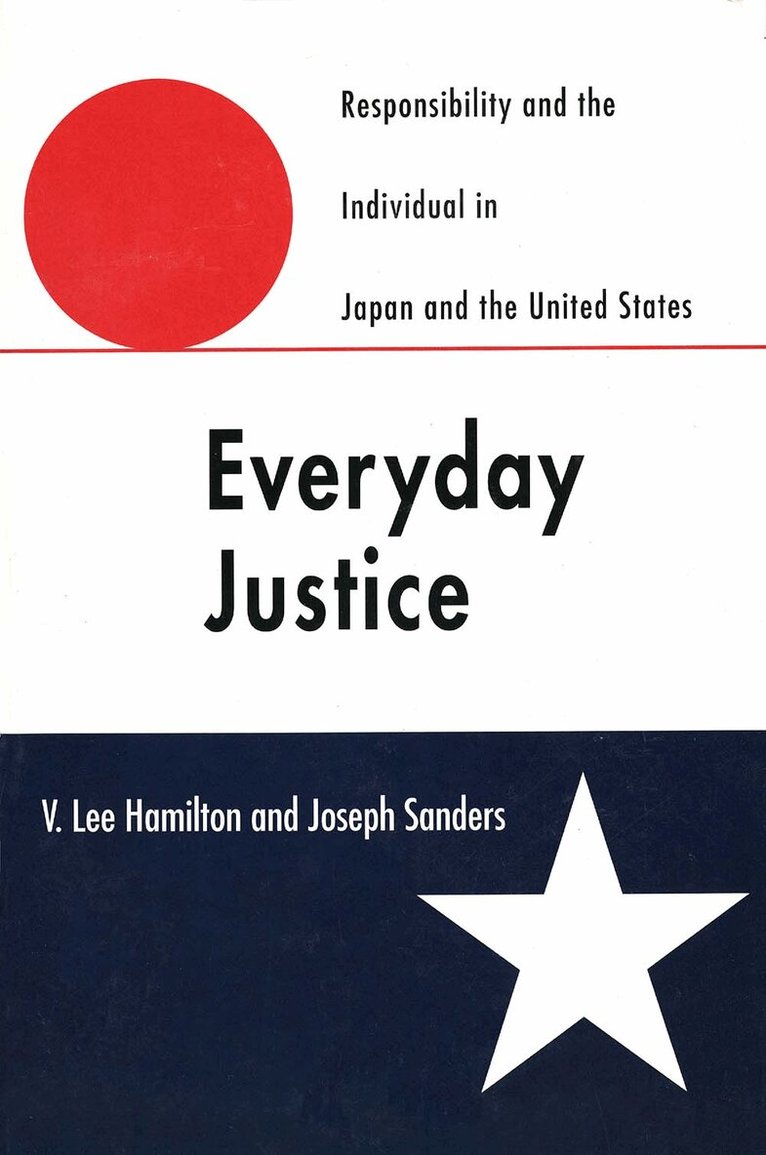
It is a fundamental human impulse to seek restitution or retribution when a wrong is done, yet individuals and societies assess responsibility and allocate punishment for wrongdoing in different ways. This book investigates how average citizens in the United States and Japan think about and judge various kinds of wrongdoing, how they determine who is responsible when things go wrong, and how they prefer to punish offenders. Drawing on the results of surveys they conducted in Detroit, Michigan, and Yokohama and Kanazawa, Japan, the authors compare both individual and cultural reactions to wrongdoing. They find that decisions about justice are influenced by whether or not there seems to be a social relationship between the offender and victim: the American tendency is to see actors in isolation while the Japanese tendency is to see them in relation to others. The Japanese, who emphasize the importance of role obligations and social ties, mete out punishment with the goal of restoring the offender to the social network. Americans, who acknowledge fewer “ties that bind” and have firmer convictions that evil resides in individuals, punish wrongdoers by isolating them from the community. The authors explore the implications of “justice among friends” versus “justice towards strangers” as approaches to the righting of wrongs in modern society. Their findings will be of interest to students of social psychology, the sociology of law, and Japanese studies.
Häftad, Engelska, 1996
570 kr
Skickas inom 5-8 vardagar
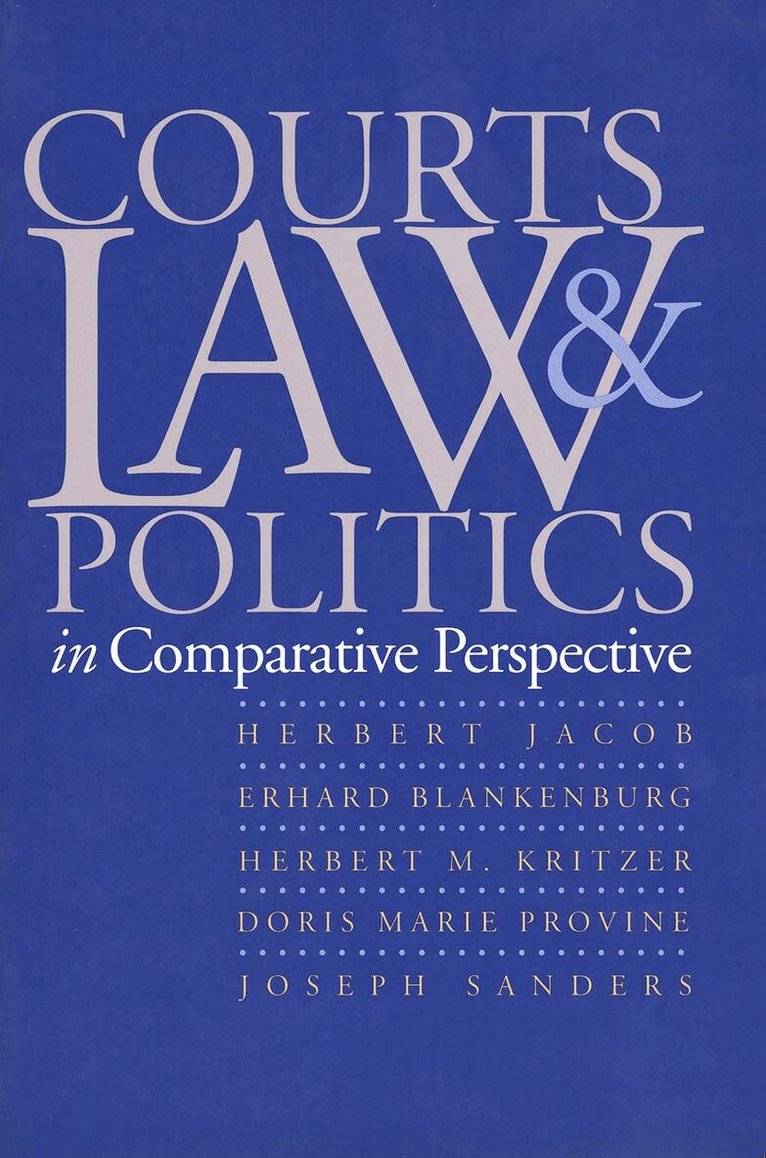
This comprehensive book compares the intersection of political forces and legal practices in five industrial nations—the United States, England, France, Germany, and Japan. The authors, eminent political scientists and legal scholars, investigate how constitutional courts function in each country, how the adjudication of criminal justice and the processing of civil disputes connect legal systems to politics, and how both ordinary citizens and large corporations use the courts.For each of the five countries, the authors discuss the structure of courts and access to them, the manner in which politics and law are differentiated or amalgamated, whether judicial posts are political prizes or bureaucratic positions, the ways in which courts are perceived as legitimate forms for addressing political conflicts, the degree of legal consciousness among citizens, the kinds of work lawyers do, and the manner in which law and courts are used as social control mechanisms. The authors find that although the extent to which courts participate in policymaking varies dramatically from country to country, judicial responsiveness to perceived public problems is not a uniquely American phenomenon.
Inbunden, Engelska, 2001
1 493 kr
Skickas inom 10-15 vardagar
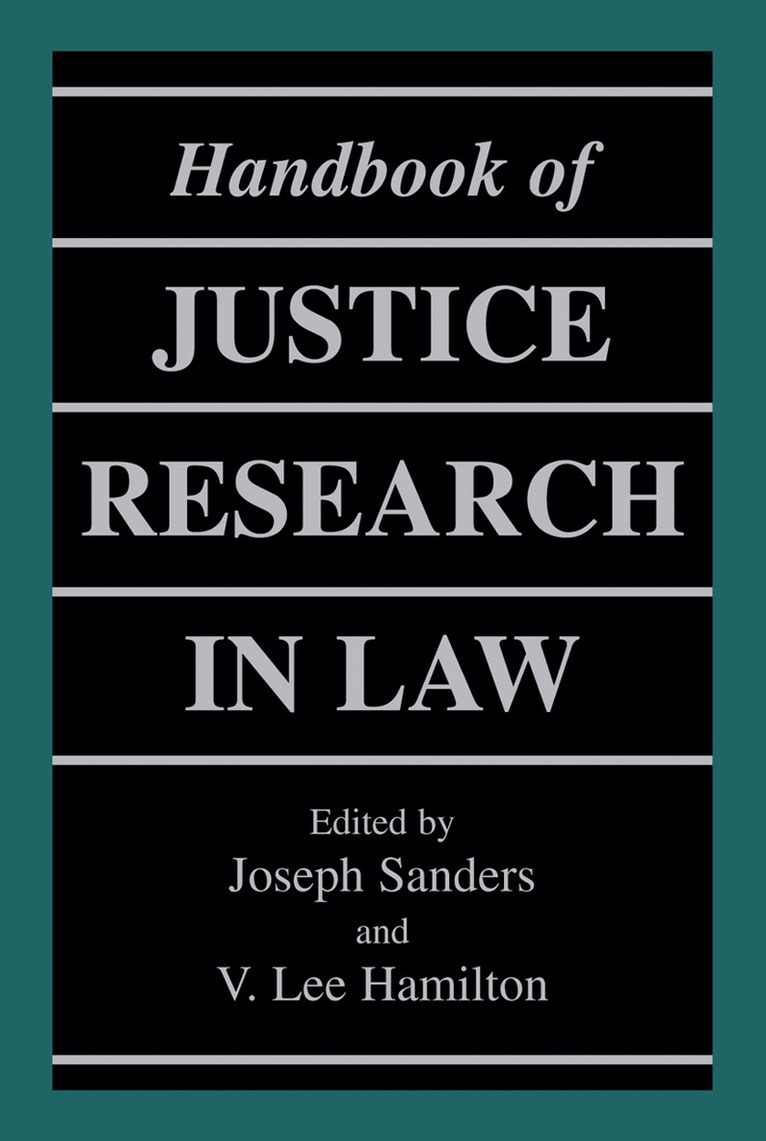
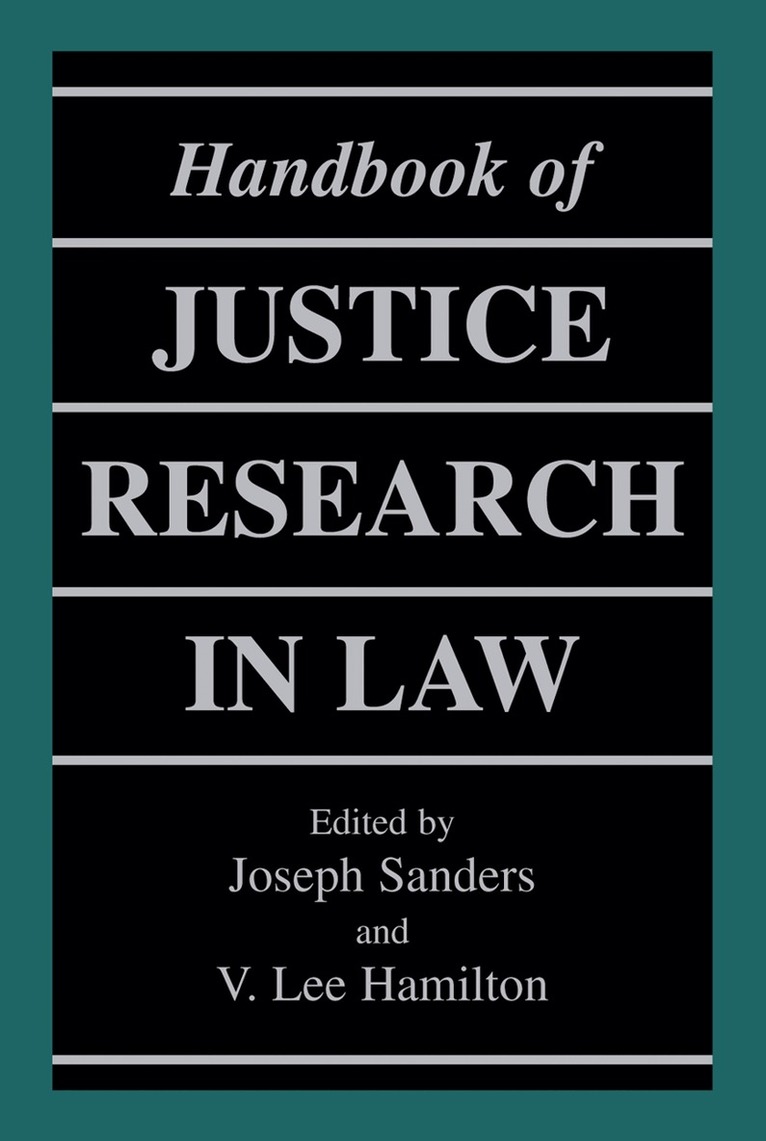
Justice—a word of great simplicity and almost frightening scope. When we were invited to edit a volume on justice in law, we joked about the small topic we had been assigned. Often humor masks fear, and this was certainly one of those times. Throughout the project, we found daunting the task of covering even a fraction of the topics that usually fall under the umbrella of justice research in law. Ultimately, the organization of the book emerged from the writing of it. Our introductory chapter provides a road map to how the topics weave together, but as is so often the case it was written last, not ?rst. It was only when we had chapters in hand that we began to see how the many strands of justice research might be woven together. Chapters 2–4 on the basic forms of justice—procedural, retributive, and distributive—are the lynchpin of the volume; they provide the building blocks that permit us to think and write about each of the other substantive and applied chapters in terms of how they relate to the fundamental forms of justice. In the large central section of the volume (Chapters 5–9), the contributors address many ways in which the justice dimensions relate to one another. Most important for law is the relationship of perceptions of procedural justice and the two types of substantive justice—retributive and distributive.
E-bok
PDF, Engelska, 20071 922 kr
Läs direkt efter köp
Justice—a word of great simplicity and almost frightening scope. When we were invited to edit a volume on justice in law, we joked about the small topic we had been assigned. Often humor masks fear, and this was certainly one of those times. Throughout the project, we found daunting the task of covering even a fraction of the topics that usually fall under the umbrella of justice research in law. Ultimately, the organization of the book emerged from the writing of it. Our introductory chapter provides a road map to how the topics weave together, but as is so often the case it was written last, not ?rst. It was only when we had chapters in hand that we began to see how the many strands of justice research might be woven together. Chapters 2–4 on the basic forms of justice—procedural, retributive, and distributive—are the lynchpin of the volume; they provide the building blocks that permit us to think and write about each of the other substantive and applied chapters in terms of how they relate to the fundamental forms of justice. In the large central section of the volume (Chapters 5–9), the contributors address many ways in which the justice dimensions relate to one another. Most important for law is the relationship of perceptions of procedural justice and the two types of substantive justice—retributive and distributive.
Inbunden, Engelska, 1998
1 077 kr
Skickas inom 5-8 vardagar
Beginning in the mid 1970s the manufacturer of Benedictin was sued repeatedly over allegations that the drug--prescribed for pregnant women to overcome the effects of morning sickness--had caused birth defects. Yet in twenty years no one has collected any damages. Joseph Sanders offers a comprehensive study of this litigation. Sanders looks at the cases from the different perspectives of the parties involved: attorneys, scientists, and juries. He discusses the role of lawyers in the development of claims and in the litigation, how scientific evidence is used in these trials, and the role of judges in managing and resolving these cases.Increasingly, courts have decided who will bear the costs of the side effects of many products. These cases often involve thousands of individual law suits and present a variety of issues for the courts, including how to determine factual issues of causation, the value of claims, and how to fairly manage a large volume of claims. And yet the role of the judicial system in resolving liability issues involving large numbers of claims is highly controversial.This book will appeal to scholars of the American judiciary and those interested in the role of courts in product liability matters.Joseph Sanders is Professor of Law, University of Houston Law Center.
Inbunden, Engelska, 1986
979 kr
Skickas inom 10-15 vardagar
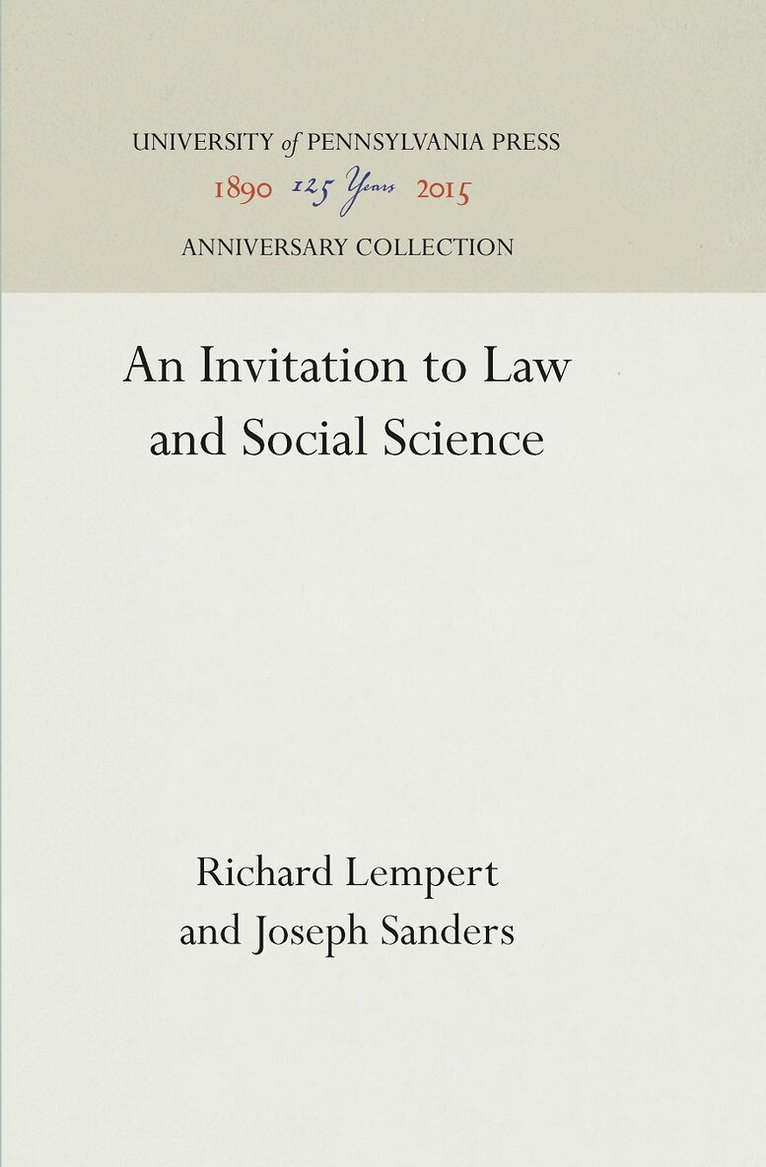
This innovative work treats law as the set of rules governing how people should act in society, and it demonstrates how the legal system attempts to deter antisocial behavior. Comprised of three sections. the book explores different ways in which law decides issues of responsibility, how cases are adjudicated, and theories of distributive justice and social change. Distinguished by its problem-oriented, topical perspective, An Invitation to Law and Social Science serves as an invaluable book for course in law and society, legal process, and the sociology of law.
Inbunden, Engelska, 2008
313 kr
Skickas inom 5-8 vardagar
Häftad, Engelska, 2010
1 577 kr
Skickas inom 10-15 vardagar
Justice—a word of great simplicity and almost frightening scope. When we were invited to edit a volume on justice in law, we joked about the small topic we had been assigned. Often humor masks fear, and this was certainly one of those times. Throughout the project, we found daunting the task of covering even a fraction of the topics that usually fall under the umbrella of justice research in law. Ultimately, the organization of the book emerged from the writing of it. Our introductory chapter provides a road map to how the topics weave together, but as is so often the case it was written last, not ?rst. It was only when we had chapters in hand that we began to see how the many strands of justice research might be woven together. Chapters 2–4 on the basic forms of justice—procedural, retributive, and distributive—are the lynchpin of the volume; they provide the building blocks that permit us to think and write about each of the other substantive and applied chapters in terms of how they relate to the fundamental forms of justice. In the large central section of the volume (Chapters 5–9), the contributors address many ways in which the justice dimensions relate to one another. Most important for law is the relationship of perceptions of procedural justice and the two types of substantive justice—retributive and distributive.
E-bok
PDF, Engelska, 20161 382 kr
Läs direkt efter köp
This innovative work treats law as the set of rules governing how people should act in society, and it demonstrates how the legal system attempts to deter antisocial behavior. Comprised of three sections. the book explores different ways in which law decides issues of responsibility, how cases are adjudicated, and theories of distributive justice and social change. Distinguished by its problem-oriented, topical perspective, An Invitation to Law and Social Science serves as an invaluable book for course in law and society, legal process, and the sociology of law.