Joshua Lupo - Böcker
Visar alla böcker från författaren Joshua Lupo. Handla med fri frakt och snabb leverans.
8 produkter
8 produkter
1 074 kr
Skickas inom 10-15 vardagar
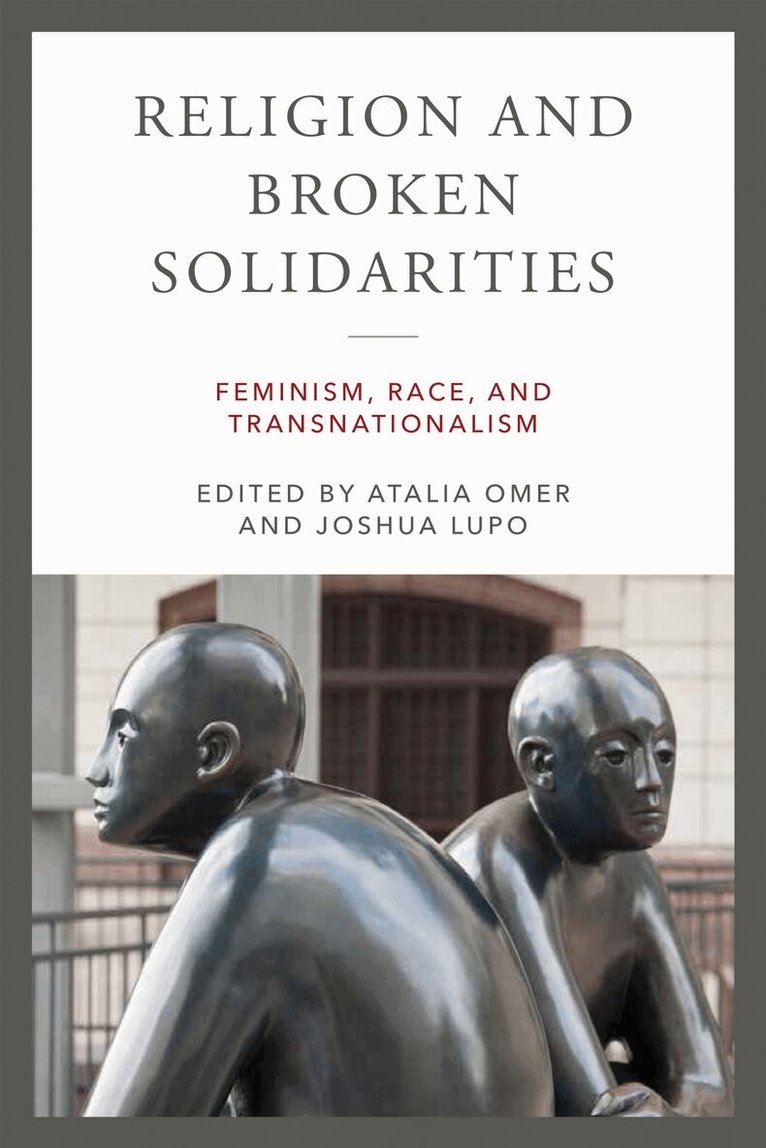
The contributors to this original volume provide a new and nuanced approach to studying how discourses of religion shape public domains in sites of political contestation and "broken solidarities."Our public discourse is saturated with intractable debates about religion, race, gender, and nationalism. Examples range from Muslim women and headscarves to Palestine/Israel and to global anti-Black racism, along with other pertinent issues. We need fresh thinking to navigate the questions that these debates raise for social justice and solidarity across lines of difference. In Religion and Broken Solidarities, the contributors provide powerful reflections and wisdom to guide how we can approach these questions with deep ethical commitments, intersectional sensibilities, and intellectual rigor.Religion and Broken Solidarities traces the role of religious discourse in unrealized moments of solidarity between marginalized groups who ostensibly share similar aims. Religion, the contributors contend, cannot be separated from national, racial, gendered, and other ways of belonging. These modes of belonging make it difficult for different minoritized groups to see how their struggles might benefit from engagement with one another. The four chapters, which interpret historical and contemporary events with a sharp and critical lens, examine accusations of antisemitism and anti-Muslim racism in the Women's March in Washington, DC; the failure of feminists in Iran and Turkey to realize a common cause because of nationalist discourse concerning religiosity and secularity; Black Catholics seeking to overcome the problems of modernity in the West; and the disjunction between the Palestinian and Mizrahi cause in Palestine/Israel. Together these analyses show that overcoming constraints to solidarity requires alternative imaginaries to that of the modern nation-state.Contributors: Atalia Omer, Joshua Lupo, Perin E. Gürel, Juliane Hammer, Ruth Carmi, Brenna Moore, and Melani McAlister.
367 kr
Skickas inom 10-15 vardagar
The contributors to this original volume provide a new and nuanced approach to studying how discourses of religion shape public domains in sites of political contestation and "broken solidarities."Our public discourse is saturated with intractable debates about religion, race, gender, and nationalism. Examples range from Muslim women and headscarves to Palestine/Israel and to global anti-Black racism, along with other pertinent issues. We need fresh thinking to navigate the questions that these debates raise for social justice and solidarity across lines of difference. In Religion and Broken Solidarities, the contributors provide powerful reflections and wisdom to guide how we can approach these questions with deep ethical commitments, intersectional sensibilities, and intellectual rigor.Religion and Broken Solidarities traces the role of religious discourse in unrealized moments of solidarity between marginalized groups who ostensibly share similar aims. Religion, the contributors contend, cannot be separated from national, racial, gendered, and other ways of belonging. These modes of belonging make it difficult for different minoritized groups to see how their struggles might benefit from engagement with one another. The four chapters, which interpret historical and contemporary events with a sharp and critical lens, examine accusations of antisemitism and anti-Muslim racism in the Women's March in Washington, DC; the failure of feminists in Iran and Turkey to realize a common cause because of nationalist discourse concerning religiosity and secularity; Black Catholics seeking to overcome the problems of modernity in the West; and the disjunction between the Palestinian and Mizrahi cause in Palestine/Israel. Together these analyses show that overcoming constraints to solidarity requires alternative imaginaries to that of the modern nation-state.Contributors: Atalia Omer, Joshua Lupo, Perin E. Gürel, Juliane Hammer, Ruth Carmi, Brenna Moore, and Melani McAlister.
Religion, Populism, and Modernity
Confronting White Christian Nationalism and Racism
Inbunden, Engelska, 2023
1 341 kr
Skickas inom 10-15 vardagar
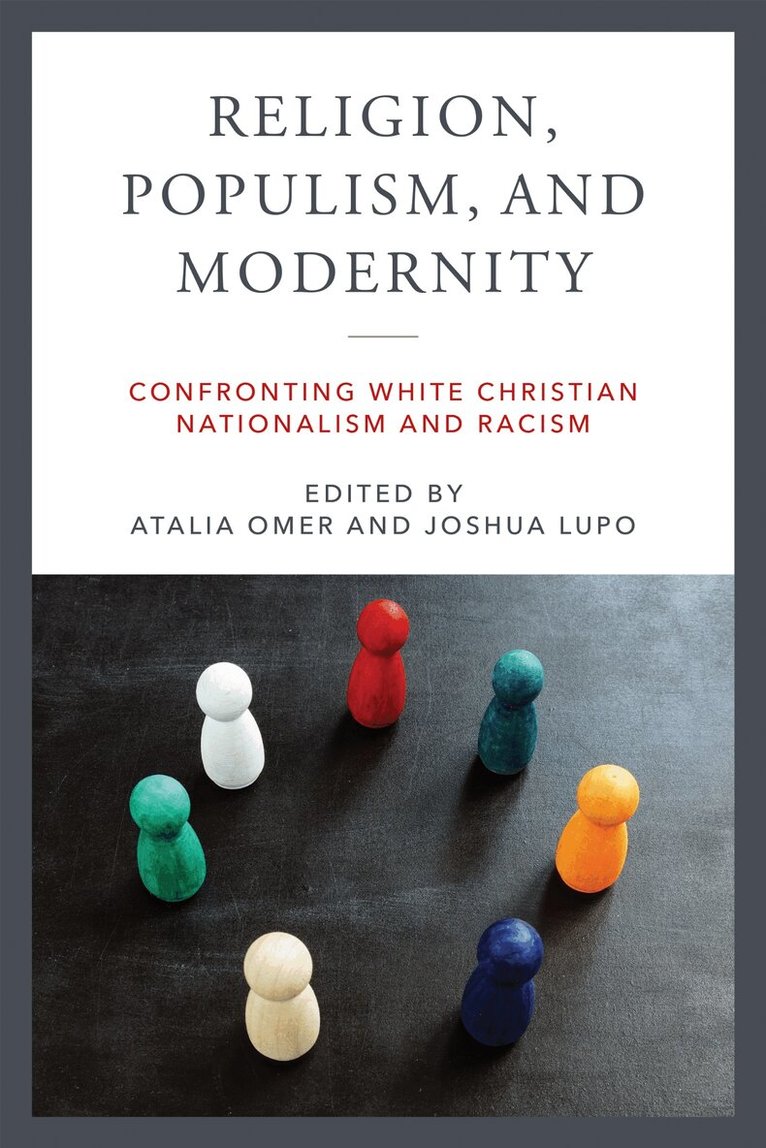
In this timely book, an interdisciplinary group of scholars investigates the recent resurfacing of White Christian nationalism and racism in populist movements across the globe.Religion, Populism, and Modernity examines the recent rise of White Christian nationalism in Europe and the United States, focusing on how right-wing populist leaders and groups have mobilized racist and xenophobic rhetoric in their bids for political power. As the contributors to this volume show, this mobilization is deeply rooted in the broader structures of western modernity and as such requires an intersectional analysis that considers race, gender, ethnicity, nationalism, and religion together. The contributors explore a number of case studies, including White nationalism in the United States among both evangelicals and Catholics, anti- and philosemitism in Poland, the Far Right party Alternative for Germany, Islamophobia in Norway and France, and the entanglement of climate change opposition in right-wing parties throughout Europe. By extending the scope of these essays beyond Trump and Brexit, the contributors remind us that these two events are not exceptions to the rule of the normal functioning of liberal democracies. Rather, they are in fact but recent examples of long-standing trends in Europe and the United States. As the editors to the volume contend, confronting these issues requires that we not only unearth their historical precedents but also imagine futures that point to new ways of being beyond them.Contributors: Atalia Omer, Joshua Lupo, Philip Gorski, Jason A. Springs, R. Scott Appleby, Richard Amesbury, Geneviève Zubrzycki, Yolande Jansen, Jasmijn Leeuwenkamp, Sindre Bangstad, and Ebrahim Moosa.
Religion, Populism, and Modernity
Confronting White Christian Nationalism and Racism
Häftad, Engelska, 2023
367 kr
Skickas inom 10-15 vardagar
In this timely book, an interdisciplinary group of scholars investigates the recent resurfacing of White Christian nationalism and racism in populist movements across the globe.Religion, Populism, and Modernity examines the recent rise of White Christian nationalism in Europe and the United States, focusing on how right-wing populist leaders and groups have mobilized racist and xenophobic rhetoric in their bids for political power. As the contributors to this volume show, this mobilization is deeply rooted in the broader structures of western modernity and as such requires an intersectional analysis that considers race, gender, ethnicity, nationalism, and religion together. The contributors explore a number of case studies, including White nationalism in the United States among both evangelicals and Catholics, anti- and philosemitism in Poland, the Far Right party Alternative for Germany, Islamophobia in Norway and France, and the entanglement of climate change opposition in right-wing parties throughout Europe. By extending the scope of these essays beyond Trump and Brexit, the contributors remind us that these two events are not exceptions to the rule of the normal functioning of liberal democracies. Rather, they are in fact but recent examples of long-standing trends in Europe and the United States. As the editors to the volume contend, confronting these issues requires that we not only unearth their historical precedents but also imagine futures that point to new ways of being beyond them.Contributors: Atalia Omer, Joshua Lupo, Philip Gorski, Jason A. Springs, R. Scott Appleby, Richard Amesbury, Geneviève Zubrzycki, Yolande Jansen, Jasmijn Leeuwenkamp, Sindre Bangstad, and Ebrahim Moosa.
1 074 kr
Skickas inom 10-15 vardagar
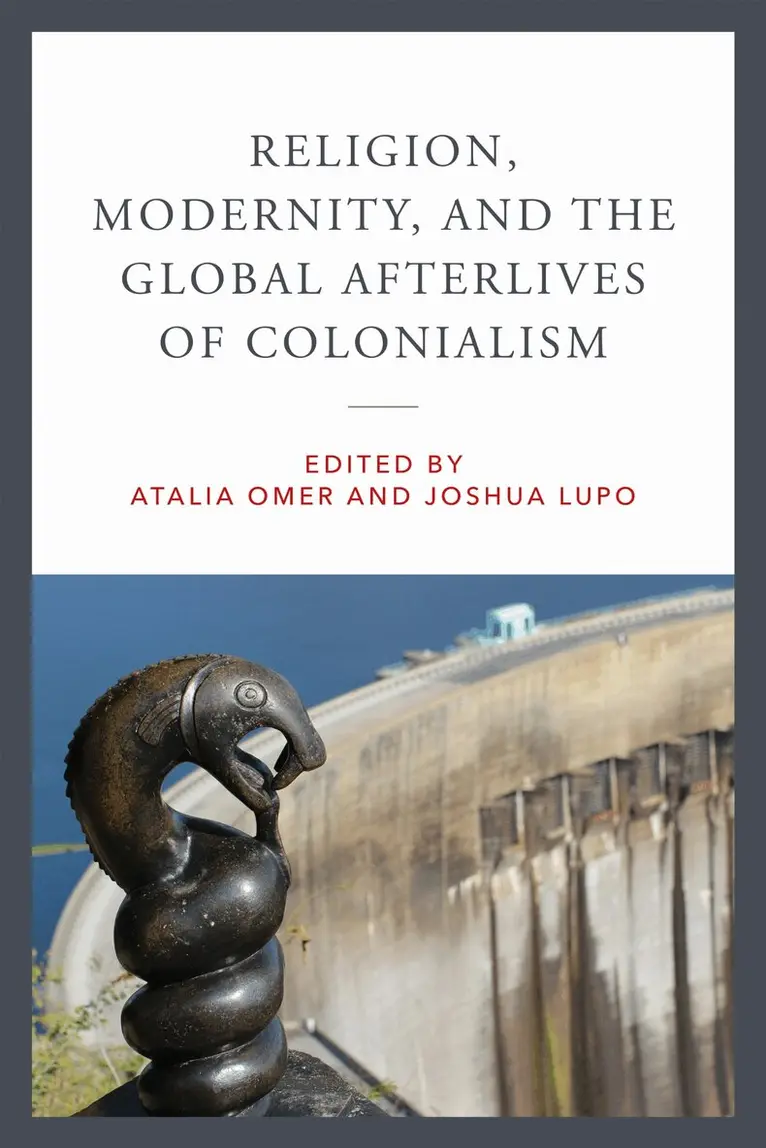
Religion, Modernity, and the Global Afterlives of Colonialism examines the tenacious, lingering impact of European colonial ideology on religion and politics around the world.Even though the formal structures of colonialism have crumbled, with a few notable exceptions, European colonial ideology continues to operate across the globe, resulting in limited, nationalistic conceptualizations of religion and politics. Religion, Modernity, and the Global Afterlives of Colonialism shows convincingly that not only has colonialism had a devastating impact on the colonized, but its reach has turned inward to erode the colonizer's own social and political systems.By examining the colonial violence constitutive of liberal political ideology, the continued oppression of Muslims in Europe in the name of security, and the way neoliberal economics bends religious hermeneutics to its will, the authors of Religion, Modernity, and the Global Afterlives of Colonialism call attention to the threats that face our world today. They also point to potential sites of hope—for example, the work of a priest in the Balkans who seeks to build solidarity across religious differences; groups in Africa who are constructing decolonial religious imaginaries; and the Islamo-futurism of Dune, which haltingly imagines a form of modernity beyond the West.Contributors: Atalia Omer, Joshua Lupo, Santiago Slabodsky, Nadia Fadil, S. Sayyid, Luca Mavelli, Edmund Frettingham, Cecelia Lynch, Slavica Jakelić, and Gil Anidjar
367 kr
Skickas inom 10-15 vardagar
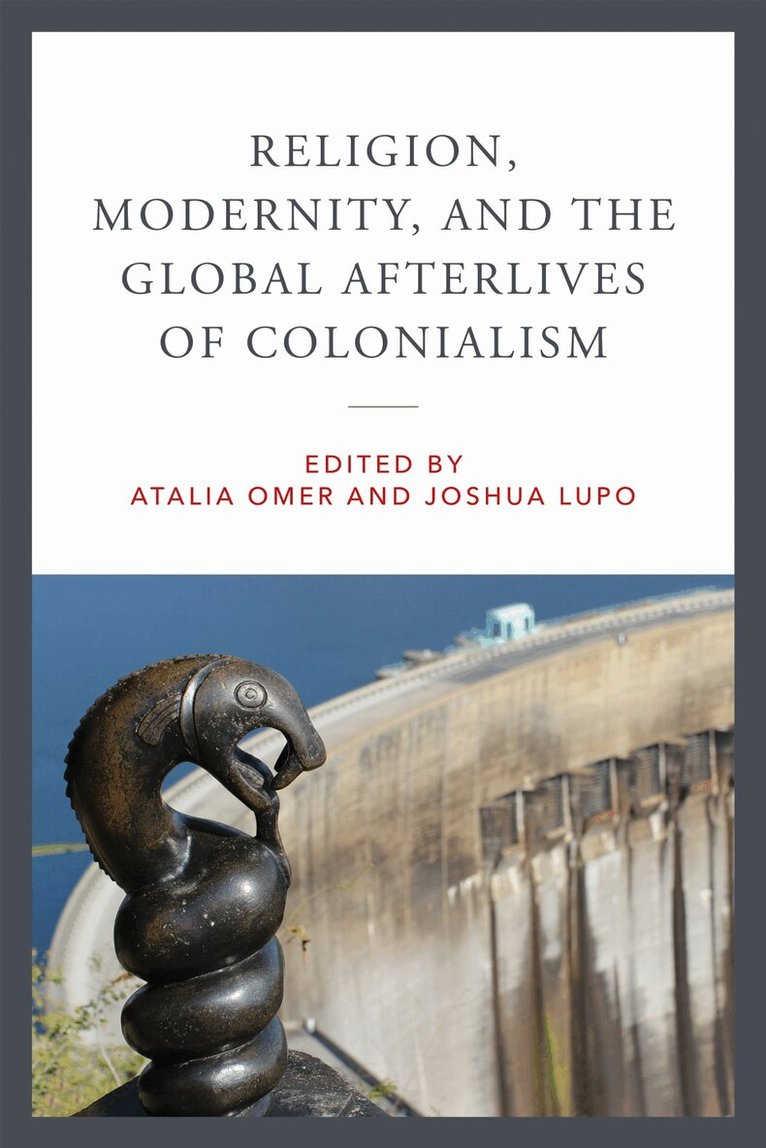
Religion, Modernity, and the Global Afterlives of Colonialism examines the tenacious, lingering impact of European colonial ideology on religion and politics around the world.Even though the formal structures of colonialism have crumbled, with a few notable exceptions, European colonial ideology continues to operate across the globe, resulting in limited, nationalistic conceptualizations of religion and politics. Religion, Modernity, and the Global Afterlives of Colonialism shows convincingly that not only has colonialism had a devastating impact on the colonized, but its reach has turned inward to erode the colonizer's own social and political systems.By examining the colonial violence constitutive of liberal political ideology, the continued oppression of Muslims in Europe in the name of security, and the way neoliberal economics bends religious hermeneutics to its will, the authors of Religion, Modernity, and the Global Afterlives of Colonialism call attention to the threats that face our world today. They also point to potential sites of hope—for example, the work of a priest in the Balkans who seeks to build solidarity across religious differences; groups in Africa who are constructing decolonial religious imaginaries; and the Islamo-futurism of Dune, which haltingly imagines a form of modernity beyond the West.Contributors: Atalia Omer, Joshua Lupo, Santiago Slabodsky, Nadia Fadil, S. Sayyid, Luca Mavelli, Edmund Frettingham, Cecelia Lynch, Slavica Jakelić, and Gil Anidjar
1 362 kr
Kommande
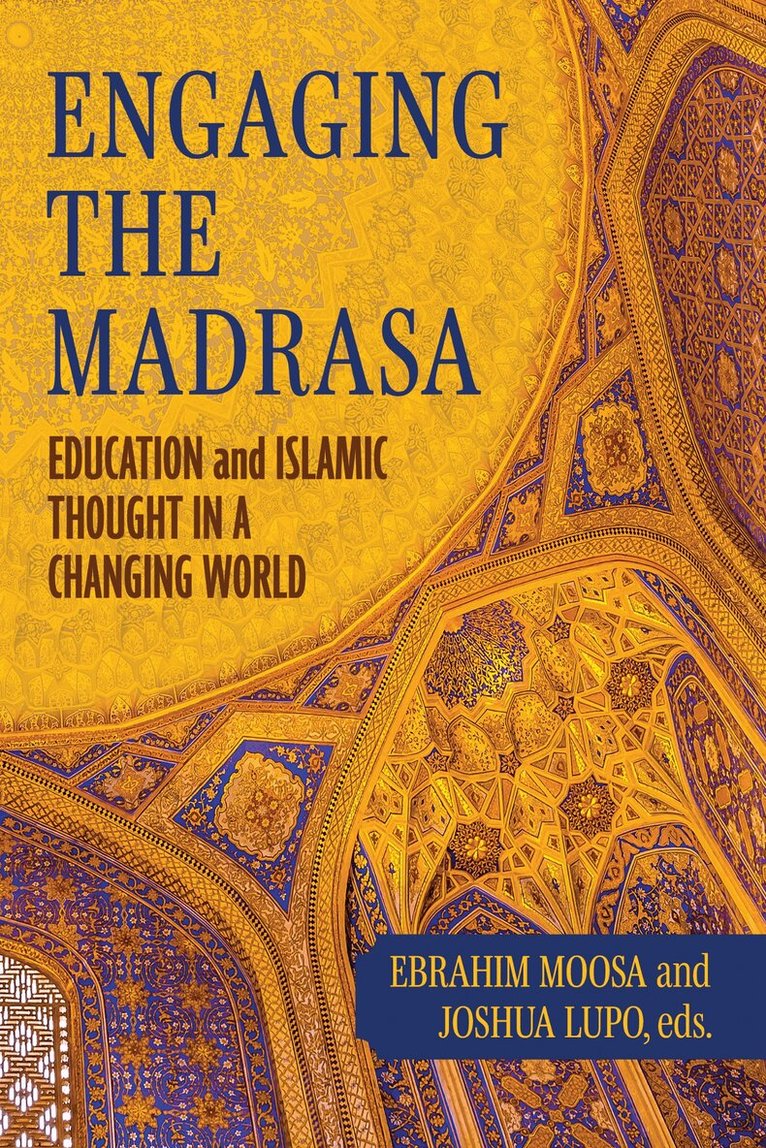
Engaging the Madrasa delves into the intellectual and political challenges that the Muslim scholarly community faces across the globe.The rapid developments of the modern age have given rise to complex theological and philosophical challenges for Muslim scholarly communities. To confront these questions, editors Ebrahim Moosa and Joshua Lupo have curated a collection of essays offering balanced and nuanced perspectives that amplify the richness of the Islamic traditions while avoiding both conservative nostalgia or progressive amnesia.Engaging the Madrasa grapples with the loss and reimagining of tradition in the modern world, bringing together madrasa scholars from India, Pakistan, and the United States to confront themes such as gender equality, the nation-state, colonial legacies, the role of technology, and more. In doing so, the contributors use both modern science and Islamic theological discourse to chart new pathways on which Muslim scholars and theologians around the globe can draw.
347 kr
Kommande
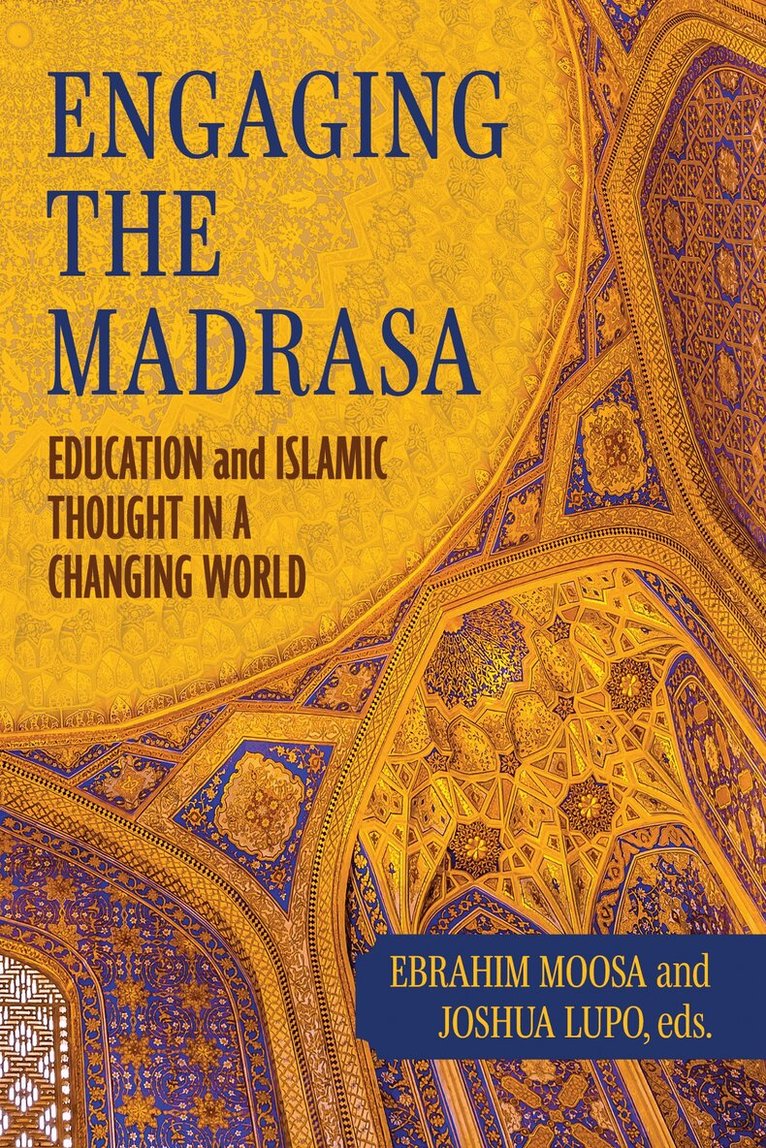
Engaging the Madrasa delves into the intellectual and political challenges that the Muslim scholarly community faces across the globe.The rapid developments of the modern age have given rise to complex theological and philosophical challenges for Muslim scholarly communities. To confront these questions, editors Ebrahim Moosa and Joshua Lupo have curated a collection of essays offering balanced and nuanced perspectives that amplify the richness of the Islamic traditions while avoiding both conservative nostalgia or progressive amnesia.Engaging the Madrasa grapples with the loss and reimagining of tradition in the modern world, bringing together madrasa scholars from India, Pakistan, and the United States to confront themes such as gender equality, the nation-state, colonial legacies, the role of technology, and more. In doing so, the contributors use both modern science and Islamic theological discourse to chart new pathways on which Muslim scholars and theologians around the globe can draw.