
Jr. Canter Brown – författare
Visar alla böcker från författaren . Handla med fri frakt och snabb leverans.
2 produkter
2 produkter
E-bok
Engelska, 2025311 kr
Läs direkt efter köp
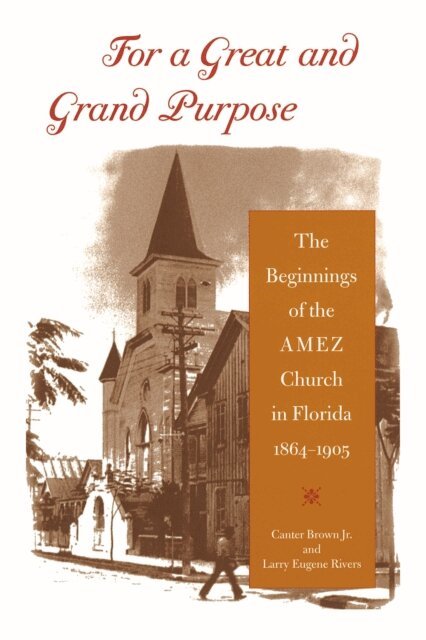
The story of a church that became influential within the Black community in Florida after the Civil WarThis history of the African Methodist Episcopal Zion (AMEZ) Church in Florida tells how dedicated members of one of the oldest and most prominent black religious institutions created a forceful presence within the African-American communityagainst innumerable odds and constant challenges.The African Methodist Episcopal Zion denomination established an official presence in the state one year before its better-known cousin and rival, the African Methodist Episcopal Church. When Connecticut native Wilbur Garrison Strong arrived in Key West in 1864, he stood out as the first black ordained minister in all of peninsular Florida. He brought with him the northern Methodist tradition of joyful praise and preaching, an ethos of a plain and simple gospel that emphasized righteous living and an unbending commitment to emancipation and hope. With Key West under the control of Union forces during much of the Civil War, slaves and free Black people were able to express their desire for independence from white churches more easily there than throughout the rest of the state, and they gravitated to the church that Strong established.During its formative years, the AMEZ became one of the first mainline churches to ordain women to full clerical status. Its ministers commanded great strength in certain cities, and its membership included more of the urban and middle-class population than was typical for southern religious organizations, which were predominantly rural. At its zenith, the AMEZ was one of the largest African-American churches in the state. But it faced difficultiesgender issues, idiosyncratic leadership, rivalries between local ministers and Episcopal authorities, and political dissension at a point when the church was attempting to address larger social issues. In addition, the scourge of hurricanes and yellow fever and citrus crop freezes affected church fortunes. By 1905, when the governor urged the expulsion of all African-Americans from Florida and when state laws mandated racial segregation on public transportation, the era of lynching, discrimination, and disfranchisement already had begun and the period of AMEZ decline had commenced.In this remarkable yet virtually unknown story, the coauthors capture the mood of the post-Civil-War period in Florida, when Black people faced the obstacles and the opportunities that accompanied their new freedom. This work adds significantly to the growing body of literature on African-Americans in Florida and offers keen insights into the nature of institution building within the black community and the greater society.
E-bok
Engelska, 2019513 kr
Läs direkt efter köp
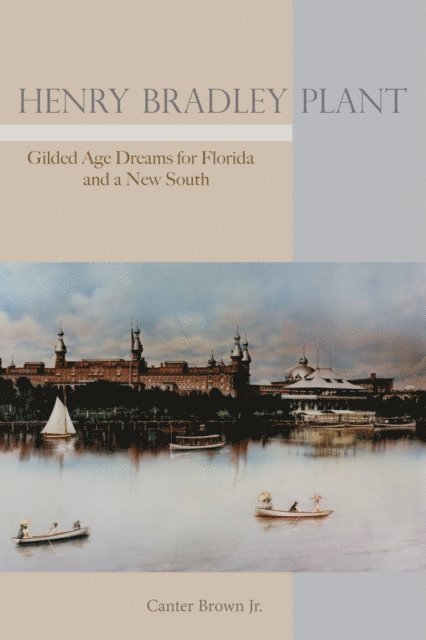
The first biography of Henry Bradley Plant, the entrepreneur and business magnate considered the father of modern Florida In this landmark biography, Canter Brown Jr. makes evident the extent of Henry Bradley Plant’s influences throughout North, Central, and South America as well as his role in the emergence of integrated transportation and a national tourism system. One of the preeminent historians of Florida, Brown brings this important but understudied figure in American history to the foreground. Henry Bradley Plant: Gilded Age Dreams for Florida and a New South carefully examines the complicated years of adventure and activity that marked Plant’s existence, from his birth in Connecticut in 1819 to his somewhat mysterious death in New York City in 1899. Brown illuminates Plant’s vision and perspectives for the state of Florida and the country as a whole and traces many of his influences back to events from his childhood and early adulthood. The book also elaborates on Plant’s controversial Civil War relationships and his utilization of wartime earnings in the postwar era to invest in the bankrupt Southern rail lines. With the success of his businesses such as the Southern Express Company and the Tampa Bay Hotel, Plant transformed Florida into a hub for trade and tourism—traits we still recognize in the Florida of today. This thoroughly researched biography fills important gaps in Florida’s social and economic history and sheds light on a historical figure to an extent never previously undertaken or sufficiently appreciated. Both informative and innovative, Brown’s volume will be a valuable resource for scholars and general readers interested in Southern history, business history, Civil War–era history, and transportation history.