Jr. Paul M. Collins – författare
Visar alla böcker från författaren Jr. Paul M. Collins. Handla med fri frakt och snabb leverans.
4 produkter
4 produkter
E-bok
Engelska, 20081 138 kr
Läs direkt efter köp
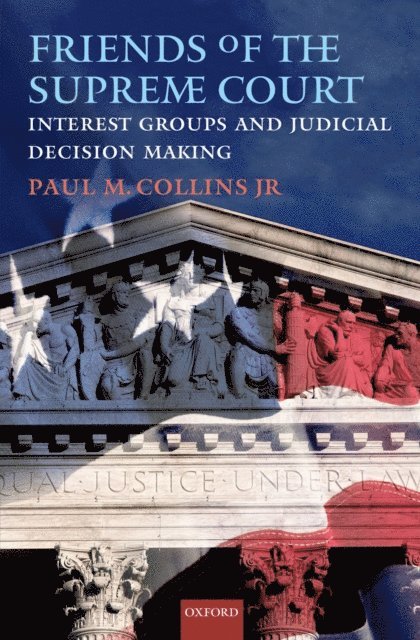
The U.S. Supreme Court is a public policy battleground in which organized interests attempt to etch their economic, legal, and political preferences into law through the filing of amicus curiae ("friend of the court") briefs. In Friends of the Supreme Court: Interest Groups and Judicial Decision Making, Paul M. Collins, Jr. explores how organized interests influence the justices'' decision making, including how the justices vote and whether they choose to author concurrences and dissents. Collins presents theories of judicial choice derived from disciplines as diverse as law, marketing, political science, and social psychology. This theoretically rich and empirically rigorous treatment of decision-making on the nation''s highest court, which represents the most comprehensive examination ever undertaken of the influence of U.S. Supreme Court amicus briefs, provides clear evidence that interest groups play a significant role in shaping the justices'' choices.
E-bok
PDF, Engelska, 20081 138 kr
Läs direkt efter köp
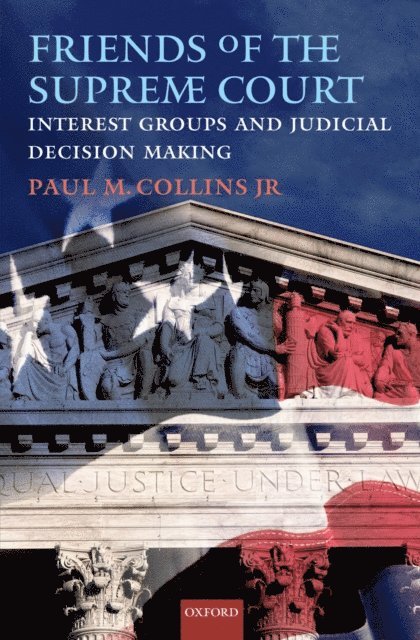
The U.S. Supreme Court is a public policy battleground in which organized interests attempt to etch their economic, legal, and political preferences into law through the filing of amicus curiae ("friend of the court") briefs. In Friends of the Supreme Court: Interest Groups and Judicial Decision Making, Paul M. Collins, Jr. explores how organized interests influence the justices'' decision making, including how the justices vote and whether they choose to author concurrences and dissents. Collins presents theories of judicial choice derived from disciplines as diverse as law, marketing, political science, and social psychology. This theoretically rich and empirically rigorous treatment of decision-making on the nation''s highest court, which represents the most comprehensive examination ever undertaken of the influence of U.S. Supreme Court amicus briefs, provides clear evidence that interest groups play a significant role in shaping the justices'' choices.
E-bok
Engelska, 2020443 kr
Läs direkt efter köp
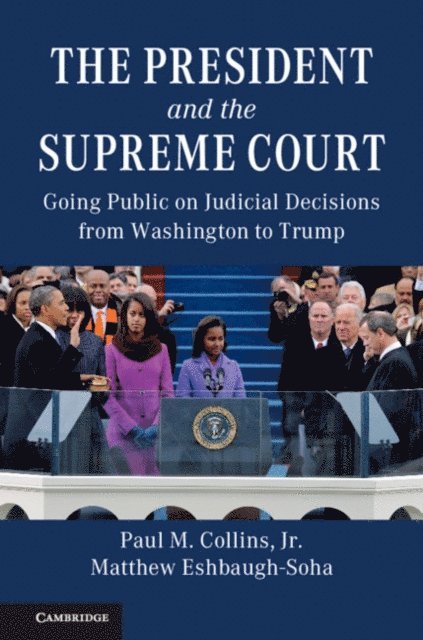
When presidents take positions on pending Supreme Court cases or criticize the Court''s decisions, they are susceptible to being attacked for acting as bullies and violating the norm of judicial independence. Why then do presidents target Supreme Court decisions in their public appeals? In this book, Paul M. Collins, Jr and Matthew Eshbaugh-Soha argue that presidents discuss the Court''s decisions to demonstrate their responsiveness to important matters of public policy and to steer the implementation of the Court''s decisions. Using data from Washington to Trump, they show that, far from being bullies, presidents discuss cases to promote their re-election, policy goals, and historical legacies, while attempting to affect the impact of Court decisions on the bureaucracy, Congress, the media, and the public.
E-bok
PDF, Engelska, 2020443 kr
Läs direkt efter köp
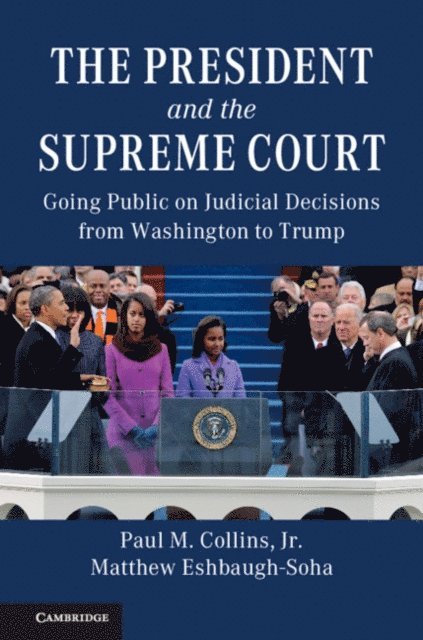
When presidents take positions on pending Supreme Court cases or criticize the Court''s decisions, they are susceptible to being attacked for acting as bullies and violating the norm of judicial independence. Why then do presidents target Supreme Court decisions in their public appeals? In this book, Paul M. Collins, Jr and Matthew Eshbaugh-Soha argue that presidents discuss the Court''s decisions to demonstrate their responsiveness to important matters of public policy and to steer the implementation of the Court''s decisions. Using data from Washington to Trump, they show that, far from being bullies, presidents discuss cases to promote their re-election, policy goals, and historical legacies, while attempting to affect the impact of Court decisions on the bureaucracy, Congress, the media, and the public.