J.Th. Lindblad – författare
Visar alla böcker från författaren J.Th. Lindblad. Handla med fri frakt och snabb leverans.
7 produkter
7 produkter
E-bok
PDF, Engelska, 20212 050 kr
Läs direkt efter köp
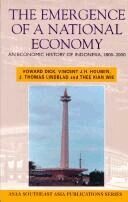
History matters. At the beginning of a new century and amidst the turmoil of a new democracy, a historical perspective on modern Indonesia is needed more than ever. This innovative economic history connects back to the colonial era and helps to explain why the transition from colonialism to Independence and from the New Order to democracy has been so difficult and sometimes traumatic.The Emergence of a National Economy identitifies three grand themes in this transformation: globalisation, state formation and economic integration. Globalisation affected the Indonesian archipelago even before the arrival of the Dutch-the New Order experience was only the most recent wave. Modern state formation began in Java under Governor-General Daendels (1808-11) and culminated in the centralised, military-bureaucratic state of Soeharto's New Order (1966-98). A national economy emerged gradually from the 1930s as the Outer Islands were reoriented towards an industrialising Java. These three themes link chronological chapters from the pre 1800 period through the modern colonial era to the breakdown of the colonial system after 1930, the birth of modern Indonesia, the remarkable economic transformation under the New Order, and the 'meltdown' during the Asian crisis of 1997/98. This overarching story gives a unity and rythm to Indonesia's modern history, while helping to explain why the future is likely to be different.The four authors-senior scholars from Australia (Howard Dick), Germany (Vincent Houben), the Netherlands (Thomas Lindblad) and Indonesia (Thee Kian Wie)-draw on a very wide range of sources to combine the insights of history, economic history and economics.
E-bok
PDF, Engelska, 20212 050 kr
Läs direkt efter köp
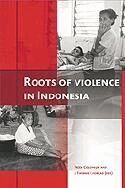
Jakarta, Sambas, Poso, the Moluccas, West Papua. These simple, geographical names have recently obtained strong associations with mass killing, just as Aceh and East Timor, where large-scale violence has flared up again. Lethal incidents between adjacent villages, or between a petty criminal and the crowd, take place throughout Indonesia. Indonesia is a violent country. Many Indonesia-watchers, both scholars and journalists, explain the violence in terms of the loss of the monopoly on the means of violence by the state since the beginning of the Reformasi in 1998. Others point at the omnipresent remnants of the New Order state (1966-1998), former President Suharto's clan or the army in particular, as the evil genius behind the present bloodshed.The authors in this volume try to explain violence in Indonesia by looking at it in historical perspective.
E-bok
PDF, Engelska, 20252 050 kr
Läs direkt efter köp
Del 194 - Verhandelingen van het Koninklijk Instituut voor Taal-, Land- en Volkenkunde
Roots of Violence in Indonesia
Contemporary Violence in Historical Perspective
Häftad, Engelska, 2002
481 kr
Skickas inom 5-8 vardagar
Häftad, Engelska, 2002
506 kr
Skickas inom 5-8 vardagar
Del 245 - Verhandelingen van het Koninklijk Instituut voor Taal-, Land- en Volkenkunde
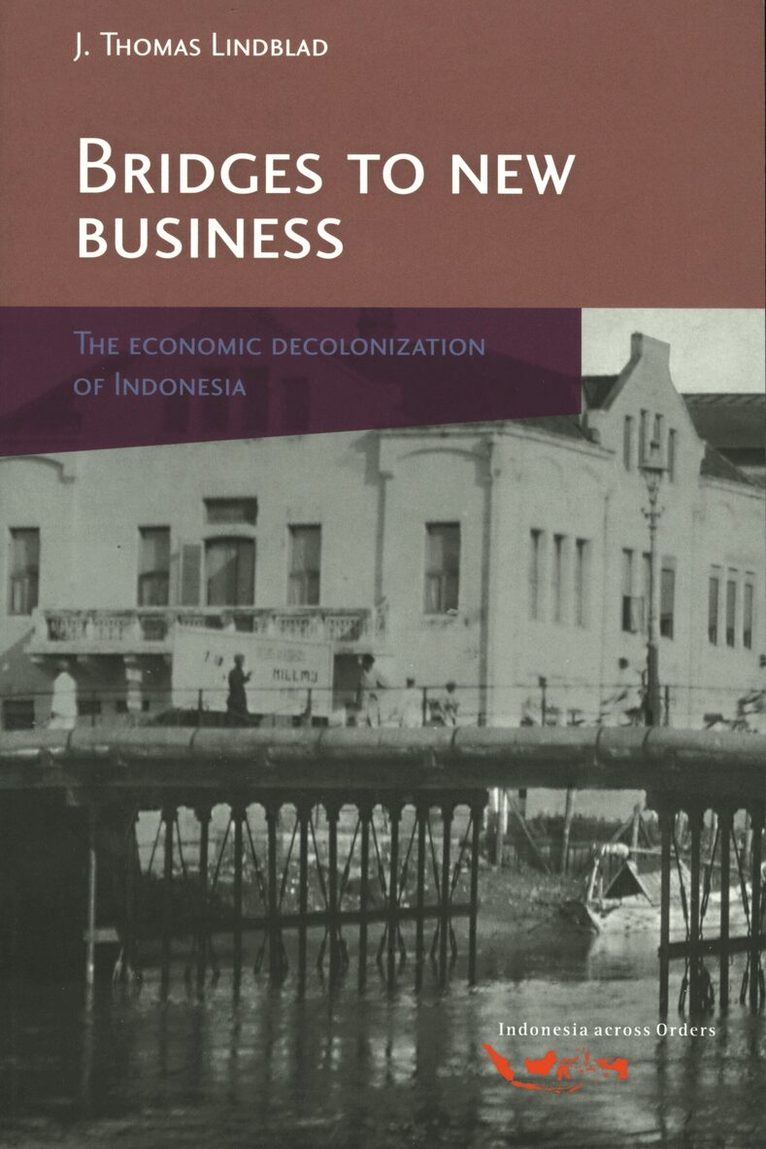
Bridges to New Business
The Economic Decolonization of Indonesia
Häftad, Engelska, 2008
893 kr
Skickas inom 5-8 vardagar
Del 267 - Verhandelingen van het Koninklijk Instituut voor Taal-, Land- en Volkenkunde
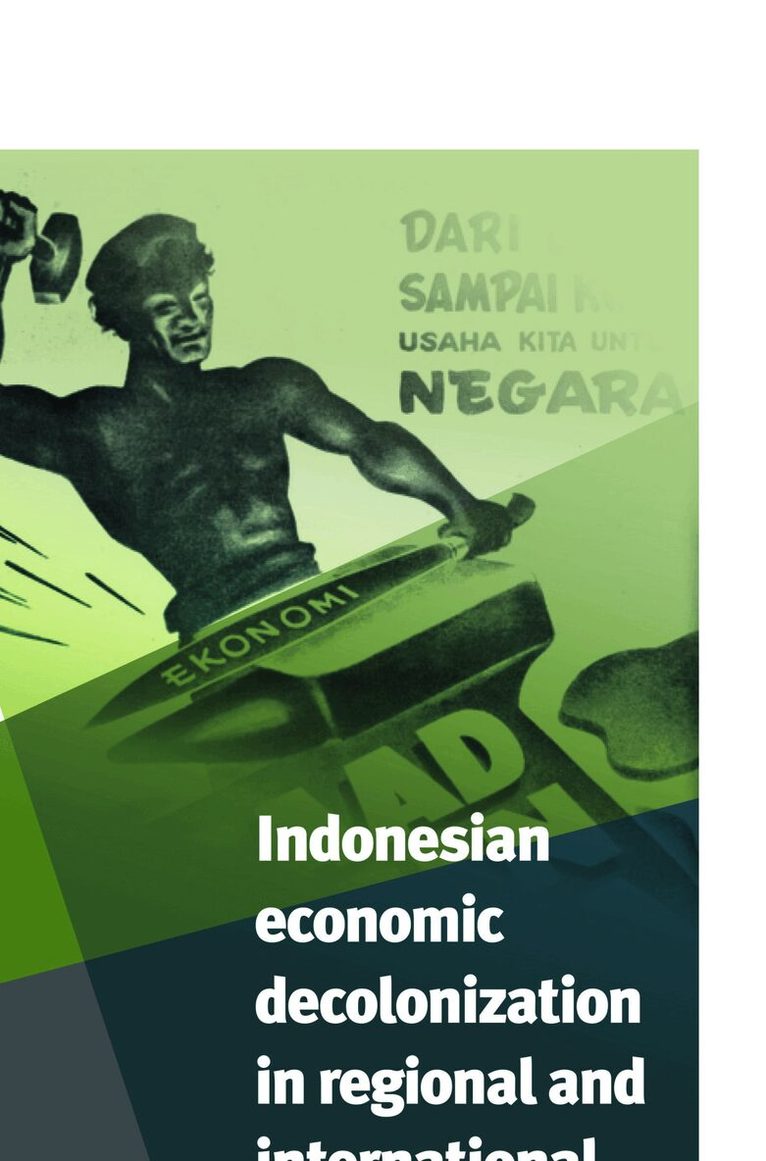
Indonesian Economic Decolonization in Regional and International Perspective
Häftad, Engelska, 2009
876 kr
Skickas inom 5-8 vardagar