1 571 kr
Skickas inom 5-8 vardagar
1 571 kr
Skickas inom 5-8 vardagar
1 803 kr
Läs direkt efter köp
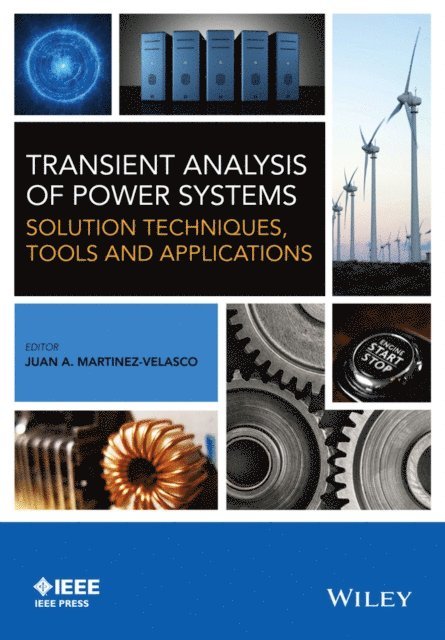
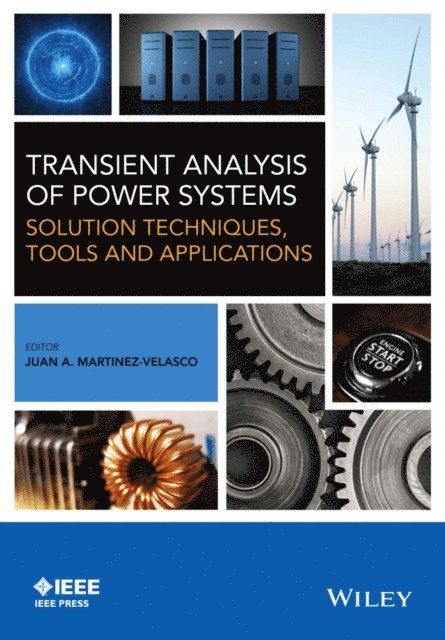
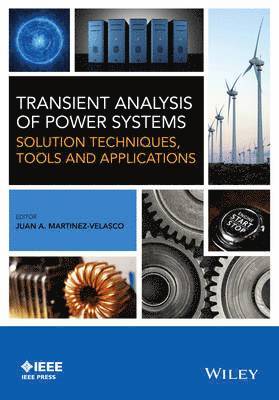
The simulation of electromagnetic transients is a mature field that plays an important role in the design of modern power systems. Since the first steps in this field to date, a significant effort has been dedicated to the development of new techniques and more powerful software tools. Sophisticated models, complex solution techniques and powerful simulation tools have been developed to perform studies that are of supreme importance in the design of modern power systems. The first developments of transients tools were mostly aimed at calculating over-voltages. Presently, these tools are applied to a myriad of studies (e.g. FACTS and Custom Power applications, protective relay performance, simulation of smart grids) for which detailed models and fast solution methods can be of paramount importance.
This book provides a basic understanding of the main aspects to be considered when performing electromagnetic transients studies, detailing the main applications of present electromagnetic transients (EMT) tools, and discusses new developments for enhanced simulation capability.
Key features:
Provides up-to-date information on solution techniques and software capabilities for simulation of electromagnetic transients. Covers key aspects that can expand the capabilities of a transient software tool (e.g. interfacing techniques) or speed up transients simulation (e.g. dynamic model averaging). Applies EMT-type tools to a wide spectrum of studies that range from fast electromagnetic transients to slow electromechanical transients, including power electronic applications, distributed energy resources and protection systems. Illustrates the application of EMT tools to the analysis and simulation of smart grids.1 798 kr
Läs direkt efter köp
The simulation of electromagnetic transients is a mature field that plays an important role in the design of modern power systems. Since the first steps in this field to date, a significant effort has been dedicated to the development of new techniques and more powerful software tools. Sophisticated models, complex solution techniques and powerful simulation tools have been developed to perform studies that are of supreme importance in the design of modern power systems. The first developments of transients tools were mostly aimed at calculating over-voltages. Presently, these tools are applied to a myriad of studies (e.g. FACTS and Custom Power applications, protective relay performance, simulation of smart grids) for which detailed models and fast solution methods can be of paramount importance.
This book provides a basic understanding of the main aspects to be considered when performing electromagnetic transients studies, detailing the main applications of present electromagnetic transients (EMT) tools, and discusses new developments for enhanced simulation capability.
Key features:
Provides up-to-date information on solution techniques and software capabilities for simulation of electromagnetic transients. Covers key aspects that can expand the capabilities of a transient software tool (e.g. interfacing techniques) or speed up transients simulation (e.g. dynamic model averaging). Applies EMT-type tools to a wide spectrum of studies that range from fast electromagnetic transients to slow electromechanical transients, including power electronic applications, distributed energy resources and protection systems. Illustrates the application of EMT tools to the analysis and simulation of smart grids.1 783 kr
Läs direkt efter köp
A hands-on introduction to advanced applications of power system transients with practical examples
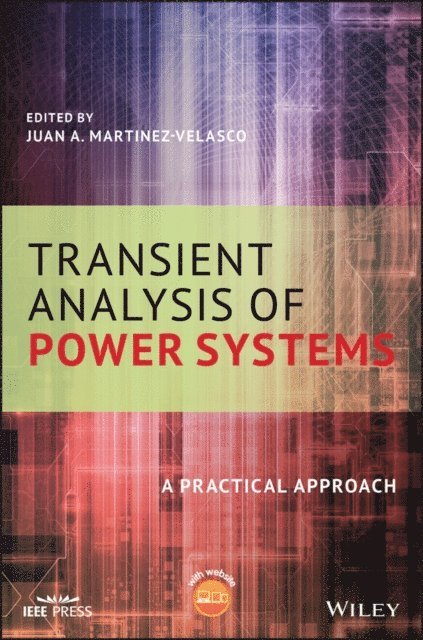
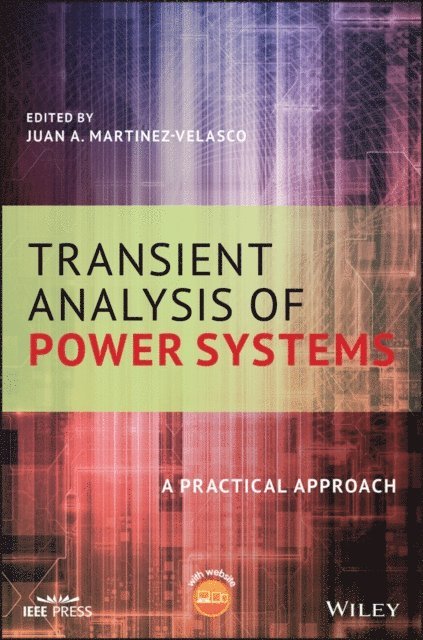
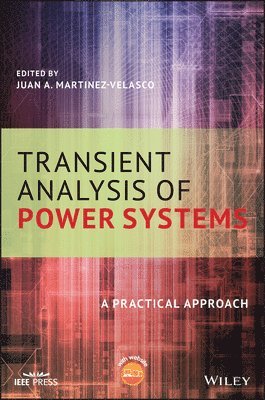
Transient Analysis of Power Systems: A Practical Approach offers an authoritative guide to the traditional capabilities and the new software and hardware approaches that can be used to carry out transient studies and make possible new and more complex research. The book explores a wide range of topics from an introduction to the subject to a review of the many advanced applications, involving the creation of custom-made models and tools and the application of multicore environments for advanced studies.
The authors cover the general aspects of the transient analysis such as modelling guidelines, solution techniques and capabilities of a transient tool. The book also explores the usual application of a transient tool including over-voltages, power quality studies and simulation of power electronics devices. In addition, it contains an introduction to the transient analysis using the ATP. All the studies are supported by practical examples and simulation results. This important book:
Summarises modelling guidelines and solution techniques used in transient analysis of power systems Provides a collection of practical examples with a detailed introduction and a discussion of results Includes a collection of case studies that illustrate how a simulation tool can be used for building environments that can be applied to both analysis and design of power systems Offers guidelines for building custom-made models and libraries of modules, supported by some practical examples Facilitates application of a transients tool to fields hardly covered with other time-domain simulation tools Includes a companion website with data (input) files of examples presented, case studies and power point presentations used to support cases studiesWritten for EMTP users, electrical engineers, Transient Analysis of Power Systems is a hands-on and practical guide to advanced applications of power system transients that includes a range of practical examples.
1 783 kr
Läs direkt efter köp
A hands-on introduction to advanced applications of power system transients with practical examples
Transient Analysis of Power Systems: A Practical Approach offers an authoritative guide to the traditional capabilities and the new software and hardware approaches that can be used to carry out transient studies and make possible new and more complex research. The book explores a wide range of topics from an introduction to the subject to a review of the many advanced applications, involving the creation of custom-made models and tools and the application of multicore environments for advanced studies.
The authors cover the general aspects of the transient analysis such as modelling guidelines, solution techniques and capabilities of a transient tool. The book also explores the usual application of a transient tool including over-voltages, power quality studies and simulation of power electronics devices. In addition, it contains an introduction to the transient analysis using the ATP. All the studies are supported by practical examples and simulation results. This important book:
Summarises modelling guidelines and solution techniques used in transient analysis of power systems Provides a collection of practical examples with a detailed introduction and a discussion of results Includes a collection of case studies that illustrate how a simulation tool can be used for building environments that can be applied to both analysis and design of power systems Offers guidelines for building custom-made models and libraries of modules, supported by some practical examples Facilitates application of a transients tool to fields hardly covered with other time-domain simulation tools Includes a companion website with data (input) files of examples presented, case studies and power point presentations used to support cases studiesWritten for EMTP users, electrical engineers, Transient Analysis of Power Systems is a hands-on and practical guide to advanced applications of power system transients that includes a range of practical examples.
1 531 kr
Skickas inom 5-8 vardagar
3 194 kr
Läs direkt efter köp
Despite the powerful numerical techniques and graphical user interfaces available in present software tools for power system transients, a lack of reliable tests and conversion procedures generally makes determination of parameters the most challenging part of creating a model.
Illustrates Parameter Determination for Real-World Applications
Geared toward both students and professionals with at least some basic knowledge of electromagnetic transient analysis, Power System Transients: Parameter Determination summarizes current procedures and techniques for the determination of transient parameters for six basic power components: overhead line, insulated cable, transformer, synchronous machine, surge arrester, and circuit breaker. An expansion on papers published in the IEEE Transactions on Power Delivery, this text helps those using transient simulation tools (e.g., EMTP-like tools) to select the optimal determination method for their particular model, and it addresses commonly encountered problems, including:
Lack of information Testing setups and measurements that are not recognized in international standards Insufficient studies to validate models, mainly those used in high-frequency transients Current built-in models that do not cover all requirementsIllustrated with case studies, this book provides modeling guidelines for the selection of adequate representations for main components. It discusses how to collect the information needed to obtain model parameters and also reviews procedures for deriving them. Appendices summarize updated techniques for identifying linear systems from frequency responses and review capabilities and limitations of simulation tools. Emphasizing standards, this book is a clear and concise presentation of key aspects in creating an adequate and reliable transient model.
2 695 kr
Skickas inom 10-15 vardagar
3 186 kr
Läs direkt efter köp
Despite the powerful numerical techniques and graphical user interfaces available in present software tools for power system transients, a lack of reliable tests and conversion procedures generally makes determination of parameters the most challenging part of creating a model.
Illustrates Parameter Determination for Real-World Applications
Geared toward both students and professionals with at least some basic knowledge of electromagnetic transient analysis, Power System Transients: Parameter Determination summarizes current procedures and techniques for the determination of transient parameters for six basic power components: overhead line, insulated cable, transformer, synchronous machine, surge arrester, and circuit breaker. An expansion on papers published in the IEEE Transactions on Power Delivery, this text helps those using transient simulation tools (e.g., EMTP-like tools) to select the optimal determination method for their particular model, and it addresses commonly encountered problems, including:
Lack of information Testing setups and measurements that are not recognized in international standards Insufficient studies to validate models, mainly those used in high-frequency transients Current built-in models that do not cover all requirementsIllustrated with case studies, this book provides modeling guidelines for the selection of adequate representations for main components. It discusses how to collect the information needed to obtain model parameters and also reviews procedures for deriving them. Appendices summarize updated techniques for identifying linear systems from frequency responses and review capabilities and limitations of simulation tools. Emphasizing standards, this book is a clear and concise presentation of key aspects in creating an adequate and reliable transient model.