Judith Ireson – författare
625 kr
Skickas inom 10-15 vardagar
2 205 kr
Skickas inom 10-15 vardagar
3 388 kr
Skickas inom 3-6 vardagar
`With an anticipated audience of teachers and policymakers, this book is user-friendly, incorporating detailed research findings illustrated by graphs and tables. A summary is provided at the end of each chapter, offering an overview for the time-conscious wishing to skip through the engaging but largely illustrative statistics and quotations. However, a close reading has its rewards, as the extracts from teachers and students offer poignant insight into the enormous complexity and far-reaching implications of ability grouping' - Cath Lambert, Educational Review
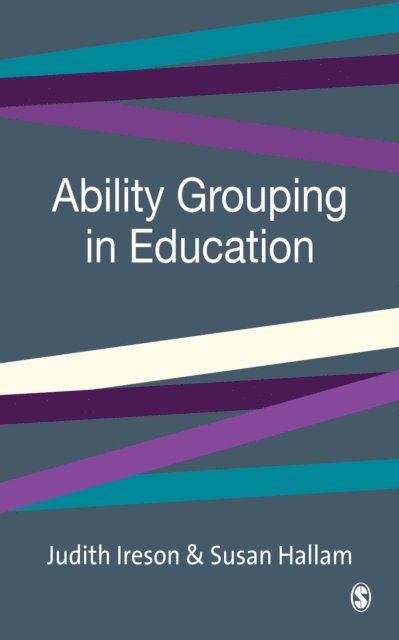
In this book, the authors provide an overview of ability grouping in education. They consider selective schooling and ability grouping within schools, such as streaming, banding setting and within-class grouping.
Selection by ability is a controversial issue, linked with conflicting ideological positions and reflected in strong differences of opinion about the merits of selective schooling. Educational systems under pressure to produce an educated workforce have led governments to look for ways of raising attainment, and grouping by ability is sometimes seen as an organizational solution.
Drawing on their own and others' research in primary and secondary schools, the authors provide an accessible analysis of the issues and latest research on ability grouping; as well as the implications of ability grouping for teachers, managers in education and the wider community.
This book is for students and practitioners taking courses in school effectiveness, education management, as well as educational psychologists and local authority professionals.
Judy Ireson is Senior Lecturer in Psychology and Special Needs at the Institute of Education , University of London, and Susan Hallam is in the Department of Psychology & Special Needs.
1 413 kr
Skickas inom 3-6 vardagar
`With an anticipated audience of teachers and policymakers, this book is user-friendly, incorporating detailed research findings illustrated by graphs and tables. A summary is provided at the end of each chapter, offering an overview for the time-conscious wishing to skip through the engaging but largely illustrative statistics and quotations. However, a close reading has its rewards, as the extracts from teachers and students offer poignant insight into the enormous complexity and far-reaching implications of ability grouping' - Cath Lambert, Educational Review
In this book, the authors provide an overview of ability grouping in education. They consider selective schooling and ability grouping within schools, such as streaming, banding setting and within-class grouping.
Selection by ability is a controversial issue, linked with conflicting ideological positions and reflected in strong differences of opinion about the merits of selective schooling. Educational systems under pressure to produce an educated workforce have led governments to look for ways of raising attainment, and grouping by ability is sometimes seen as an organizational solution.
Drawing on their own and others' research in primary and secondary schools, the authors provide an accessible analysis of the issues and latest research on ability grouping; as well as the implications of ability grouping for teachers, managers in education and the wider community.
This book is for students and practitioners taking courses in school effectiveness, education management, as well as educational psychologists and local authority professionals.
Judy Ireson is Senior Lecturer in Psychology and Special Needs at the Institute of Education , University of London, and Susan Hallam is in the Department of Psychology & Special Needs.
735 kr
Läs direkt efter köp
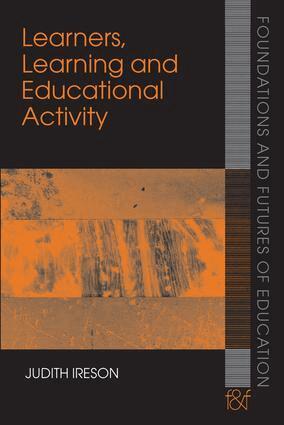
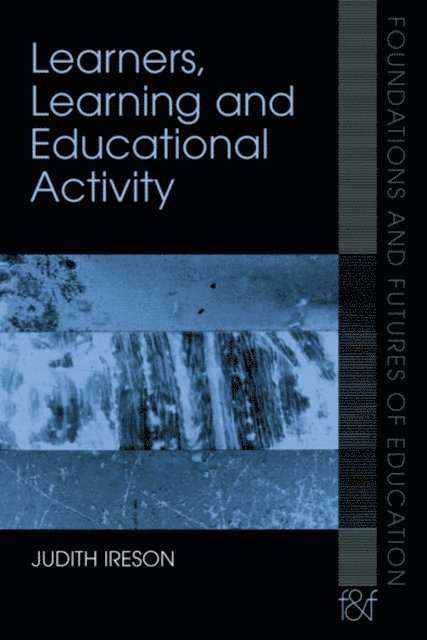
Learners, Learning and Educational Activity offers a new and creative approach to the psychology of learning. The central idea in the book is that learning in schools and other educational settings is best understood by paying attention to both individual learners and the educational contexts in which learning takes place.
Providing an accessible introduction to new ideas and recent developments in cognitive and socio-cultural perspectives on learning, the book reviews advances in selected topics that are especially relevant for teachers and other educators. These include:
learners’ conceptions of the nature of learning the development of advanced levels of learning and thinking the role of motivation and self-regulation in learning how learning and thinking relate to social and cultural contexts the ways in which these contexts influence interactions between teachers and learners.By illustrating connections between individual and social aspects of learning in educational settings in and out of school, the book encourages teachers, parents and other educators to think about learners and learning in new ways.
735 kr
Läs direkt efter köp
Learners, Learning and Educational Activity offers a new and creative approach to the psychology of learning. The central idea in the book is that learning in schools and other educational settings is best understood by paying attention to both individual learners and the educational contexts in which learning takes place.
Providing an accessible introduction to new ideas and recent developments in cognitive and socio-cultural perspectives on learning, the book reviews advances in selected topics that are especially relevant for teachers and other educators. These include:
learners’ conceptions of the nature of learning the development of advanced levels of learning and thinking the role of motivation and self-regulation in learning how learning and thinking relate to social and cultural contexts the ways in which these contexts influence interactions between teachers and learners.By illustrating connections between individual and social aspects of learning in educational settings in and out of school, the book encourages teachers, parents and other educators to think about learners and learning in new ways.
600 kr
Läs direkt efter köp
`With an anticipated audience of teachers and policymakers, this book is user-friendly, incorporating detailed research findings illustrated by graphs and tables. A summary is provided at the end of each chapter, offering an overview for the time-conscious wishing to skip through the engaging but largely illustrative statistics and quotations. However, a close reading has its rewards, as the extracts from teachers and students offer poignant insight into the enormous complexity and far-reaching implications of ability grouping′ - Cath Lambert, Educational Review
In this book, the authors provide an overview of ability grouping in education. They consider selective schooling and ability grouping within schools, such as streaming, banding setting and within-class grouping.
Selection by ability is a controversial issue, linked with conflicting ideological positions and reflected in strong differences of opinion about the merits of selective schooling. Educational systems under pressure to produce an educated workforce have led governments to look for ways of raising attainment, and grouping by ability is sometimes seen as an organizational solution.
Drawing on their own and others′ research in primary and secondary schools, the authors provide an accessible analysis of the issues and latest research on ability grouping; as well as the implications of ability grouping for teachers, managers in education and the wider community.
This book is for students and practitioners taking courses in school effectiveness, education management, as well as educational psychologists and local authority professionals.
Judy Ireson is Senior Lecturer in Psychology and Special Needs at the Institute of Education , University of London, and Susan Hallam is in the Department of Psychology & Special Needs.