Judith Russell – författare
Visar alla böcker från författaren Judith Russell. Handla med fri frakt och snabb leverans.
4 produkter
4 produkter
Inbunden, Engelska, 2003
2 393 kr
Skickas inom 3-6 vardagar
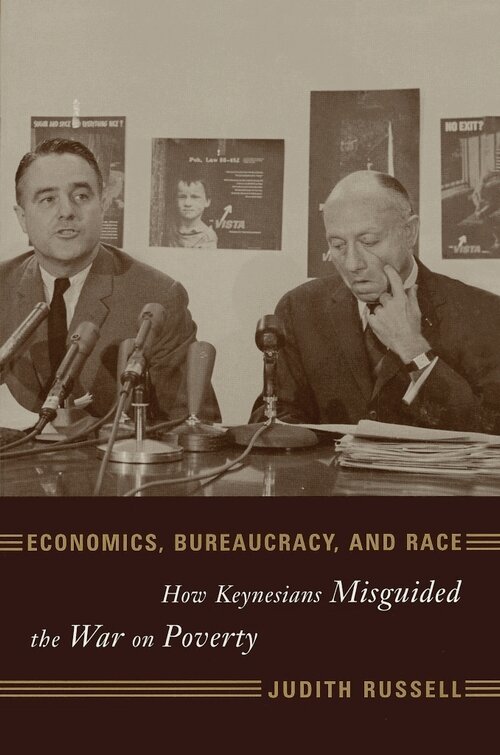
In this hard-hitting analysis of the war on poverty, Judith Russell charges that since FDR's New Deal, the U.S. government has introduced many public policies attempting to address poverty, yet it has failed to produce coherent programs to combat it. Focusing on the genesis of the Economic Opportunity Act of 1964, the core of Presidents Kennedy and Johnson's antipoverty crusade, Russell asserts that the war on poverty could have been an inclusive policy of government-sponsored jobs programs, but it failed to confront the deep-rooted problems endemic to American poverty. While the macroeconomic strategies devised by the Keynesian Council of Economic Advisors in 1963 and 1964 eventually rejected proposed jobs programs to combat unemployment, Russell argues that this was the wrong strategy for fighting the structural unemployment at the center of hard-core poverty. At the same time, liberal policymakers ignored direct calls for jobs programs emanating from black Americans who were disproportionately affected by structural unemployment. Without these programs at the center of the war on poverty, it was doomed to fail.Drawing on a plethora of archival sources, including the Kennedy and Johnson Presidential Libraries, and interviews and a ten-year correspondence with former Secretary of Labor W. Willard Wirtz, this forceful examination brings a fresh perspective to a key era in American economic policymaking and to contemporary policy debates.
Häftad, Engelska, 2003
653 kr
Skickas inom 3-6 vardagar
In this hard-hitting analysis of the war on poverty, Judith Russell charges that since FDR's New Deal, the U.S. government has introduced many public policies attempting to address poverty, yet it has failed to produce coherent programs to combat it. Focusing on the genesis of the Economic Opportunity Act of 1964, the core of Presidents Kennedy and Johnson's antipoverty crusade, Russell asserts that the war on poverty could have been an inclusive policy of government-sponsored jobs programs, but it failed to confront the deep-rooted problems endemic to American poverty. While the macroeconomic strategies devised by the Keynesian Council of Economic Advisors in 1963 and 1964 eventually rejected proposed jobs programs to combat unemployment, Russell argues that this was the wrong strategy for fighting the structural unemployment at the center of hard-core poverty. At the same time, liberal policymakers ignored direct calls for jobs programs emanating from black Americans who were disproportionately affected by structural unemployment. Without these programs at the center of the war on poverty, it was doomed to fail.Drawing on a plethora of archival sources, including the Kennedy and Johnson Presidential Libraries, and interviews and a ten-year correspondence with former Secretary of Labor W. Willard Wirtz, this forceful examination brings a fresh perspective to a key era in American economic policymaking and to contemporary policy debates.
Häftad, Engelska, 2014
207 kr
Skickas inom 5-8 vardagar
E-bok
Engelska, 2014129 kr
Läs direkt efter köp
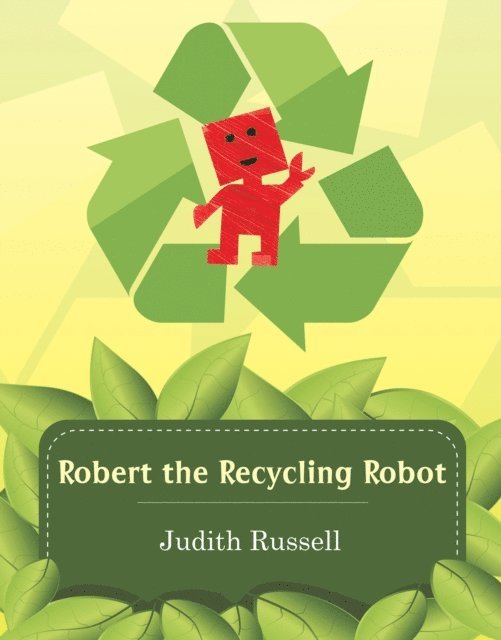
Robert the Recycling Robot came into fruition as the author was working on her masters degree in education during her Art and Visual Inquiry class. The major visual art project was to write and illustrate a childrens picture book addressing an issue of your choice from a variety of topics. The colorful red character Robert was created for children to follow as they read teaching them simple steps to recycle, utilizing the 3Rs (reuse, reduce, and recycle). One of the main criterias were to have original artwork and story line, consistent style, and effective and attractive presentation. During the class the author was exposed to the style of Eric Carles book that attracted some of her art techniques. During the authors research it was discovered it was literature for adults to read, but little for children that would allow them to visually see and understand the importance of recycling. The author hopes this whimsical character will make such an impression on children that they will want to commit and assist in saving the environment in their childhood, and not wait until they are adults to begin the recycling process. This is Volume I of future translation into diverse languages, because recycling is globally worldwide. Robert the Recycling Robot will be traveling into various areas to encourage the community worldwide, and students in public and private venues to recycle.