Judith Walzer Leavitt – författare
Visar alla böcker från författaren Judith Walzer Leavitt. Handla med fri frakt och snabb leverans.
13 produkter
13 produkter
Häftad, Engelska, 2017
400 kr
Skickas inom 5-8 vardagar
Based on personal accounts by birthing women and their medical attendants, Brought to Bed reveals how childbirth has changed from colonial times to the present.Judith Walzer Leavitt's study focuses on the traditional woman-centered home-birthing practices, their replacement by male doctors, and the movement from the home to the hospital. She explains that childbearing women and their physicians gradually changed birth places because they believed the increased medicalization would make giving birth safer and more comfortable. Ironically, because of infection, infant and maternal mortality did not immediately decline. She concludes that birthing women held considerable power in determining labor and delivery events as long as childbirth remained in the home. The move to the hospital in the twentieth century gave the medical profession the upper hand. Leavitt also discusses recent events in American obstetrics that illustrate how women have attempted to retrieve some of the traditional women--and family--centered aspects of childbirth.This 30th anniversary edition includes a new preface that discusses the writing of the history of childbirth over the past three decades.
E-bok
PDF, Engelska, 2016440 kr
Läs direkt efter köp
Based on personal accounts by birthing women and their medical attendants, Brought to Bed reveals how childbirth has changed from colonial times to the late twentieth century. Judith Walzer Leavitt''s classic study focuses on the traditional woman-centered home-birthing practices, their replacement by male doctors, and the movement from the home to the hospital. Leavitt narrates the shifting power of childbearing women and their physicians, as well as changes in infant and maternal mortality. She also discusses how women have attempted to retrieve some of the traditional women--and family--centered aspects of childbirth. This 30th anniversary edition includes a new preface that reviews the burgeoning writing on the history of childbirth since its publication.
E-bok
Engelska, 1988245 kr
Läs direkt efter köp
Based on personal accounts by birthing women and their medical attendants, Brought to Bed reveals how childbirth has changed from colonial times to the present.Judith Walzer Leavitt''s study focuses on the traditional woman-centered home-birthing practices, their replacement by male doctors, and the movement from the home to the hospital. She explains that childbearing women and their physicians gradually changed birth places because they believed the increased medicalization would make giving birth safer and more comfortable. Ironically, because of infection, infant and maternal mortality did not immediately decline. She concludes that birthing women held considerable power in determining labor and delivery events as long as childbirth remained in the home. The move to the hospital in the twentieth century gave the medical profession the upper hand. Leavitt also discusses recent events in American obstetrics that illustrate how women have attempted to retrieve some of the traditional women--and family--centered aspects of childbirth.
Häftad, Engelska, 1994
219 kr
Skickas inom 5-8 vardagar
Based on personal accounts by birthing women and their medical attendants, Brought to Bed reveals how childbirth has changed from colonial times to the present.Judith Walzer Leavitt's study focuses on the traditional woman-centered home-birthing practices, their replacement by male doctors, and the movement from the home to the hospital. She explains that childbearing women and their physicians gradually changed birth places because they believed the increased medicalization would make giving birth safer and more comfortable. Ironically, because of infection, infant and maternal mortality did not immediately decline. She concludes that birthing women held considerable power in determining labor and delivery events as long as childbirth remained in the home. The move to the hospital in the twentieth century gave the medical profession the upper hand. Leavitt also discusses recent events in American obstetrics that illustrate how women have attempted to retrieve some of the traditional women--and family--centered aspects of childbirth.
E-bok
PDF, Engelska, 1988275 kr
Läs direkt efter köp
Based on personal accounts by birthing women and their medical attendants, Brought to Bed reveals how childbirth has changed from colonial times to the present. Judith Walzer Leavitt''s study focuses on the traditional woman-centered home-birthing practices, their replacement by male doctors, and the movement from the home to the hospital. She explains that childbearing women and their physicians gradually changed birth places because they believed the increased medicalization would make giving birth safer and more comfortable. Ironically, because of infection, infant and maternal mortality did not immediately decline. She concludes that birthing women held considerable power in determining labor and delivery events as long as childbirth remained in the home. The move to the hospital in the twentieth century gave the medical profession the upper hand. Leavitt also discusses recent events in American obstetrics that illustrate how women have attempted to retrieve some of the traditional women--and family--centered aspects of childbirth.
Häftad, Engelska, 1999
336 kr
Skickas inom 10-15 vardagar
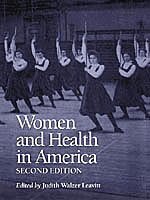
In this second edition, Judith Walzer Leavitt has collected 35 articles representing important scholarship in this once-neglected field. Organized chronologically and then by topic, this volume covers studies of women and health in the colonial and revolutionary periods and the 19th century through the Civil War. The remainder of the book concentrates on the late 19th and 20th centuries and addresses such controversial issues as body image and physical fitness, sexuality, fertility, abortion and birth control, childbirth and motherhood, mental illness, women's health care providers (midwives, nurses, physicians) and health reform and public health.
Häftad, Engelska, 1997
364 kr
Skickas
E-bok
Engelska, 2014278 kr
Läs direkt efter köp
She was an Irish immigrant cook. Between 1900 and 1907, she infected twenty-two New Yorkers with typhoid fever through her puddings and cakes; one of them died. Tracked down through epidemiological detective work, she was finally apprehended as she hid behind a barricade of trashcans. To protect the public''s health, authorities isolated her on Manhattan''s North Brother Island, where she died some thirty years later.This book tells the remarkable story of Mary Mallon--the real Typhoid Mary. Combining social history with biography, historian Judith Leavitt re-creates early-twentieth-century New York City, a world of strict class divisions and prejudice against immigrants and women. Leavitt engages the reader with the excitement of the early days of microbiology and brings to life the conflicting perspectives of journalists, public health officials, the law, and Mary Mallon herself.Leavitt''s readable account illuminates dilemmas that continue to haunt us. To what degree are we willing to sacrifice individual liberty to protect the public''s health? How far should we go in the age of AIDS, drug-resistant tuberculosis, and other diseases? For anyone who is concerned about the threats and quandaries posed by new epidemics, Typhoid Mary is a vivid reminder of the human side of disease and disease control.
Häftad, Engelska, 2010
451 kr
Skickas inom 10-15 vardagar
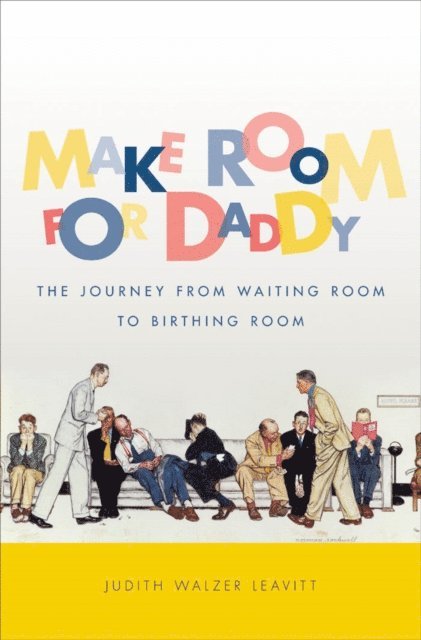
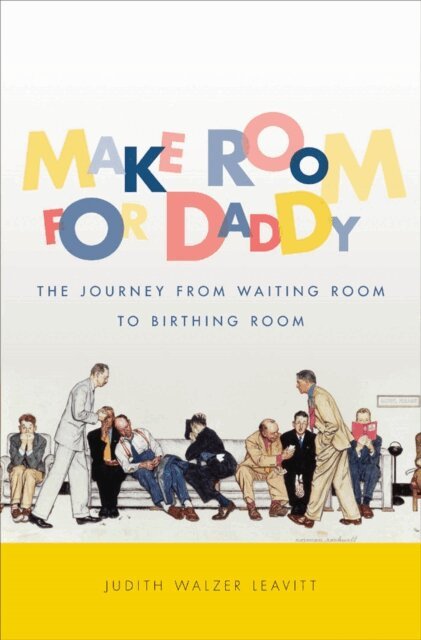
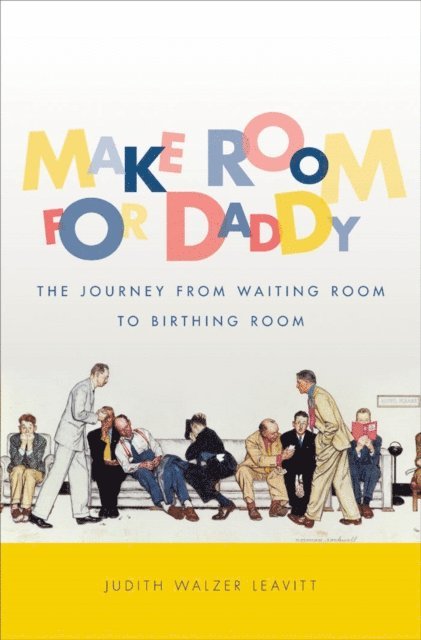
Using fathers' first-hand accounts from letters, journals, and personal interviews along with hospital records and medical literature, Judith Walzer Leavitt offers a new perspective on the changing role of expectant fathers from the 1940s to the 1980s. She shows how, as men moved first from the hospital waiting room to the labour room in the 1960s, and then on to the delivery and birthing rooms in the 1970s and 1980s, they became progressively more involved in the birth experience and their influence over events expanded. With careful attention to power and privilege, Leavitt charts not only the increasing involvement of fathers, but also medical inequalities, the impact of race and class, and the evolution of hospital policies. Illustrated with more than seventy images from TV, films, and magazines, this book provides important new insights into childbirth in modern America, even as it reminds readers of their own experiences.
E-bok
Engelska, 2009433 kr
Läs direkt efter köp
Using fathers'' first-hand accounts from letters, journals, and personal interviews along with hospital records and medical literature, Judith Walzer Leavitt offers a new perspective on the changing role of expectant fathers from the 1940s to the 1980s. She shows how, as men moved first from the hospital waiting room to the labor room in the 1960s, and then on to the delivery and birthing rooms in the 1970s and 1980s, they became progressively more involved in the birth experience and their influence over events expanded. With careful attention to power and privilege, Leavitt charts not only the increasing involvement of fathers, but also medical inequalities, the impact of race and class, and the evolution of hospital policies. Illustrated with more than seventy images from TV, films, and magazines, this book provides important new insights into childbirth in modern America, even as it reminds readers of their own experiences.
E-bok
PDF, Engelska, 20091 039 kr
Läs direkt efter köp
Using fathers'' first-hand accounts from letters, journals, and personal interviews along with hospital records and medical literature, Judith Walzer Leavitt offers a new perspective on the changing role of expectant fathers from the 1940s to the 1980s. She shows how, as men moved first from the hospital waiting room to the labor room in the 1960s, and then on to the delivery and birthing rooms in the 1970s and 1980s, they became progressively more involved in the birth experience and their influence over events expanded. With careful attention to power and privilege, Leavitt charts not only the increasing involvement of fathers, but also medical inequalities, the impact of race and class, and the evolution of hospital policies. Illustrated with more than seventy images from TV, films, and magazines, this book provides important new insights into childbirth in modern America, even as it reminds readers of their own experiences.
E-bok
PDF, Engelska, 2009433 kr
Läs direkt efter köp
Using fathers'' first-hand accounts from letters, journals, and personal interviews along with hospital records and medical literature, Judith Walzer Leavitt offers a new perspective on the changing role of expectant fathers from the 1940s to the 1980s. She shows how, as men moved first from the hospital waiting room to the labor room in the 1960s, and then on to the delivery and birthing rooms in the 1970s and 1980s, they became progressively more involved in the birth experience and their influence over events expanded. With careful attention to power and privilege, Leavitt charts not only the increasing involvement of fathers, but also medical inequalities, the impact of race and class, and the evolution of hospital policies. Illustrated with more than seventy images from TV, films, and magazines, this book provides important new insights into childbirth in modern America, even as it reminds readers of their own experiences.
E-bok
PDF, Engelska, 20091 299 kr
Läs direkt efter köp
Using fathers'' first-hand accounts from letters, journals, and personal interviews along with hospital records and medical literature, Judith Walzer Leavitt offers a new perspective on the changing role of expectant fathers from the 1940s to the 1980s. She shows how, as men moved first from the hospital waiting room to the labor room in the 1960s, and then on to the delivery and birthing rooms in the 1970s and 1980s, they became progressively more involved in the birth experience and their influence over events expanded. With careful attention to power and privilege, Leavitt charts not only the increasing involvement of fathers, but also medical inequalities, the impact of race and class, and the evolution of hospital policies. Illustrated with more than seventy images from TV, films, and magazines, this book provides important new insights into childbirth in modern America, even as it reminds readers of their own experiences.