Julian G. Elliott – författare
Visar alla böcker från författaren Julian G. Elliott. Handla med fri frakt och snabb leverans.
7 produkter
7 produkter
Häftad, Engelska, 2024
342 kr
Skickas inom 7-10 vardagar
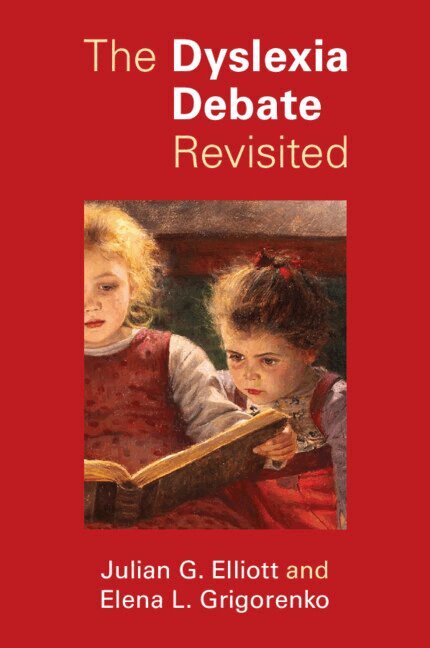
In every country, and in every language, a significant proportion of children struggle to master the skill of reading. In 2014, The Dyslexia Debate examined the problematic interpretation of the term 'dyslexia' as well as questioning its efficacy as a diagnosis. Ten years on, The Dyslexia Debate Revisited reflects on the changes in dyslexia assessment and treatment over the last decade, including the introduction of dyslexia legislation in many US states. Addressing the critical responses to their original challenge of the dyslexia construct, Julian G. Elliott and Elena L. Grigorenko also consider why, despite scientific critiques, existing dyslexia conceptions and assessment practices continue to be highly attractive to many professionals, individuals, and families. Based on current scientific knowledge, the authors strive to promote a shared understanding of reading difficulties and emphasize the importance of providing timely and appropriate intervention and support to anyone who faces difficulties with learning to read.
Del 6 - Advances in Cognition and Educational Practice
Dynamic Assessment
Prevailing Models and Applications
Inbunden, Engelska, 2000
1 900 kr
Skickas inom 5-8 vardagar
This review of advances in cognition and educational practice examines conceptual issues in research in intelligence.
E-bok
PDF, Engelska, 2024401 kr
Läs direkt efter köp
E-bok
Engelska, 2024401 kr
Läs direkt efter köp
E-bok
PDF, Engelska, 2014490 kr
Läs direkt efter köp
The Dyslexia Debate examines how we use the term ''dyslexia'' and questions its efficacy as a diagnosis. While many believe that a diagnosis of dyslexia will shed light on a reader''s struggles and help identify the best form of intervention, Julian G. Elliott and Elena L. Grigorenko show that it adds little value. In fact, our problematic interpretation of the term could prove to be a major disservice to many children with difficulties learning to read. This book outlines in detail the diverse ways in which reading problems have been conceptualized and operationalized. Elliott and Grigorenko consider the latest research in cognitive science, genetics, and neuroscience, and the limitations of these fields in terms of professional action. They then provide a more helpful, scientifically rigorous way to describe the various types of reading difficulties and discuss empirically supported forms of intervention.
E-bok
Engelska, 2014490 kr
Läs direkt efter köp
The Dyslexia Debate examines how we use the term ''dyslexia'' and questions its efficacy as a diagnosis. While many believe that a diagnosis of dyslexia will shed light on a reader''s struggles and help identify the best form of intervention, Julian G. Elliott and Elena L. Grigorenko show that it adds little value. In fact, our problematic interpretation of the term could prove to be a major disservice to many children with difficulties learning to read. This book outlines in detail the diverse ways in which reading problems have been conceptualized and operationalized. Elliott and Grigorenko consider the latest research in cognitive science, genetics, and neuroscience, and the limitations of these fields in terms of professional action. They then provide a more helpful, scientifically rigorous way to describe the various types of reading difficulties and discuss empirically supported forms of intervention.
Inbunden, Engelska, 2024
1 240 kr
Skickas inom 7-10 vardagar
In every country, and in every language, a significant proportion of children struggle to master the skill of reading. In 2014, The Dyslexia Debate examined the problematic interpretation of the term 'dyslexia' as well as questioning its efficacy as a diagnosis. Ten years on, The Dyslexia Debate Revisited reflects on the changes in dyslexia assessment and treatment over the last decade, including the introduction of dyslexia legislation in many US states. Addressing the critical responses to their original challenge of the dyslexia construct, Julian G. Elliott and Elena L. Grigorenko also consider why, despite scientific critiques, existing dyslexia conceptions and assessment practices continue to be highly attractive to many professionals, individuals, and families. Based on current scientific knowledge, the authors strive to promote a shared understanding of reading difficulties and emphasize the importance of providing timely and appropriate intervention and support to anyone who faces difficulties with learning to read.