Justo Miranda – författare
Visar alla böcker från författaren Justo Miranda. Handla med fri frakt och snabb leverans.
6 produkter
6 produkter
Inbunden, Engelska, 2013
230 kr
Skickas
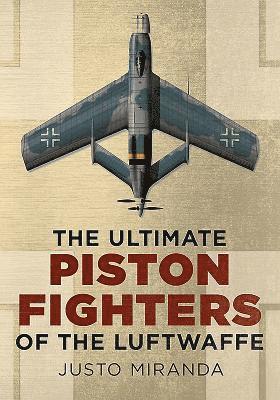
The development of aviation engines in Germany was revolutionary during closing stages of the Second World War. In 1945, the Daimler Benz, Jumo and BMW engines in service, equipped with power boosting systems, generated 2,000 hp. There were prototypes that could generate 3,000 hp and BMW/Argus projects could reach 4,000 hp. To benefit from their extreme performances, Blohm und Voss, Daimler Benz, Dornier, Focke Wulf, Heinkel, Henschel, Messerschmitt and Skoda designed an impressive series of fighters that never left the drawing board. The reason was the decision taken by the Oberkommando der Luftwaffe to mass manufacture the iconic and revolutionary Messerschmitt Me 262 jet fighter. This lost generation of projects were quickly forgotten and after years of research have been recovered and presented in The Ultimate Piston Fighters of the Luftwaffe. Profusely illustrated with technical drawings and fascinating data and information on the Luftwaffe's most radical fighter projects, The Ultimate Piston Fighters of the Luftwaffe chronicles these revolutionary designs that might have changed the course of the war.A fascinating book for the military historian, modellers and those interested in aviation, this shows how advanced German scientists were towards the end of the Second World War and how the beloved Spitfire and Mustang would have been instantly superseded by radical Nazi fighters.
Inbunden, Engelska, 2014
262 kr
Skickas
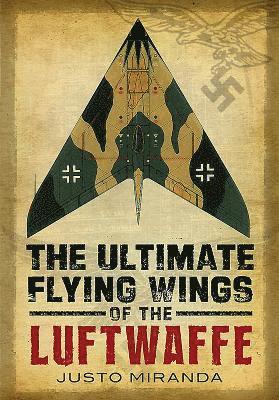
When the Allies crossed the Rhine, Hitler decreed to go down fighting to the last man. A strange triangular bomber launched the 'Nicht loschbares Feuer' over London, destroying the city. Later, a black boomerang of sixty metres dropped two tons of anthrax over Washington and New York, making them inhabitable for fifty years. Thankfully, the inextinguishable firebomb was a figment of H. G. Wells' imagination. However, the construction of the secret flying wings had commenced at the start of 1945. Indeed, one fighter took to the skies on its only test flight. If these radical fighters of the Luftwaffe had been pressed into service earlier, they may well have changed the outcome of the Second World War. Profusely illustrated with technical drawings and fascinating data and information on the Luftwaffe's most radical fighter and bomber projects, The Ultimate Flying Wings of the Luftwaffe chronicles these revolutionary designs. A fascinating book for the military historian, modellers and those interested in aviation, this shows how close Hitler may have come in winning the war.
Inbunden, Engelska, 2019
304 kr
Skickas
When the Nazis started to threaten the world with their efficient machine of propaganda, the main concern of European governments was the overwhelming reaction of panic that the expected bombing of the Luftwaffe might cause within the civil population. During the Munich Agreement in 1938, the democracies were defended by old biplanes and a bunch of modern fighters: 50 Hurricanes, 20 Morane-405 and 5 Fokker D.XXI. France and Great Britain took up the production of USA airplanes and cancelled exports to small countries, which were forced to design and build their own PANIC FIGHTERS with the intelligence and skill that desperation provides. When nothing seemed able to contain the German advance, France, Great Britain and the USSR developed several programs of emergency fighters, as did Australia, to face the Japanese expansion. At the time the course of events switched, it was the Axis powers that had to create their own PANIC FIGHTERS, some of them suicidal. The present book includes several last resource designs of fighters that are practically unknown and that were developed in times of tribulation by Australia, Belgium, Bulgaria, Canada, Czechoslovakia, Denmark, Estonia, Finland, France, Germany, Great Britain, Hungary, Japan, Yugoslavia, Latvia, Netherland, Poland, Romania, Sweden and Switzerland.
Inbunden, Engelska, 2021
313 kr
Skickas
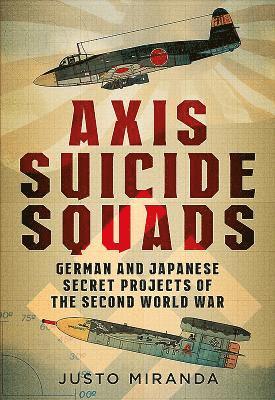
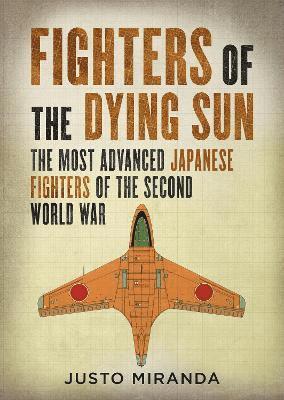
The first B-29 flew over Tokyo on 1 November 1944. It was a photographic reconnaissance aircraft ironically named ‘Tokyo Rose’. The Ki.44 fighters of the 47th Sentai took off to intercept it but as it turned out the Superfortress flew at such an altitude and speed that they could not reach it. The Ki-44-II-Otsu had been specifically designed for this type of interception and could reach the astonishing rate of climb of 5,000 m in four minutes; however it was not good enough. During the following ten months, a devastating bombing campaign of thousands of Superfortress destroyed 67 Japanese cities and half of Tokyo. The cultural shock and the political consequences were huge, when it was realised that the Japanese industry was not able to produce the specially heat and stress-resistant metallic alloys that were required to manufacture the turbo superchargers needed by the fighters in charge of defending the Japanese mainland. They lacked the essential chromium and molybdenum metals to harden the steel. This fact thwarted the manufacturing of numerous advanced projects of both conventional fighters and those derived from the transfer of German technology fitted with turbojets and rocket engines. They are thoroughly described in this book.
Inbunden, Engelska, 2026
313 kr
Skickas
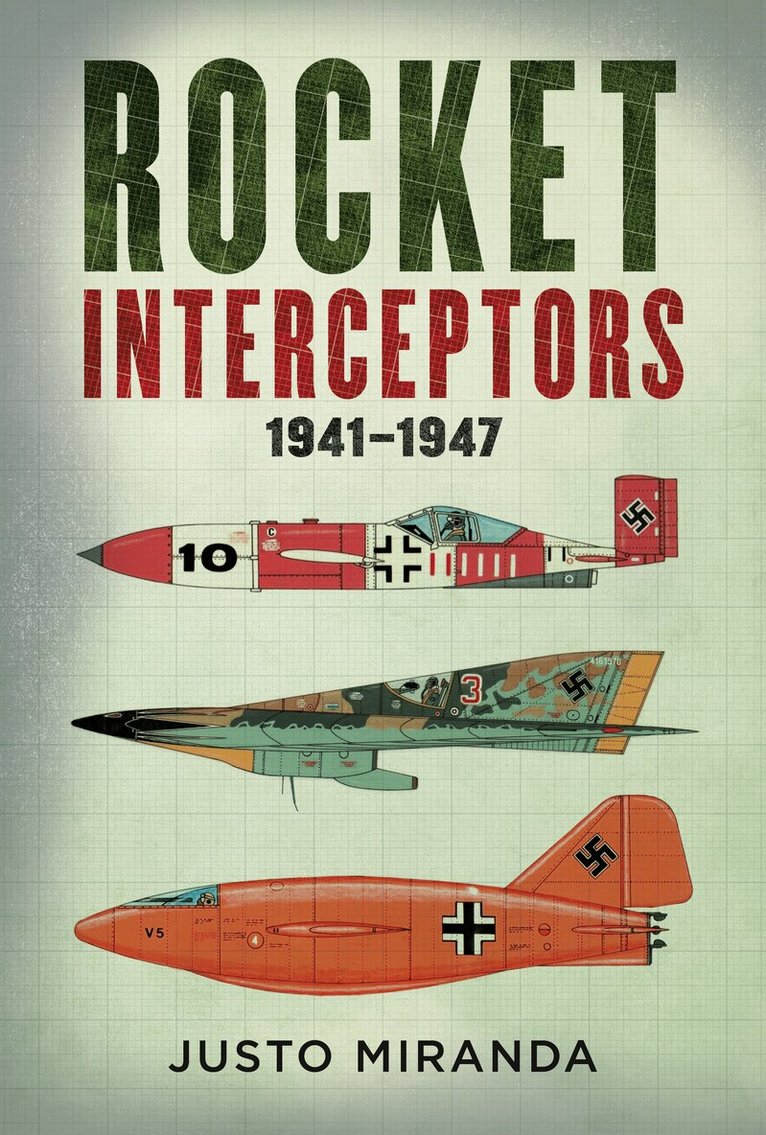
During its short life, the rocket interceptor, a concept that reached maturity towards the end of the Second World War, attracted the attention of top scientists, designers and aeronautical engineers in Germany, the USSR, the United States and Japan. It was universally agreed that an interceptor capable of flying 300 mph faster than any other aircraft would give the wielding power untouchable aerial superiority. However, this new technology was unable to adapt to the realities of war.The complexity of the propulsion system and the need to develop new aerodynamic concepts were challenges too great for the aeronautical industries of the major powers at the time, which specialized in the mass construction of piston fighters. Nor were fighter pilots able to adapt to the high-G combat conditions that came with achieving speeds of nearly 900 mph; it was simply not possible for them to aim and fire.In 280 immaculate technical drawings, each set within its historical context and with full performance specifications, Rocket Interceptors 1941–1947 presents 125 project, prototype and combat rocket-powered aircraft developed by Germany, the United States, the USSR and Japan in the 1940s, though initial development for some can be traced as far back as the 1920s. This is the last word on a technology that, had it been properly harnessed, might have changed the course of the Second World War.
Inbunden, Engelska, 2023
415 kr
Tillfälligt slut
During the five years of the Second World War, the power of engines and speed of aircraft increased as much as it did during twenty years of peacetime. Conventional aircraft and engines reached the limits marked in the original design and surpassed them, very fast. The basis for this huge achievement was exotic fuels, short-lived artificially overpowered engines, propellers with four, five, and even six blades, and thinner wings with special sections of laminar flow. Then the faster Allied fighters began to be attacked by a demon that lived in the air: scientists called it compressibility buffeting and different type of aircraft suffered it at different speeds and manifested itself in different ways. The American and British designers never understood the true causes behind the aerodynamic phenomenon. They were forced to adopt brute force solutions by increasing engine power on the turbojet powered fighters, leaving in the background the research on the last projects of fighters, driven by monster piston engines. The purpose of this book is to present them to the public, for its notable interest.