J.V. Narlikar – författare
Visar alla böcker från författaren J.V. Narlikar. Handla med fri frakt och snabb leverans.
6 produkter
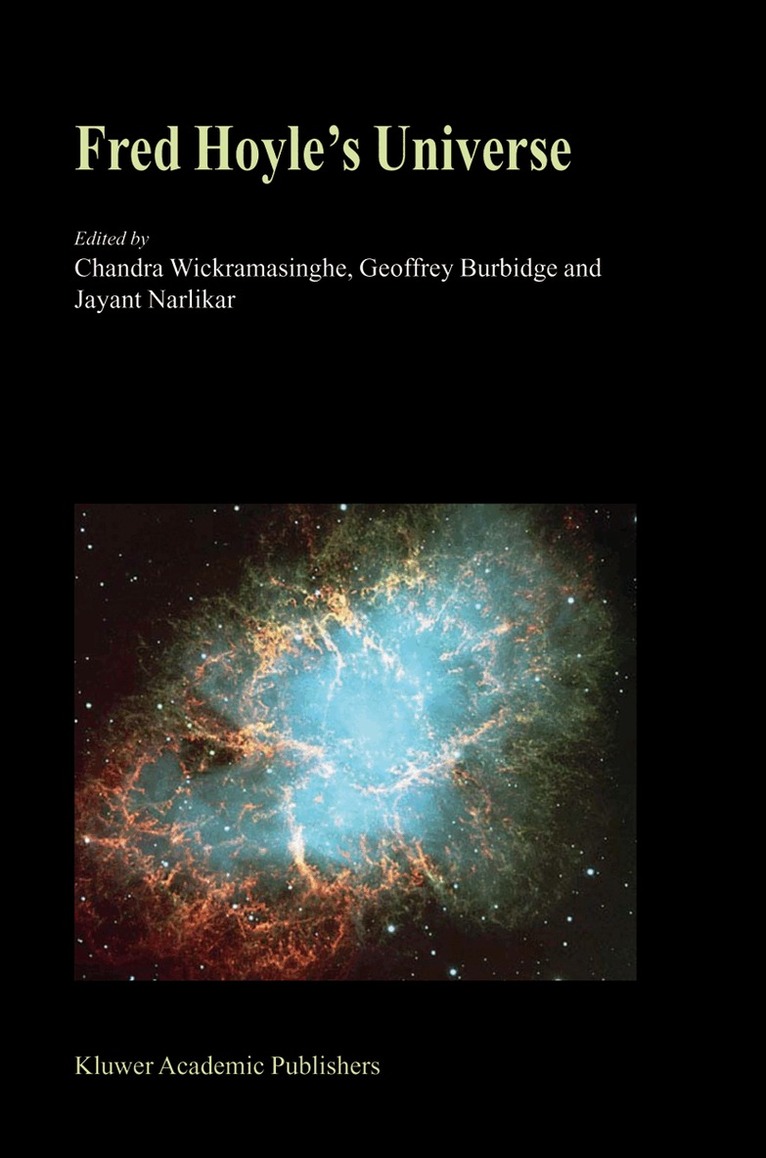
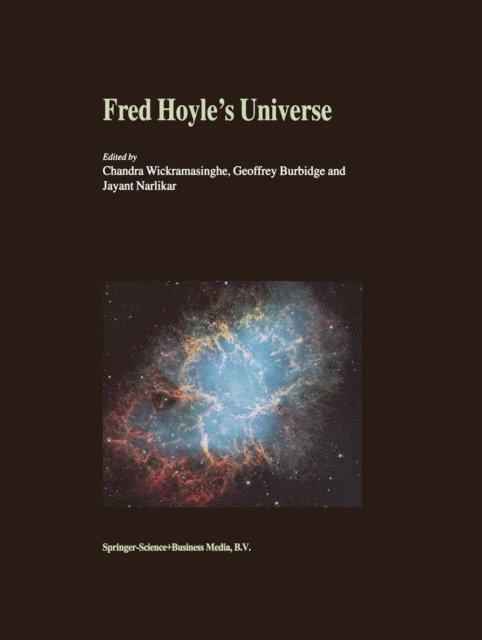
Fred Hoyle’s Universe
Proceedings of a Conference Celebrating Fred Hoyle’s Extraordinary Contributions to Science 25–26 June 2002 Cardiff University, United Kingdom
Av N.C. Wickramasinghe, Geoffrey Burbidge m. fl.
Inbunden, 2003
1641 kr
Lägg i varukorg
This volume contains papers presented at an international conference to celebrate Fred Hoyle's monumental contributions to astronomy, astrophysics and astrobiology and more generally to humanity and culture. The contributed articles highlight the important aspects of his scientific life and show …
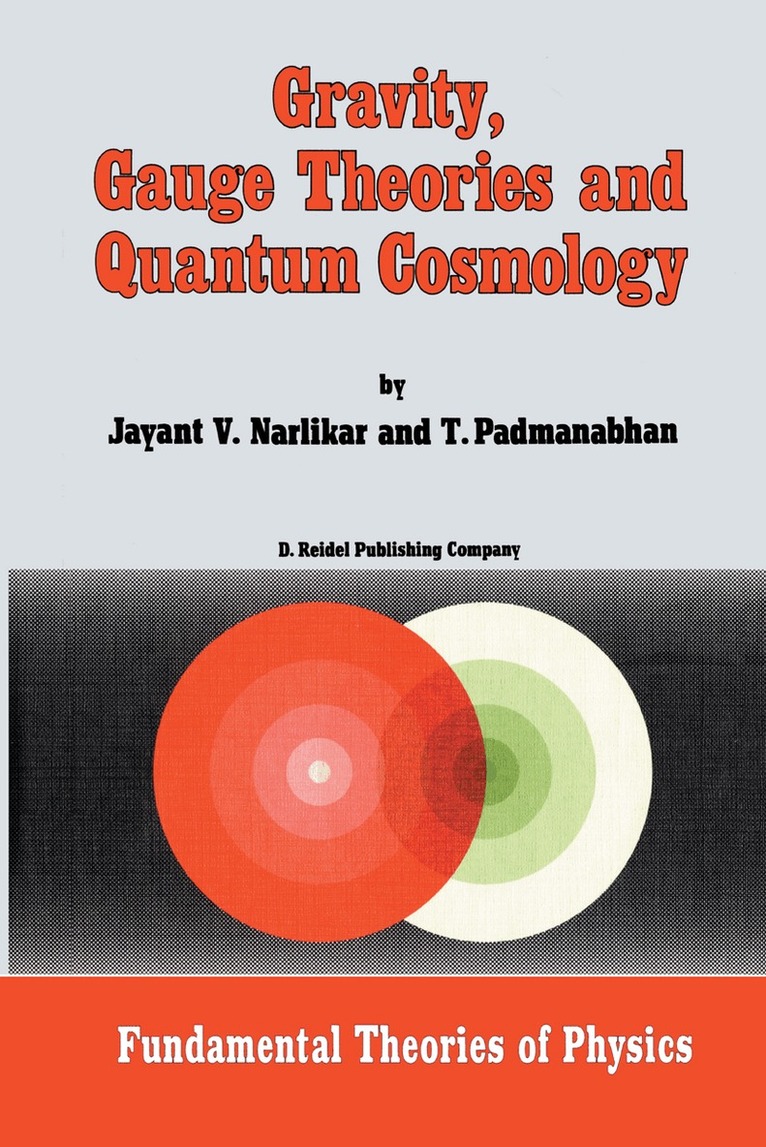
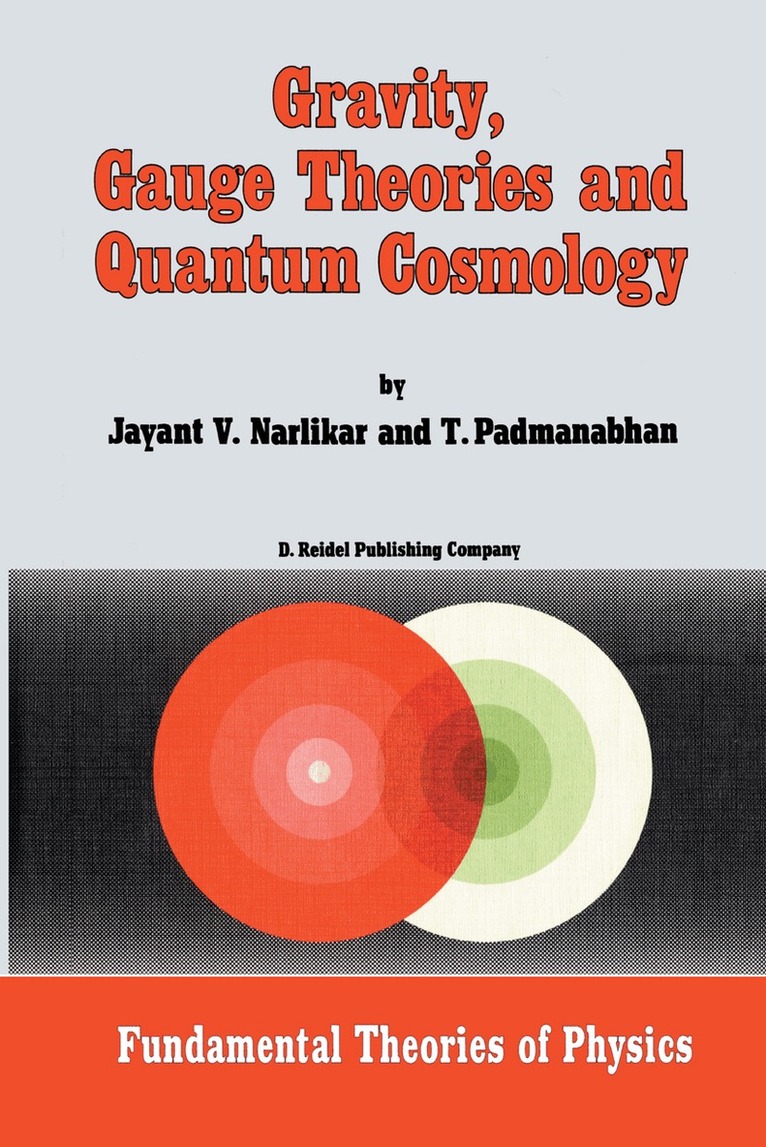
Gravity, Gauge Theories and Quantum Cosmology
Av J.V. Narlikar, T. Padmanabhan
Inbunden, 1986
2185 kr
Lägg i varukorg
For several decades since its inception, Einstein's general theory of relativity stood somewhat aloof from the rest of physics. Paradoxically, the attributes which normally boost a physical theory - namely, its perfection as a theoreti cal framework and the extraordinary intellectual achievement …
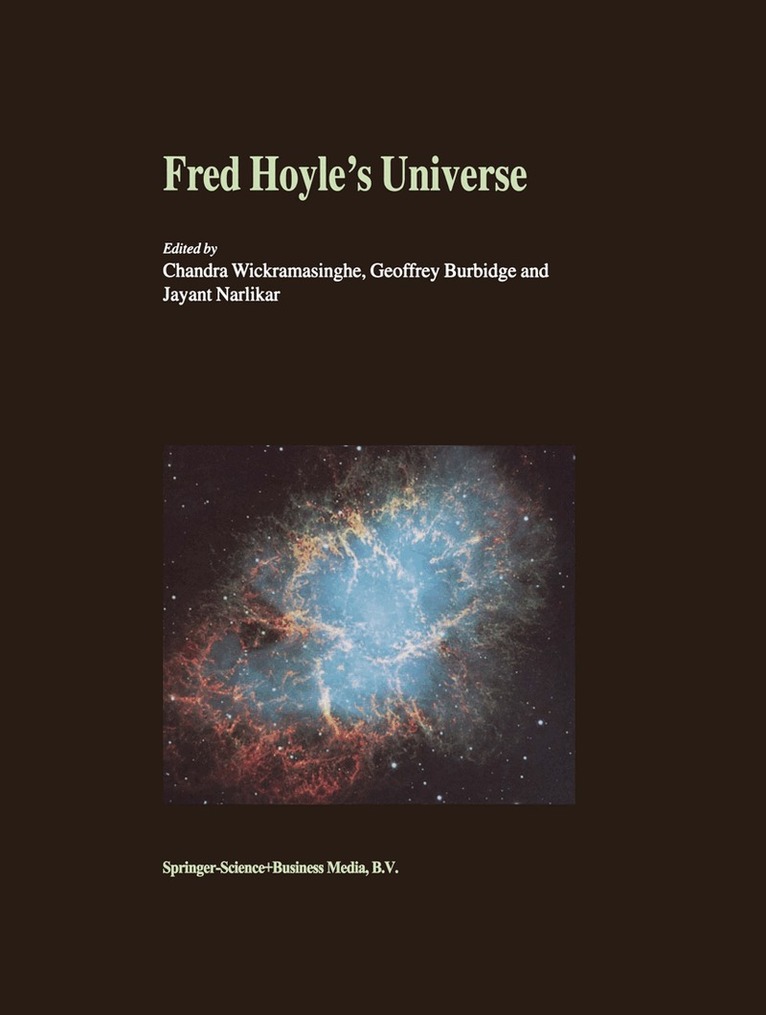
Fred Hoyle’s Universe
Proceedings of a Conference Celebrating Fred Hoyle’s Extraordinary Contributions to Science 25–26 June 2002 Cardiff University, United Kingdom
Av N.C. Wickramasinghe, Geoffrey Burbidge m. fl.
Häftad, 2010
1641 kr
Lägg i varukorg
This volume contains papers presented at an international conference to celebrate Fred Hoyle's monumental contributions to astronomy, astrophysics and astrobiology and more generally to humanity and culture. The contributed articles highlight the important aspects of his scientific life and show …
Gravity, Gauge Theories and Quantum Cosmology
Av T. Padmanabhan, J.V. Narlikar
E-bok, 2012
2925 kr
Lägg i varukorg
For several decades since its inception, Einstein''s general theory of relativity stood somewhat aloof from the rest of physics. Paradoxically, the attributes which normally boost a physical theory - namely, its perfection as a theoreti cal framework and the extraordinary intellectual achievement …
Gravity, Gauge Theories and Quantum Cosmology
Av J.V. Narlikar, T. Padmanabhan m. fl.
Häftad, 2011
2185 kr
Lägg i varukorg
For several decades since its inception, Einstein's general theory of relativity stood somewhat aloof from the rest of physics. Paradoxically, the attributes which normally boost a physical theory - namely, its perfection as a theoreti cal framework and the extraordinary intellectual achievement …
Fred Hoyle's Universe
Proceedings of a Conference Celebrating Fred Hoyle’s Extraordinary Contributions to Science 25–26 June 2002 Cardiff University, United Kingdom
Av J.V. Narlikar, Geoffrey Burbidge m. fl.
E-bok, 2013
2111 kr
Lägg i varukorg
This volume contains papers presented at an international conference to celebrate Fred Hoyle''s monumental contributions to astronomy, astrophysics and astrobiology and more generally to humanity and culture. The contributed articles highlight the important aspects of his scientific life and show …