J.W. Pickersgill – författare
474 kr
Läs direkt efter köp
382 kr
Skickas inom 5-8 vardagar
551 kr
Läs direkt efter köp
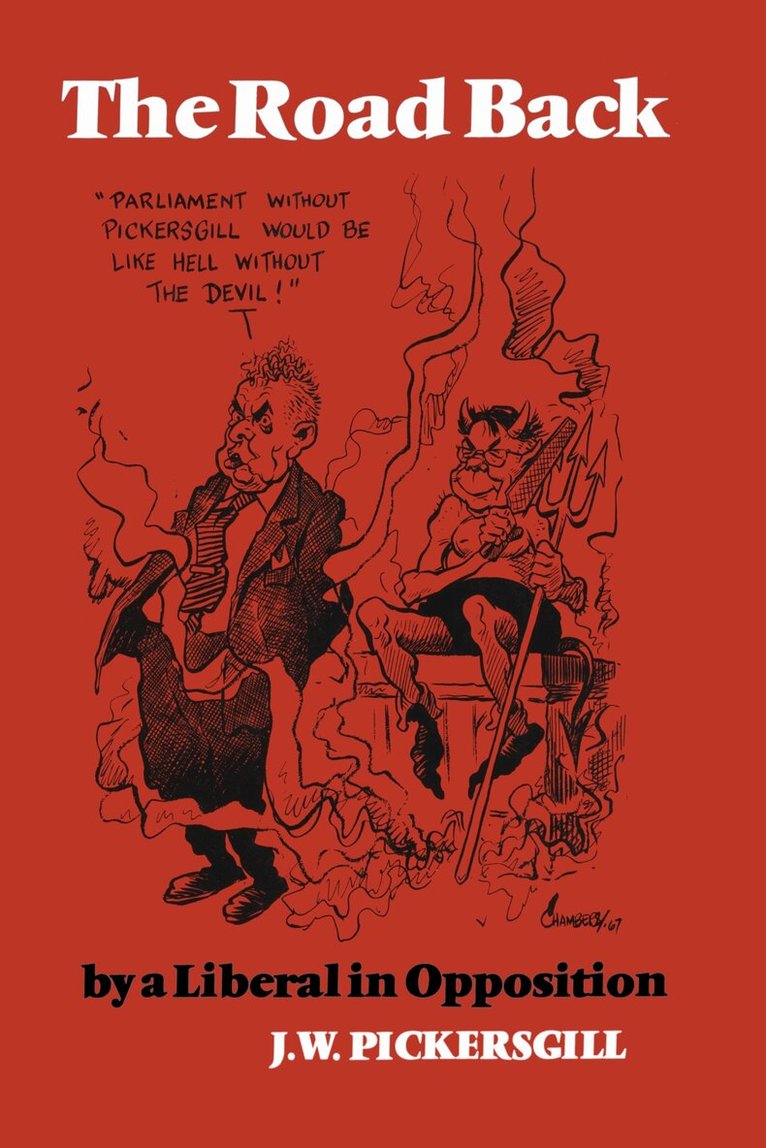
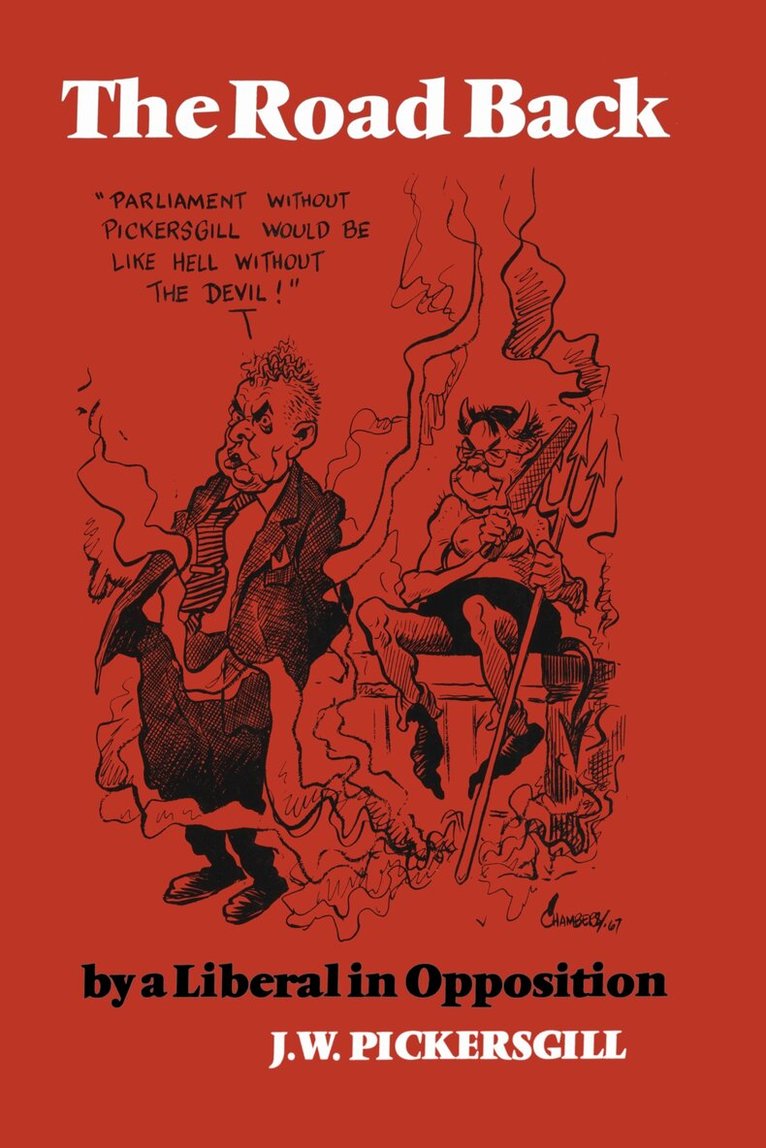
Louis St. Laurent was appointed to the Cabinet in 1941 and seven years later succeeded Mackenzie King as Leader of the Liberal party and as Prime Minister. J.W. Pickersgill was then head of the Prime Minister''s Office. ''In a sense,'' he writes, ''King handed me on to St. Laurent with the rest of the furniture.''
Thus began the relationship which is the theme of this book. It portrays St. Laurent''s leadership from his initial appointment to his retirement after the 1957 election, and it describes Mr. Pickersgill''s own career in the East Block and later as a Member of Parliament and Minister. It relates the changing parliamentary and electoral fortunes of the Liberal party (a long account of what went wrong in the pipeline debate is included), and recalls the legislative achievements of the time, along with many of the considerations behind them. All in all, it offers the reader a history of these years and a frank account of Canadian political life that cannot fail to interest and inform.
Mr. Pickersgill found that he and St. Laurent shared a sense of values about Canada, even though they came from vastly different backgrounds. He also found him an admirable person to work for and with. Clear-sighted, and with a straightforward dignity and integrity, Louis St. Laurent never sought power; but when it came to him, he exercised it with such skill that, for once, under his leadership, Canada seemed an easy country to govern.
Only one so closely associated with St. Laurent could have written a book so fascinating and full of insight.
730 kr
Läs direkt efter köp
In this volume, William Lyon Mackenzie King, Prime Minister of Canada for 25 years, tells in his own words of his activities in public life and the events of the momentous years from 1939 to 1944, as recorded in his personal diary. Mr. J.W. Pickersgill has provided a narrative framework, so that the reader is absorbed at once in the procession of great events, important people, and significant issues. In the course of his official duties, Mr. Pickersgill was involved daily with the Prime Minister''s activities, and his experience has been invaluable in drawing together material from the diary from this period, none of which has hitherto been made public.
The story begins with the declaration of war by Canada, and at once we meet the main themes of the book and the leading preoccupations of Canadian public men in the war years; Canada''s relations with the Commonwealth, the nature of her participation in the total Allied war effort, conscription, and national government. Then come chapters describing the planning of the devices involving Canada by which heavy initial military reverses were countered: the Air Training Plan, the Ogdensburg Agreement, the Hyde Park Declaration, the destroyer-bases exchange, Lend-Lease, Mackenzie King visits Roosevelt in Washington, goes to England to visit the Canadian Army and to confer with Churchill and other war leaders; Churchill comes to Ottawa and addresses Parliament; the three leaders come together on the heights of Quebec; the Commonwealth Prime Ministers debate at No. 10 Downing Street -- the diary reports minutely and with many fascinating details of formal and informal discussions.
These are the mighty occasions, but the book is also amazingly revealing for both amateur and specialist students of government about the day-to-day conduct of the Canadian Cabinet and Government as its members strove with the problems of office through the dark days of war. The many personalities -- Lapointe and Rogers, Ralston and Howe, Godbout and St. Laurent, Hepburn and Meighen, and a host of other -- crowd the pages in vivid life as Mr. King sets down his record of his relations with them. His moods are many; jovial or lonely, sharply critical or affectionate, self-assured or self-assuring. Of all the personalities in these engrossing pages, that of Mr. King remains probably the most provocative and perplexing, and this record will provide ample stimulus for further discussion of a remarkable career.
This unusual book is to be distinguished from the official biography begun by R. MacGregor Dawson, and being continued by Blair Neatby. Its special importance lies in the fact that it makes accessible large uninterrupted sections of the private diary. Mackenzie King''s unrevised daily record of events is of such great importance and historical validity, that the decision has been made to publish not one but three volumes, of which this is the first.
730 kr
Läs direkt efter köp
Volume I of the Mackenzie King Record carried the story of Mackenzie King as wartime Prime Minister of Canada down to mid-1944, a time which might be regarded as almost the peak of his career. When Volume II begins he has just returned from important London meetings of the Commonwealth Prime Ministers during which he had addressed the combined Houses of Parliament at Westminster. It seemed that the great problems of the war had now been met, and the chief preoccupations of his government while the invasion of the Continent was first awaited and then watched were with preparations for the post-war period and the extent of Canada''s participation in the war against Japan. Victory late in 1944 or early in 1945 seemed certain. Within six months of his return from London, however, the task of maintaining Canada''s contribution to the war effort in Europe had created the gravest political crisis of the war and raised an issue of profound significance for Canadian unity then and in years to come.
The crisis was the unexpected request for provision of reinforcements for the invading Canadian army, and the ensuing debate about whether men for general service could be found in sufficient numbers by the volunteer system or whether a measure of conscription would have to be introduced. A drama then unfolded which can be observed with fascination in these pages as the cabinet discuss the issues, Colonel Ralston is replaced as Minister of National Defence by General McNaughton, the appeal for volunteers is not a success, and Mackenzie King finally makes his startling decision to pass the order-in-council which drafted 16,000 men for general service. The story is given in great detail as recorded in the Prime Minister''s diary, and it gives an amazing insight into the workings of a cabinet and a government attempting to deal with a momentous issue and to resolve clashes of opinion of great significance for the stability of the country. The volume also contains a full account of such events as the Grey North by-election and the general election of 1945, and includes both the ominous arrival of atomic power and the hopes for peace represented in the San Francisco Conference.
The authors have let the diary tell the story in greatest part, and have provided connecting passages for any necessary background. This volume, like volume I, has had the benefit of Mr. Pickersgill''s special knowledge of the events gained in his service at this time in the Prime Minister''s office. The volume will be of the highest interest for both amateur and specialist students of Canadian government and history.
The Record, to be completed in one more volume taking the story to Mackenzie King''s retirement, is to be distinguished from the official biography begun by R. MacGregor Dawson and being completed (up to the outbreak of the Second World War) by Blair Neatby. Its special importance lies in the fact that it makes accessible large uninterrupted sections of a diary whose copiousness, accuracy, and human interest make it a document unique in Canadian history.
632 kr
Läs direkt efter köp
Volume I and II of the The MacKenzie King Record presented they story of Mackenzie King as wartime Prime Minister of Canada. Volume III begins after the war has ended, and begins dramatically with a long account of the Gouzenko case. Its implications were felt in many areas, one of them being international relations in the difficult months after the end of hostilities when the western allies were endeavouring to find ways of working with the USSR to form peace treaties and organize the United Nations. The awesome shadow of the atomic bomb is cast over most of the many discussions which the Prime Minister and his advisers have with the United States: Attlee, Churchill (the famous Fulton address is reported fully), Eden, Lord Addison, Bevin, Truman, Acheson. In this volume the Prime Minister records meetings with Commonwealth ministers, the Victory Day celebrations in London, his visits to the battlefields, and towns and villages of France where Canadian soldiers had been in the conflict just ended, and the Paris peace conference of 1946.
At home, the aftermath of the long years of demanding effort during the war finds the Prime Minister and his senior colleagues weary, and yet faced with many domestic problems in the handling of price controls and foreign exchange, wheat policy, labour relations, social security, fiscal relations with the provinces, and national defence. Viscount Alexander arrives as Governor-General. At the end of the volume Mackenzie King has relinquished the portfolio of External Affairs to Louis St. Laurent and announced that he will not contest the next election: a major theme of volume IV is here introduced.
The authors have let the diary tell the story in greatest part, and have provided connecting passages for any necessary background. This volume, like volumes I and II, has had the benefit of Mr. Pickersgill''s special knowledge of its events gained in his service at this time in the Prime Minister''s office. The volume will be of the highest interest for both amateur and specialist students of Canadian government and history.
The Record, completed in one more volume taking the story to Mackenzie King''s retirement, is to be distinguished from the official biography begun by R. MacGregor Dawson and being completed (up to the outbreak of the Second World War) by Blair Neatby. Its special importance lies in the fact that it makes accessible large uninterrupted sections of a diary unique in Canadian history.
681 kr
Läs direkt efter köp
Volumes I and II of The Mackenzie King Record presented the story of Mackenzie King as wartime Prime Minister of Canada; volume III recorded the immediate aftermath of the war in Canada and beyond. Volume IV records Mackenzie King''s final period in office and ends with a long and absorbing account of the Liberal convention at which Louis St. Laurent was chosen his successor as leader of the party and with the last months before his retirement as Prime Minister.
The period covered in this volume is one of mounting crisis in international affairs: Berlin, Palestine, Korea are sources of conflict and of immense concern, leading on to the formation of NATO and with a background of the efforts to help western Europe recover economically. Mackenzie King, Louis St. Laurent, and, increasingly, Lester Pearson are involved in the discussions of these events as they affect the world in general and Canada in particular, and at times there are a significant differences of opinion about Canada''s role on the international scene between the Prime Minister and his advisers. The sombre mood of the account of cold war tensions is lightened by such events as the Prime Minister''s attendance at the Royal Wedding.
Within Canada the Cabinet has to face such problems as the foreign exchange crisis, and there are important shifts in its membership as Mackenzie King prepares for his withdrawal. He receives manifold tributes on his long tenure of public office and the Liberal convention of 1948 in welcoming the successor he had desired gives full due to a record begun so many years before under the guidance of Sir Wilfrid Laurier.
The authors have let the diary tell the story in greatest part, and have provided connection passages for any necessary background. This volume, like volumes I, II and III, has had the benefit for Mr. Pickersgill''s special knowledge of its events gained in his service at this time in the Prime Minister''s office. It will be of the highest interest for both amateur and specialist students of Canadian government and history.
The Record, completed in this volume, is to be distinguished from the official biography begun by R. MacGregor Dawson and being completed (up to the outbreak of the Second World War) by Blair Neatby. Its special importance lies in the fact that it makes accessible large uninterrupted sections of a dairy unique in Canadian history.