Kais M. Firro – författare
Visar alla böcker från författaren Kais M. Firro. Handla med fri frakt och snabb leverans.
5 produkter
5 produkter
E-bok
PDF, Engelska, 20022 105 kr
Läs direkt efter köp
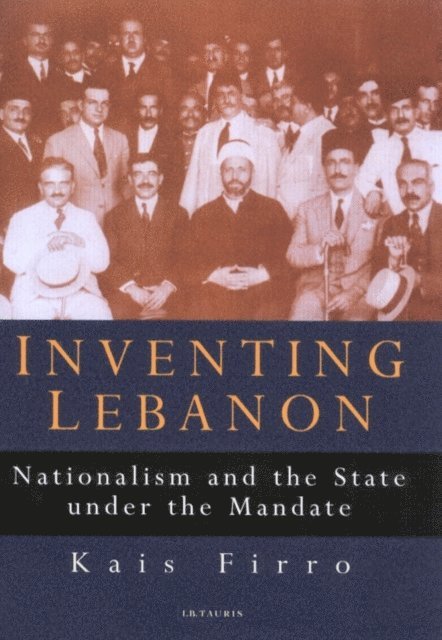
This study examines the history behind an idea: a new polity of "Greater Lebanon". It shows how, under the powerful influence of the French Mandate, various groups of the local elite attempted to create what amounted to a new Lebanese nationalism, carving the state into Maronite Christian, Sunni and Shiite power bases. The results only accentuated the divisions already inherent in this multi-ethnic and multi-faith society, and were to pave the way for the instability and wars that have plagued the country ever since.
Inbunden, Engelska, 2009
1 816 kr
Skickas inom 5-8 vardagar
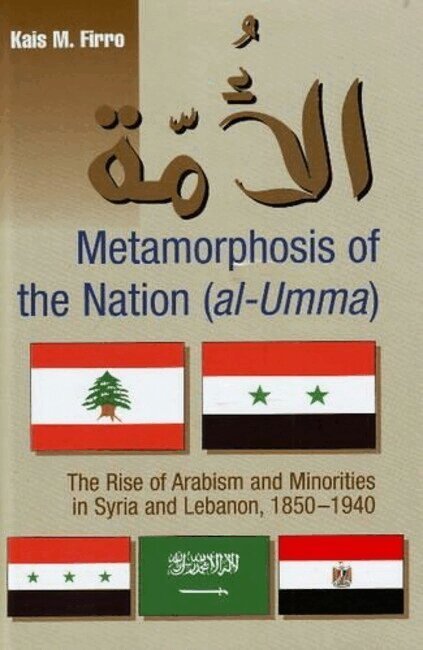
Studies on nationalism in the "Arab World" have dealt with the socio-economic conditions through which the nationalist phenomena emerged. Notwithstanding the importance of these conditions, the focus here is on the cultural aspects as manifested in the language of the discourse and ideology. Proto-nationalist and nationalist phenomena could not exist outside their discourse and ideology through which they were modelled, shaped and identified as a conceptual framework through association, behavioural patterns, and loyalty to collective identities. Theorists of nationalism tend to deal with the terms nation, nationalism as givens without specifying the exact time and place in which the terms had been coined to signify their concepts. This book focuses on nationalist and ethnic discourse through textual analysis from classical and modern Arabic. Tracing the development in the usage of terms related to collective identities, the present study shows that Arabic print language, education and press rooted the usage of al-umma to signify several connotations in accordance to its user, creating perplexity for defining al-umma. Chapters trace the usage of umma, qawm, sha'b and 'arab in the classical texts; investigate the development of the nationalist discourse since the end of the 19the century until 1940; and deal with four religious communities in Syria and Lebanon, and the role of their intellectuals in formulating ideas concerning their self-image in nationalist terms. Throughout, the study keeps track of the changes in Arabist discourse of the term "umma". A Conclusion reevaluates the ethnic and nationalist discourse at the present time, showing that the elitist characteristics of al-umma, "the nation", has had a limited influence on subduing parochial identities such as tribes and religious communities, as well as the Islamic cosmopolitan identity. This book is essential reading for all those engaged in the study and research of collective identity, Islam, nationalism and ethnicity.
Inbunden, Engelska, 2002
1 995 kr
Skickas inom 10-15 vardagar
This study examines the history behind an idea: a new polity of "Greater Lebanon". It shows how, under the powerful influence of the French Mandate, various groups of the local elite attempted to create what amounted to a new Lebanese nationalism, carving the state into Maronite Christian, Sunni and Shiite power bases. The results only accentuated the divisions already inherent in this multi-ethnic and multi-faith society, and were to pave the way for the instability and wars that have plagued the country ever since.
E-bok
PDF, Engelska, 20212 944 kr
Läs direkt efter köp
Following the war of 1948 Palestine's Druzes became part of the state of Israel. Overwhelmingly rural, they sought to safeguard their community's age-old ethnic independence by holding on to their traditional ethno-religious particularism. Ethnicity and ethnic issues, however, were ready tools for the Zionists in the pursuit of their policy aims vis-a-vis the state's Arab population. Central among these was the cooptation of part of the Druze elite in an obvious effort to alienate the Druzes from the other Arabs - creating "e;good"e; Arabs and "e;bad"e; Arabs served the Jewish state as a foil for its ongoing policy of dispossession and control. The author painstakingly documents the political, social and economic factors that ensured the "e;success"e; of these Zionist policies, but concludes that the fissured identity of Israel's Druzes today bespeaks a feeling of musiba, tragedy, within the community itself.
E-bok
PDF, Engelska, 20233 367 kr
Läs direkt efter köp
A History of the Druzes begins with an introduction to the early history of the Druzes, focusing on the religious, political, and social features that fostered the Druze community as a religious minority with its own particular characteristics, facilitating an understanding of the Druzes today.Part two examines the period of decline of the Druzes in Lebanon and the emergence of their new center of settlement in Hawran as well as the socio-political significance of the decline against the background of the history of the community.Part three studies the situation of the Druze community during the years 1860-1914, when the new settlement in Hawran took over the role played by the community in Lebanon in the past. It discusses the rise of the Atrash family, the type of feudality that existed in Hawran, the interaction of the Druze community with its environment, and the community's internal socio-political development.Part four is concerned with the repercussions of the mandate system on the socio-political situation of the Druzes community in the new constellation characterized by the dispute between Britain and France and by the emergence of Arab national movements. The post-1946/48 years are dealt with in a short concluding part which surveys the Druze communities in Syria, Lebanon and Israel and provides an historical perspective in evaluating the present situation of the Druzes in each of these countries.