Kaleem Siddiqi - Böcker
Visar alla böcker från författaren Kaleem Siddiqi. Handla med fri frakt och snabb leverans.
3 produkter
3 produkter
534 kr
Skickas inom 10-15 vardagar
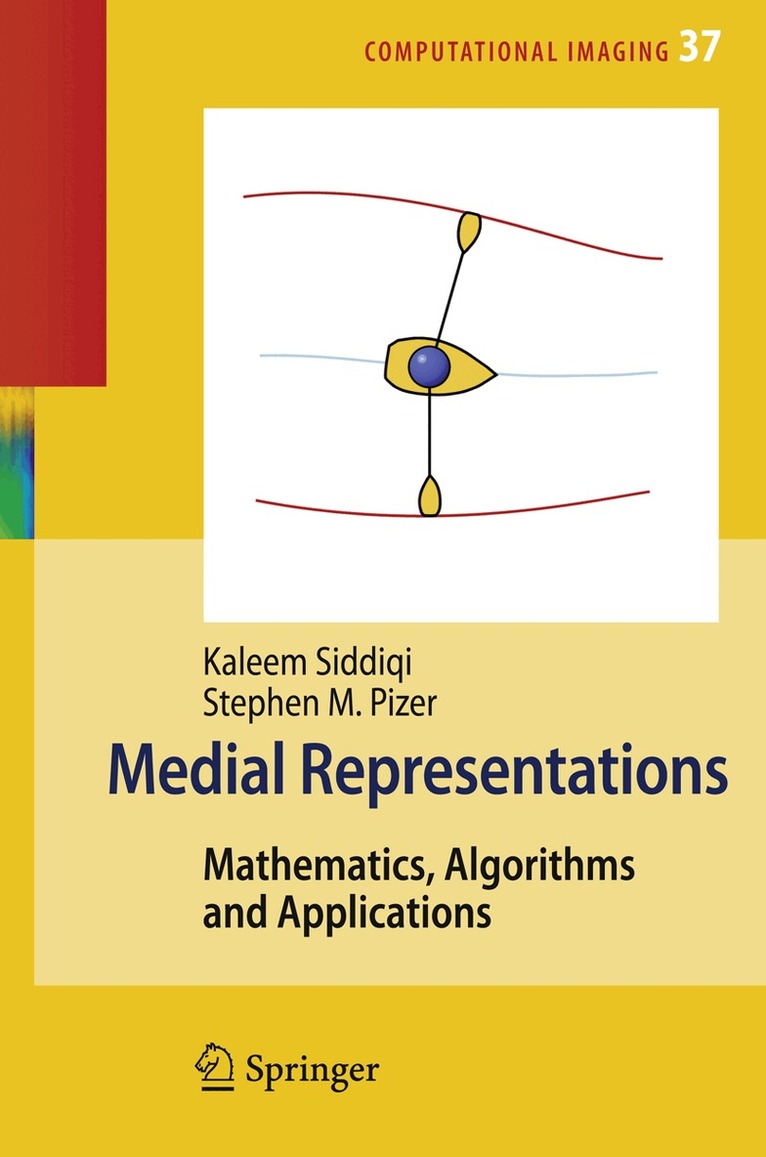
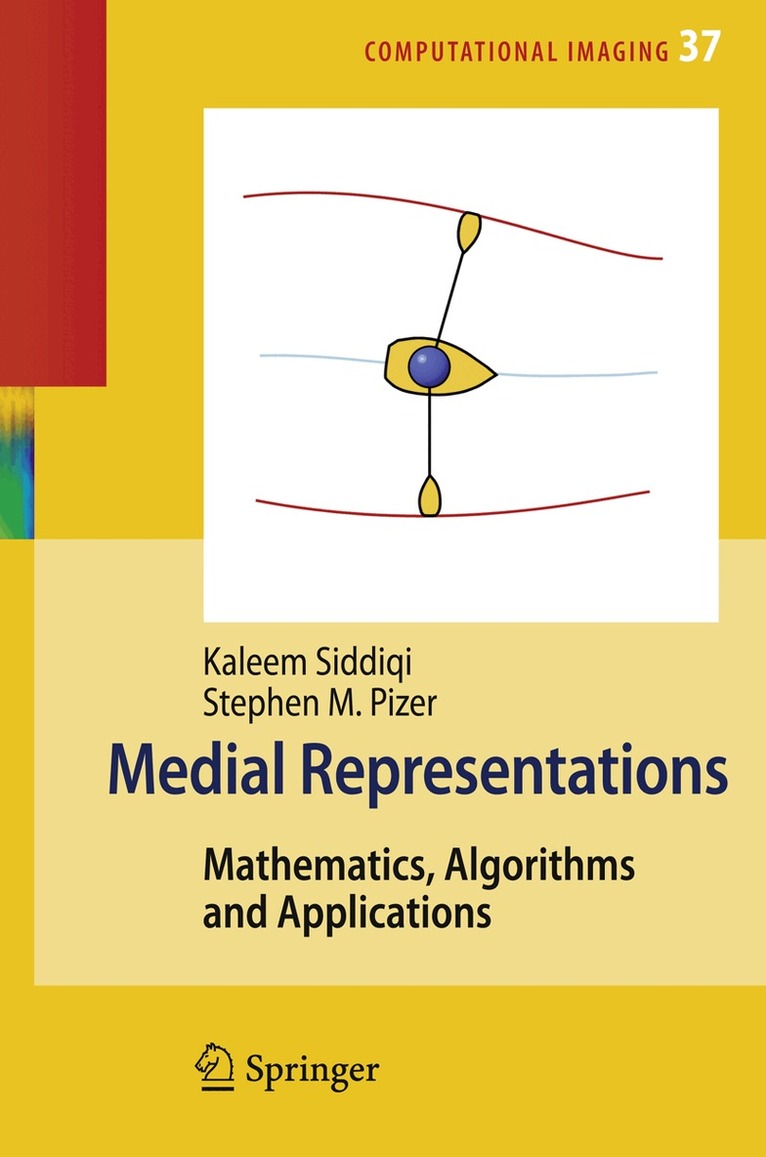
The last half century has seen the development of many biological or physical t- ories that have explicitly or implicitly involved medial descriptions of objects and other spatial entities in our world. Simultaneously mathematicians have studied the properties of these skeletal descriptions of shape, and, stimulated by the many areas where medial models are useful, computer scientists and engineers have developed numerous algorithms for computing and using these models. We bring this kno- edge and experience together into this book in order to make medial technology more widely understood and used. The book consists of an introductory chapter, two chapters on the major mat- matical results on medial representations, ?ve chapters on algorithms for extracting medial models from boundary or binary image descriptions of objects, and three chapters on applications in image analysis and other areas of study and design. We hope that this book will serve the science and engineering communities using medial models and will provide learning material for students entering this ?eld. We are fortunate to have recruited many of the world leaders in medial theory, algorithms, and applications to write chapters in this book. We thank them for their signi?cant effort in preparing their contributions. We have edited these chapters and have combined them with the ?ve chapters that we have written to produce an integrated whole.
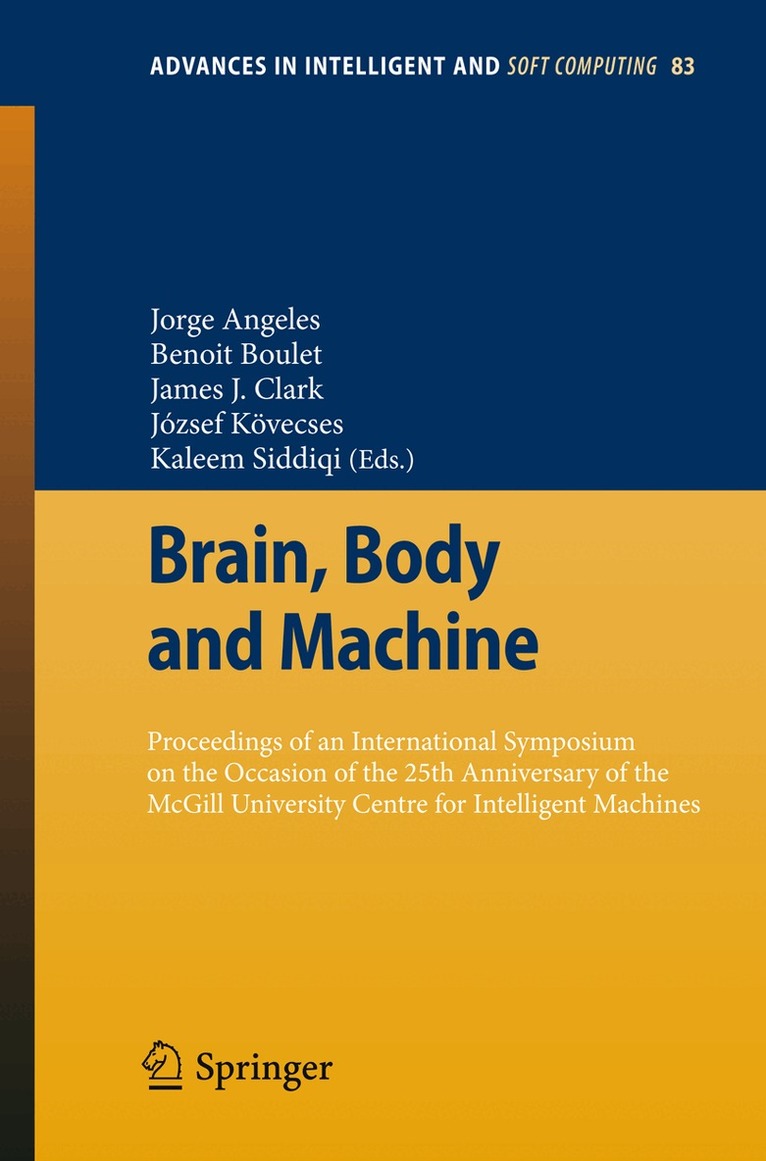
Brain, Body and Machine
Proceedings of an International Symposium on the Occasion of the 25th Anniversary of McGill University Centre for Intelligent Machines
Häftad, Engelska, 2010
2 121 kr
Skickas inom 10-15 vardagar
The Centre for Intelligent Machines (CIM), McGill University, was of?cially c- ated on November13th, 1985,upon approvalby the University Senate. The mission of the centre is, since its inception, "to excel in the ?eld of intelligent systems, stressing basic research, technology development and education." Intelligent - chines are understood,along these lines, as systems "capable of adapting their go- oriented behavior by sensing and interpreting their environment, making decisions and plans, and then carrying out those plans using physical actions." Research - tivities of interest to CIM include robot design, mechanical system dynamics, robot control,computervision,visualperception,medicalimaging,haptics,systemtheory and applications, and virtual environments.These ?elds can be succinctly described by the title of the international symposium recorded in this book,Brain,Bodyand Machine (BBM). CIM's objectof research is thusre?ected in the book,wherereaderswill ?nd that most papers cover at least two of the three main thrusts. Papers re?ect the state-- the-artofthemultidisciplineofintelligentmachines,nowadayshighlydiversi?ed.A broad spectrum of applications is covered, from humanoid robots and autonomous planetary rovers, to innovative procedures and systems for shape-reproduction and on to systems or devices for medical diagnosis.Applications are all geared to one commongoal,a better quality of life for highlychallengedpatients or simply for the healthy individual. Methods to face the challenges include not only sophisticated deterministic algorithms, but also their heuristic counterparts, at the roots of what is known assoftcomputing.
536 kr
Skickas inom 10-15 vardagar
The last half century has seen the development of many biological or physical t- ories that have explicitly or implicitly involved medial descriptions of objects and other spatial entities in our world. Simultaneously mathematicians have studied the properties of these skeletal descriptions of shape, and, stimulated by the many areas where medial models are useful, computer scientists and engineers have developed numerous algorithms for computing and using these models. We bring this kno- edge and experience together into this book in order to make medial technology more widely understood and used. The book consists of an introductory chapter, two chapters on the major mat- matical results on medial representations, ?ve chapters on algorithms for extracting medial models from boundary or binary image descriptions of objects, and three chapters on applications in image analysis and other areas of study and design. We hope that this book will serve the science and engineering communities using medial models and will provide learning material for students entering this ?eld. We are fortunate to have recruited many of the world leaders in medial theory, algorithms, and applications to write chapters in this book. We thank them for their signi?cant effort in preparing their contributions. We have edited these chapters and have combined them with the ?ve chapters that we have written to produce an integrated whole.