Karin Larkin – författare
Visar alla böcker från författaren Karin Larkin. Handla med fri frakt och snabb leverans.
2 produkter
2 produkter
Inbunden, Engelska, 2027
1 034 kr
Kommande
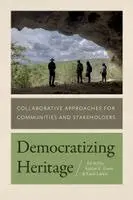
How archaeologists can apply democratic methods of community engagement to make cultural heritage projects more inclusiveDemocratizing cultural heritage means making archaeological practice, artifact interpretation and care, and the preservation of historic sites more accessible, inclusive, and participatory. It involves shifting power in the creation of heritage narratives to descendant communities or stakeholders, an approach rarely emphasized in compliance-based work. This volume offers practical guidance for employing democratic methodologies at every stage of heritage projects, drawing on examples from museum, academic, cultural resource management, and government settings.The case studies in Democratizing Heritage demonstrate how collaborative approaches work in practice. They include partnerships between the Iowa state archaeologist’s office and Tribal leaders to document sites and increase public understanding of Indigenous history, a project to protect ancient caves in the Central Valley of Oaxaca that aligned local development plans with national institutions, and efforts led by local residents to preserve and interpret the Malcolm X House. Collectively, these cases emphasize that cultural heritage should be shared by everyone and show that democratizing heritage production is a practical possibility.
Inbunden, Engelska, 2009
690 kr
Tillfälligt slut
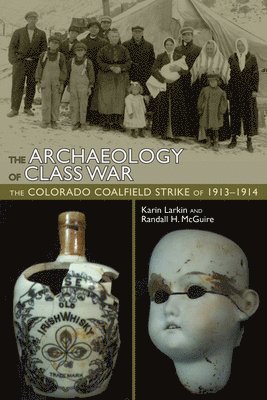
The Archaeology of the Colorado Coalfield War Project has conducted archaeological investigations at the site of the Ludlow Massacre in Ludlow, Colorado, since 1996. With the help of the United Mine Workers of America and funds from the Colorado State Historical Society and the Colorado Endowment for the Humanities, the scholars involved have integrated archaeological finds with archival evidence to show how the everyday experiences of miners and their families shaped the strike and its outcome.The Archaeology of Class War weaves together material culture, documents, oral histories, landscapes, and photographs to reveal aspects of the strike and life in early twentieth-century Colorado coalfields unlike any standard documentary history. Excavations at the site of the massacre and the nearby town of Berwind exposed tent platforms, latrines, trash dumps, and the cellars in which families huddled during the attack. Myriad artifacts—from canning jars to a doll’s head—reveal the details of daily existence and bring the community to life.The Archaeology of Class War will be of interest to archaeologists, historians, and general readers interested in mining and labor history.