
Karl Patrick R. Mendoza – författare
Visar alla böcker från författaren . Handla med fri frakt och snabb leverans.
4 produkter
4 produkter
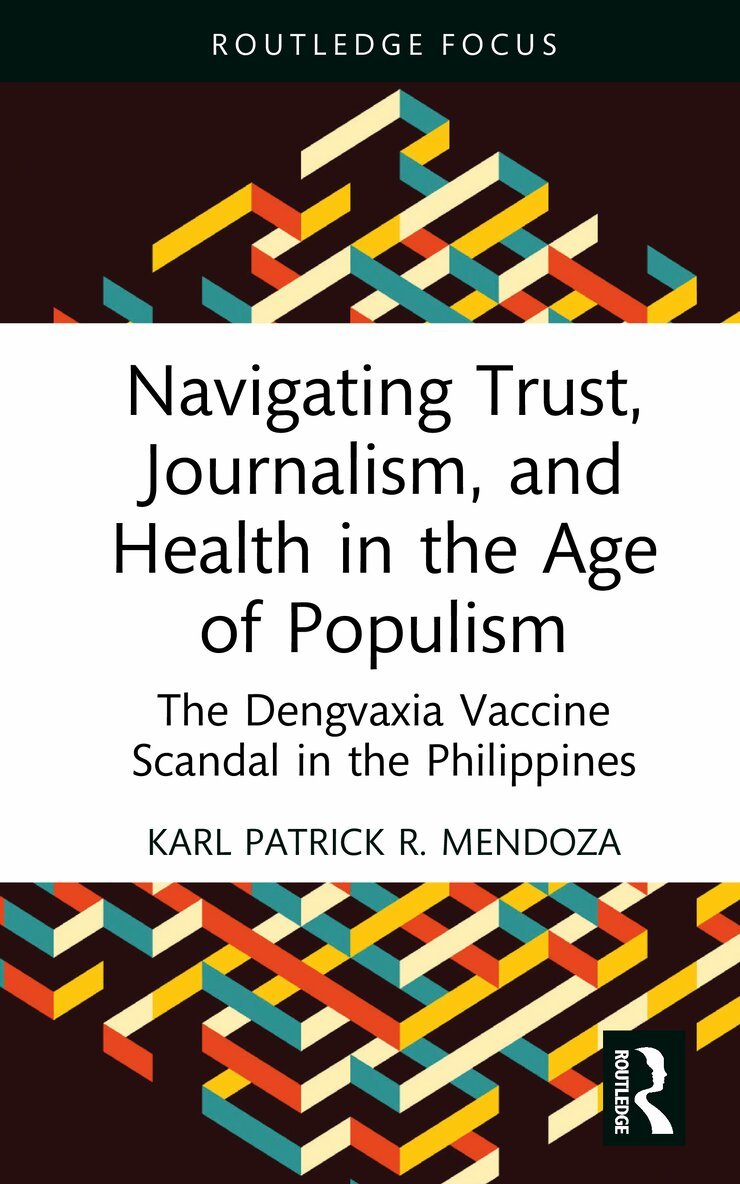
Inbunden, Engelska, 2025
838 kr
Skickas
This book delves into the profound impact of trust dynamics during a vaccine scandal on democratic politics. Breaking away from conventional perspectives that perceive scandals merely as maintainers of the status quo or reflections of elite-mass conflict, this book asserts that vaccine-related controversies, as seen in the 2017 Dengvaxia scandal in the Philippines, can reinforce trust in cultural terms.The narrative unfolds by scrutinizing how specific trust cultures, defined as particular ways of trust granting and reciprocating—and public perceptions of politics evolve in the aftermath of such crises. This book presents compelling in-depth case studies of news representation, production, and reception of the Dengvaxia scandal, unveiling significant findings. Firstly, the controversy surrounding the alleged link between the vaccine and child deaths was not solely a medical issue but deeply intertwined with political motivations. This political influence underscores the intricate connection between political motivations and public health narratives, a crucial aspect in understanding the implications of trust cultures during vaccine scandals. Secondly, online journalists covering the vaccine scandal did not contribute to a nuanced understanding but sensationalized the story. This journalistic tendency not only polarized perspectives but also shaped public perception, emphasizing the crucial role of media representation in influencing trust cultures and public narratives during vaccine-related controversies. Lastly, the book explores how parents’ perception of the news media as controlled by specific narratives contributed to forming a distinct parental trust culture.Navigating Trust, Journalism, and Health in the Age of Populism offers a compelling exploration of the Dengvaxia scandal, providing a nuanced analysis beyond immediate health implications. The book invites readers to consider the broader ramifications of democratic ideals and the intricate fabric of trust within society.
E-bok
PDF, Engelska, 2025419 kr
Läs direkt efter köp
This book delves into the profound impact of trust dynamics during a vaccine scandal on democratic politics. Breaking away from conventional perspectives that perceive scandals merely as maintainers of the status quo or reflections of elite-mass conflict, this book asserts that vaccine-related controversies, as seen in the 2017 Dengvaxia scandal in the Philippines, can reinforce trust in cultural terms.The narrative unfolds by scrutinizing how specific trust cultures, defined as particular ways of trust granting and reciprocating—and public perceptions of politics evolve in the aftermath of such crises. This book presents compelling in-depth case studies of news representation, production, and reception of the Dengvaxia scandal, unveiling significant findings. Firstly, the controversy surrounding the alleged link between the vaccine and child deaths was not solely a medical issue but deeply intertwined with political motivations. This political influence underscores the intricate connection between political motivations and public health narratives, a crucial aspect in understanding the implications of trust cultures during vaccine scandals. Secondly, online journalists covering the vaccine scandal did not contribute to a nuanced understanding but sensationalized the story. This journalistic tendency not only polarized perspectives but also shaped public perception, emphasizing the crucial role of media representation in influencing trust cultures and public narratives during vaccine-related controversies. Lastly, the book explores how parents’ perception of the news media as controlled by specific narratives contributed to forming a distinct parental trust culture.Navigating Trust, Journalism, and Health in the Age of Populism offers a compelling exploration of the Dengvaxia scandal, providing a nuanced analysis beyond immediate health implications. The book invites readers to consider the broader ramifications of democratic ideals and the intricate fabric of trust within society.
E-bok
Engelska, 2025404 kr
Läs direkt efter köp
This book delves into the profound impact of trust dynamics during a vaccine scandal on democratic politics. Breaking away from conventional perspectives that perceive scandals merely as maintainers of the status quo or reflections of elite-mass conflict, this book asserts that vaccine-related controversies, as seen in the 2017 Dengvaxia scandal in the Philippines, can reinforce trust in cultural terms.The narrative unfolds by scrutinizing how specific trust cultures, defined as particular ways of trust granting and reciprocating—and public perceptions of politics evolve in the aftermath of such crises. This book presents compelling in-depth case studies of news representation, production, and reception of the Dengvaxia scandal, unveiling significant findings. Firstly, the controversy surrounding the alleged link between the vaccine and child deaths was not solely a medical issue but deeply intertwined with political motivations. This political influence underscores the intricate connection between political motivations and public health narratives, a crucial aspect in understanding the implications of trust cultures during vaccine scandals. Secondly, online journalists covering the vaccine scandal did not contribute to a nuanced understanding but sensationalized the story. This journalistic tendency not only polarized perspectives but also shaped public perception, emphasizing the crucial role of media representation in influencing trust cultures and public narratives during vaccine-related controversies. Lastly, the book explores how parents’ perception of the news media as controlled by specific narratives contributed to forming a distinct parental trust culture.Navigating Trust, Journalism, and Health in the Age of Populism offers a compelling exploration of the Dengvaxia scandal, providing a nuanced analysis beyond immediate health implications. The book invites readers to consider the broader ramifications of democratic ideals and the intricate fabric of trust within society.
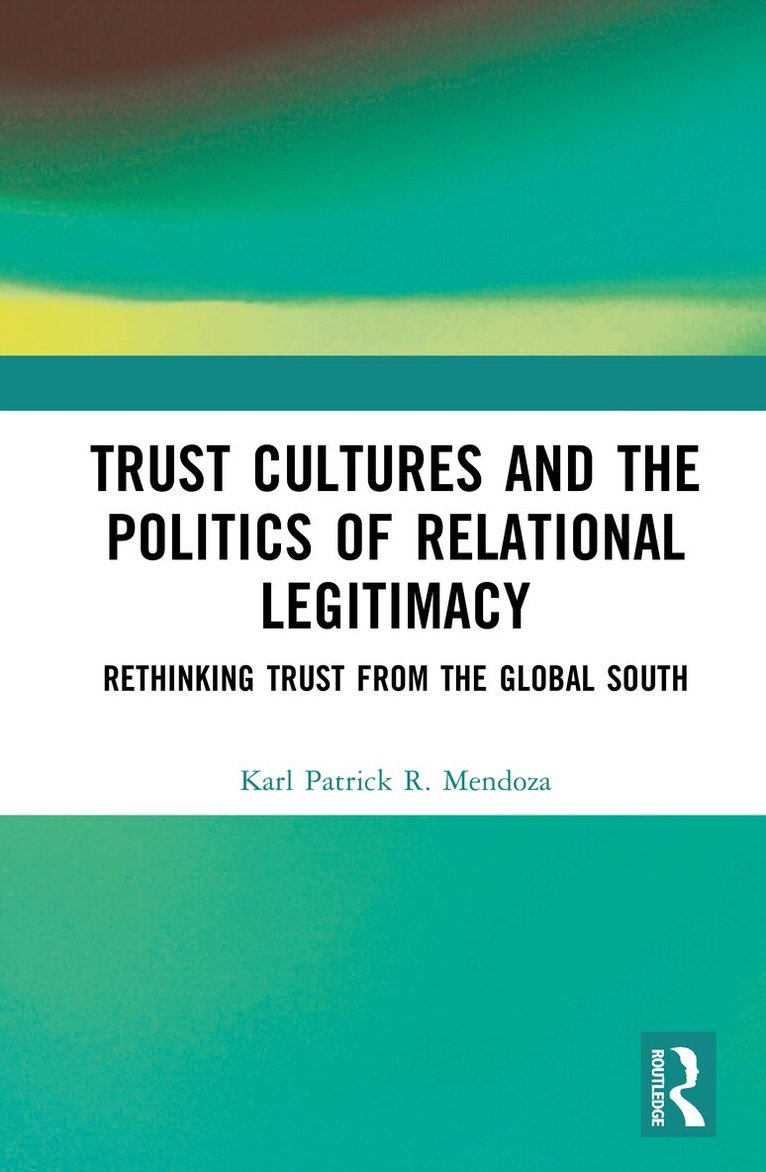
Inbunden, Engelska, 2026
2 543 kr
Kommande
Moving beyond conventional understandings of trust as an individual attitude or institutional outcome, Trust Cultures and the Politics of Relational Legitimacy develop the concept of trust cultures to explain how historically and culturally situated publics learn to navigate uncertainty, recalibrate expectations, and sustain democratic life despite persistent institutional fragility.Trust is understood not simply as confidence in institutions but as part of a broader relational process through which legitimacy is continually negotiated, contested, repaired, and reconstituted. Drawing on interpretive analyses of public health controversies, local governance, political scandals, and everyday democratic life in the Philippines, the book develops an interconnected conceptual vocabulary—including relational legitimacy, democratic ambivalence, scandal constructivation, accrued damage, fragile repair, and moral coordination—to demonstrate that democratic endurance depends less on institutional perfection than on the relational capacities through which citizens continue inhabiting imperfect institutions. Rather than treating the Global South as a site for applying theories developed elsewhere, this book advances it as a site of theory generation. It argues that postcolonial democracies illuminate broader dynamics of legitimacy, uncertainty, and democratic endurance that increasingly characterize political life across the contemporary world. Bringing communication research into conversation with cultural sociology, political sociology, democratic theory, and interpretive social science, this book offers a relational account of democracy in which trust is understood not as the absence of uncertainty but as one of the relational infrastructures through which democratic societies learn to live together despite it.This work is essential for scholars, researchers, and practitioners in political communication, sociology of emotions, trust studies, and Southeast Asian/Global South studies. It speaks to those grappling with the challenges of disinformation, affective polarisation, and the erosion of institutional legitimacy in fractured democracies, offering a Global South-rooted perspective that redefines trust as a relational, emotional, and ethical dynamic.