
Katarzyna StokA‚osa – författare
797 kr
Läs direkt efter köp
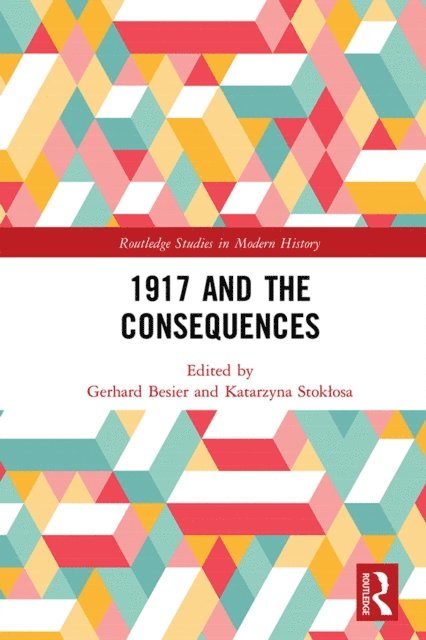
The Russian Revolution of 1917 has been one of the most important events of modern history. It changed the course of the events not only in Russia but, on a wider scale, across the world while it influenced the flow of history throughout the twentieth century until the fall of the Soviet Union and, to some extent, well beyond this time. Radical change in Russia triggered social revolutions and reformations across Europe, while authoritarian systems shaped their societies according to the Russian model. This book analyses these forces, particularly at the European periphery which has been underexplored until this volume.
797 kr
Läs direkt efter köp
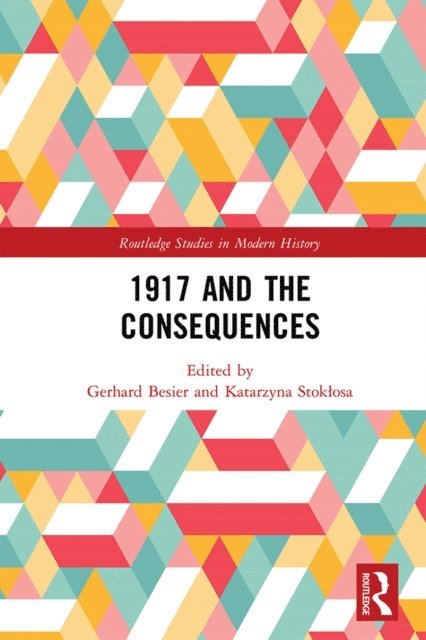
The Russian Revolution of 1917 has been one of the most important events of modern history. It changed the course of the events not only in Russia but, on a wider scale, across the world while it influenced the flow of history throughout the twentieth century until the fall of the Soviet Union and, to some extent, well beyond this time. Radical change in Russia triggered social revolutions and reformations across Europe, while authoritarian systems shaped their societies according to the Russian model. This book analyses these forces, particularly at the European periphery which has been underexplored until this volume.
710 kr
Läs direkt efter köp
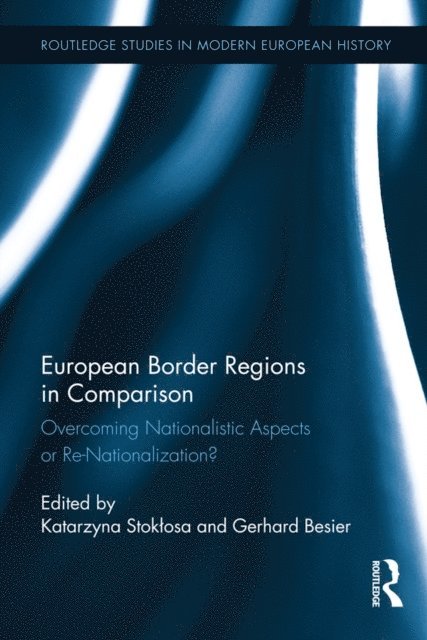
Borders exist in almost every sphere of life. Initially, borders were established in connection with kingdoms, regions, towns, villages and cities. With nation-building, they became important as a line separating two national states with different “national characteristics,” narratives and myths. The term “border” has a negative connotation for being a separating line, a warning signal not to cross a line between the allowed and the forbidden. The awareness of both mental and factual borders in manifold spheres of our life has made them a topic of consideration in almost all scholarly disciplines – history, geography, political science and many others. This book primarily incorporates an interdisciplinary and comparative approach. Historians, sociologists, anthropologists and political science scholars from a diverse range of European universities analyze historical as well as contemporary perceptions and perspectives concerning border regions – inside the EU, between EU and non-EU European countries, and between European and non-European countries.
710 kr
Läs direkt efter köp
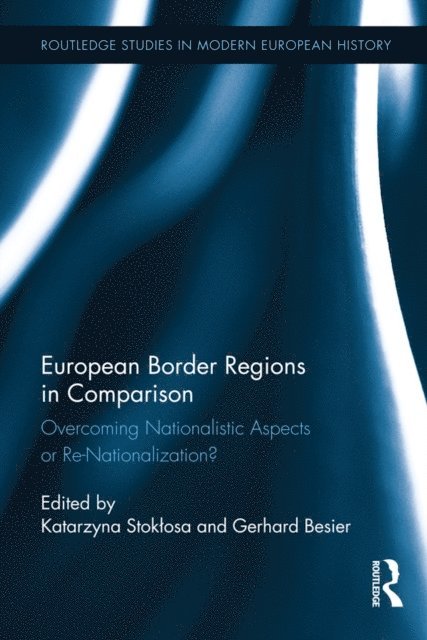
Borders exist in almost every sphere of life. Initially, borders were established in connection with kingdoms, regions, towns, villages and cities. With nation-building, they became important as a line separating two national states with different “national characteristics,” narratives and myths. The term “border” has a negative connotation for being a separating line, a warning signal not to cross a line between the allowed and the forbidden. The awareness of both mental and factual borders in manifold spheres of our life has made them a topic of consideration in almost all scholarly disciplines – history, geography, political science and many others. This book primarily incorporates an interdisciplinary and comparative approach. Historians, sociologists, anthropologists and political science scholars from a diverse range of European universities analyze historical as well as contemporary perceptions and perspectives concerning border regions – inside the EU, between EU and non-EU European countries, and between European and non-European countries.