

Inbunden, Engelska, 2019
245 kr
Skickas inom 3-6 vardagar
245 kr
Skickas inom 3-6 vardagar
627 kr
Läs direkt efter köp
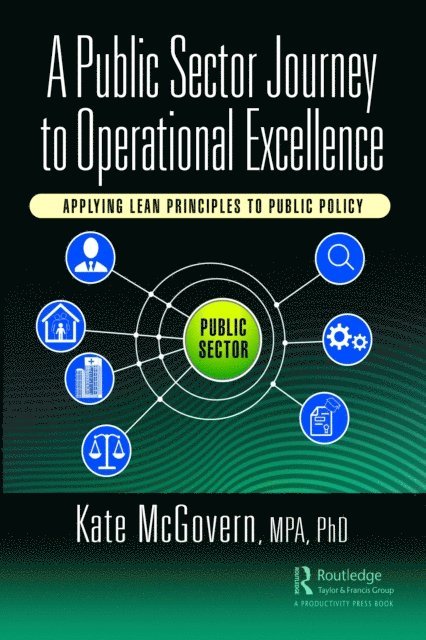
A Public Sector Journey to Operational Excellence links effective government operations to the ability to accomplish bold social goals. The book illustrates how the principles and techniques of continuous improvement can be applied to public sector management and public policy development. The linkage of management to policy is woven throughout the four sections:
Part 1 begins with the history and application of the principles of continuous improvement (CI). Readers are introduced to Lean and related methodology. CI principles are then juxtaposed with John M. Bernard’s categorization of three stages of maturity in government. Next, guidance is provided on how to launch a CI initiative in the public sector, leading to a discussion of public administration in theory and practice.
Part 2 examines the application of CI to governmental operations. Examples, such as the VA’s hiring process, underscore the need to Lean bureaucratic and regulatory processes. Profiles of CI work in several states illustrate both the potential and the pitfalls, leading to recommendations for an optimal model.
Part 3 acknowledges that among the responsibilities of government, the public policy function is the most difficult to Lean. It discusses the complexities inherent in government since the public policy is both a political and an administrative function. Toyota Kata methodology is illustrated, with its potential application to the challenges of policy development. It could be a force multiplier when civics and politics meet CI.
Part 4 links the promise of CI to make government more effective, enabling it to solve complex problems. Strategies are proposed to overcome the threats and sustain the gains in these initiatives. Cognizant of the many challenges, the book closes with a range of recommendations and a reflection on the purpose of government.
627 kr
Läs direkt efter köp
A Public Sector Journey to Operational Excellence links effective government operations to the ability to accomplish bold social goals. The book illustrates how the principles and techniques of continuous improvement can be applied to public sector management and public policy development. The linkage of management to policy is woven throughout the four sections:
Part 1 begins with the history and application of the principles of continuous improvement (CI). Readers are introduced to Lean and related methodology. CI principles are then juxtaposed with John M. Bernard’s categorization of three stages of maturity in government. Next, guidance is provided on how to launch a CI initiative in the public sector, leading to a discussion of public administration in theory and practice.
Part 2 examines the application of CI to governmental operations. Examples, such as the VA’s hiring process, underscore the need to Lean bureaucratic and regulatory processes. Profiles of CI work in several states illustrate both the potential and the pitfalls, leading to recommendations for an optimal model.
Part 3 acknowledges that among the responsibilities of government, the public policy function is the most difficult to Lean. It discusses the complexities inherent in government since the public policy is both a political and an administrative function. Toyota Kata methodology is illustrated, with its potential application to the challenges of policy development. It could be a force multiplier when civics and politics meet CI.
Part 4 links the promise of CI to make government more effective, enabling it to solve complex problems. Strategies are proposed to overcome the threats and sustain the gains in these initiatives. Cognizant of the many challenges, the book closes with a range of recommendations and a reflection on the purpose of government.
537 kr
Skickas inom 10-15 vardagar
2 100 kr
Skickas inom 10-15 vardagar
773 kr
Skickas inom 10-15 vardagar

317 kr
Skickas inom 3-6 vardagar
541 kr
Läs direkt efter köp
Most Lean practitioners learn about the three Ms: muda (waste), mura (unevenness or variability), and muri (overburden), and beginners in Lean generally focus on the removal of muda.
The impact of muri is not as readily understood. It is extremely significant, however, for those working in government. Decisions on staffing levels and resource allocation are made by elected officials who are generally disconnected from daily operations. Short-sighted cost-cutting makes it difficult to deliver quality services as efficiently as possible. The mantra of "do more with less" creates ever-increasing muri.
In contrast to robust Lean programs in privately owned companies, efficiency initiatives are regularly cut from public-sector budgets. Antiquated systems remain in place, with too few workers to operate the existing processes. The debilitating impact of persistent muri brings burnout and turnover, perpetuating a vicious cycle.
Despite the muri, a dedicated cadre of public servants is hard at work using Lean techniques and principles to break down bureaucratic red tape and improve the quality of services at every level of government across the country. While the author incorporated examples of Lean initiatives in other states to give readers an idea of all the terrific work that is occurring, this book is really the story of one of those journeys.
Using the author’s experience while working for the State of New Hampshire, you’ll learn about the steps along the way. Each chapter tells a story of what they did, what they learned, and how the lessons can be applied. Annotated outlines of White, Yellow, and Green Belt programs, and the Lean for Leaders workshop, as well as two hypothetical scenarios that were used as training exercises are included. These approaches are not intended to be authoritative or prescriptive; they are offered as insights and examples.
You’ll read about the challenges and pitfalls, and the creative countermeasures developed by a dauntless team of Lean practitioners. The story is shared to inform and encourage others -- material based on the New Hampshire Bureau of Education and Training’s Lean programs is included throughout the book.
541 kr
Läs direkt efter köp
Most Lean practitioners learn about the three Ms: muda (waste), mura (unevenness or variability), and muri (overburden), and beginners in Lean generally focus on the removal of muda.
The impact of muri is not as readily understood. It is extremely significant, however, for those working in government. Decisions on staffing levels and resource allocation are made by elected officials who are generally disconnected from daily operations. Short-sighted cost-cutting makes it difficult to deliver quality services as efficiently as possible. The mantra of "do more with less" creates ever-increasing muri.
In contrast to robust Lean programs in privately owned companies, efficiency initiatives are regularly cut from public-sector budgets. Antiquated systems remain in place, with too few workers to operate the existing processes. The debilitating impact of persistent muri brings burnout and turnover, perpetuating a vicious cycle.
Despite the muri, a dedicated cadre of public servants is hard at work using Lean techniques and principles to break down bureaucratic red tape and improve the quality of services at every level of government across the country. While the author incorporated examples of Lean initiatives in other states to give readers an idea of all the terrific work that is occurring, this book is really the story of one of those journeys.
Using the author’s experience while working for the State of New Hampshire, you’ll learn about the steps along the way. Each chapter tells a story of what they did, what they learned, and how the lessons can be applied. Annotated outlines of White, Yellow, and Green Belt programs, and the Lean for Leaders workshop, as well as two hypothetical scenarios that were used as training exercises are included. These approaches are not intended to be authoritative or prescriptive; they are offered as insights and examples.
You’ll read about the challenges and pitfalls, and the creative countermeasures developed by a dauntless team of Lean practitioners. The story is shared to inform and encourage others -- material based on the New Hampshire Bureau of Education and Training’s Lean programs is included throughout the book.

107 kr
Skickas

270 kr
Skickas inom 3-6 vardagar

494 kr
Läs direkt efter köp

494 kr
Läs direkt efter köp
245 kr
Skickas inom 3-6 vardagar
627 kr
Läs direkt efter köp
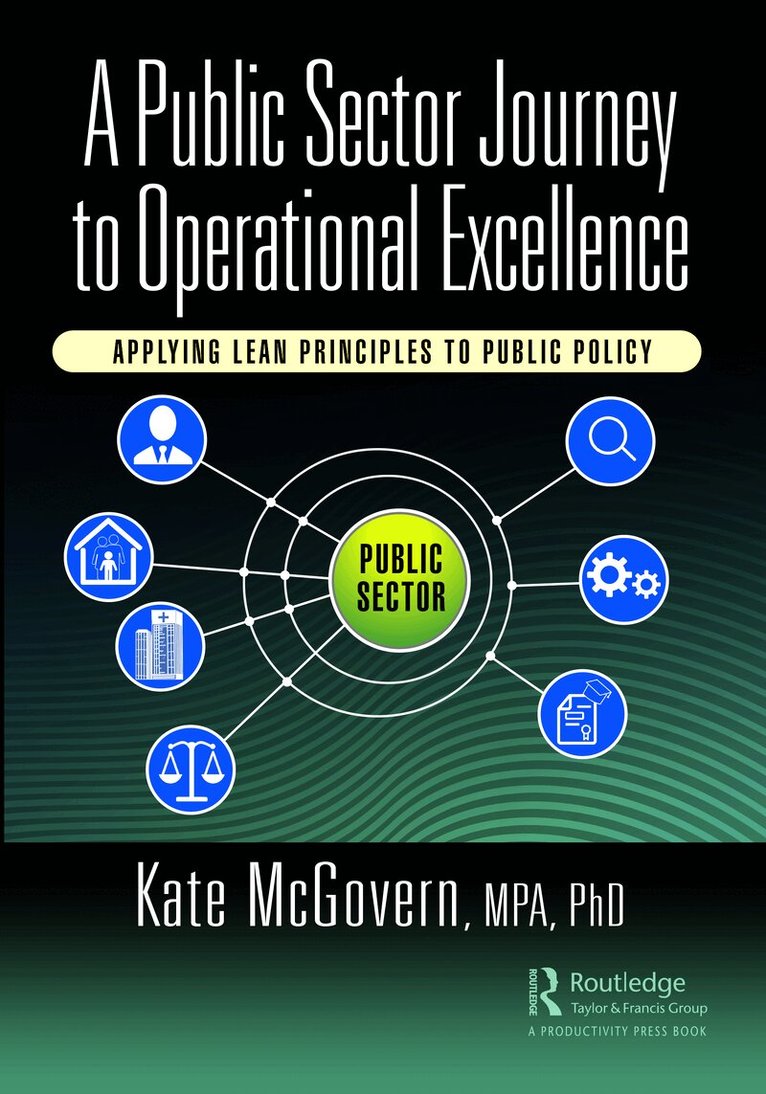
A Public Sector Journey to Operational Excellence links effective government operations to the ability to accomplish bold social goals. The book illustrates how the principles and techniques of continuous improvement can be applied to public sector management and public policy development. The linkage of management to policy is woven throughout the four sections:
Part 1 begins with the history and application of the principles of continuous improvement (CI). Readers are introduced to Lean and related methodology. CI principles are then juxtaposed with John M. Bernard’s categorization of three stages of maturity in government. Next, guidance is provided on how to launch a CI initiative in the public sector, leading to a discussion of public administration in theory and practice.
Part 2 examines the application of CI to governmental operations. Examples, such as the VA’s hiring process, underscore the need to Lean bureaucratic and regulatory processes. Profiles of CI work in several states illustrate both the potential and the pitfalls, leading to recommendations for an optimal model.
Part 3 acknowledges that among the responsibilities of government, the public policy function is the most difficult to Lean. It discusses the complexities inherent in government since the public policy is both a political and an administrative function. Toyota Kata methodology is illustrated, with its potential application to the challenges of policy development. It could be a force multiplier when civics and politics meet CI.
Part 4 links the promise of CI to make government more effective, enabling it to solve complex problems. Strategies are proposed to overcome the threats and sustain the gains in these initiatives. Cognizant of the many challenges, the book closes with a range of recommendations and a reflection on the purpose of government.
627 kr
Läs direkt efter köp
A Public Sector Journey to Operational Excellence links effective government operations to the ability to accomplish bold social goals. The book illustrates how the principles and techniques of continuous improvement can be applied to public sector management and public policy development. The linkage of management to policy is woven throughout the four sections:
Part 1 begins with the history and application of the principles of continuous improvement (CI). Readers are introduced to Lean and related methodology. CI principles are then juxtaposed with John M. Bernard’s categorization of three stages of maturity in government. Next, guidance is provided on how to launch a CI initiative in the public sector, leading to a discussion of public administration in theory and practice.
Part 2 examines the application of CI to governmental operations. Examples, such as the VA’s hiring process, underscore the need to Lean bureaucratic and regulatory processes. Profiles of CI work in several states illustrate both the potential and the pitfalls, leading to recommendations for an optimal model.
Part 3 acknowledges that among the responsibilities of government, the public policy function is the most difficult to Lean. It discusses the complexities inherent in government since the public policy is both a political and an administrative function. Toyota Kata methodology is illustrated, with its potential application to the challenges of policy development. It could be a force multiplier when civics and politics meet CI.
Part 4 links the promise of CI to make government more effective, enabling it to solve complex problems. Strategies are proposed to overcome the threats and sustain the gains in these initiatives. Cognizant of the many challenges, the book closes with a range of recommendations and a reflection on the purpose of government.
537 kr
Skickas inom 10-15 vardagar
2 100 kr
Skickas inom 10-15 vardagar
773 kr
Skickas inom 10-15 vardagar
317 kr
Skickas inom 3-6 vardagar
541 kr
Läs direkt efter köp
Most Lean practitioners learn about the three Ms: muda (waste), mura (unevenness or variability), and muri (overburden), and beginners in Lean generally focus on the removal of muda.
The impact of muri is not as readily understood. It is extremely significant, however, for those working in government. Decisions on staffing levels and resource allocation are made by elected officials who are generally disconnected from daily operations. Short-sighted cost-cutting makes it difficult to deliver quality services as efficiently as possible. The mantra of "do more with less" creates ever-increasing muri.
In contrast to robust Lean programs in privately owned companies, efficiency initiatives are regularly cut from public-sector budgets. Antiquated systems remain in place, with too few workers to operate the existing processes. The debilitating impact of persistent muri brings burnout and turnover, perpetuating a vicious cycle.
Despite the muri, a dedicated cadre of public servants is hard at work using Lean techniques and principles to break down bureaucratic red tape and improve the quality of services at every level of government across the country. While the author incorporated examples of Lean initiatives in other states to give readers an idea of all the terrific work that is occurring, this book is really the story of one of those journeys.
Using the author’s experience while working for the State of New Hampshire, you’ll learn about the steps along the way. Each chapter tells a story of what they did, what they learned, and how the lessons can be applied. Annotated outlines of White, Yellow, and Green Belt programs, and the Lean for Leaders workshop, as well as two hypothetical scenarios that were used as training exercises are included. These approaches are not intended to be authoritative or prescriptive; they are offered as insights and examples.
You’ll read about the challenges and pitfalls, and the creative countermeasures developed by a dauntless team of Lean practitioners. The story is shared to inform and encourage others -- material based on the New Hampshire Bureau of Education and Training’s Lean programs is included throughout the book.
541 kr
Läs direkt efter köp
Most Lean practitioners learn about the three Ms: muda (waste), mura (unevenness or variability), and muri (overburden), and beginners in Lean generally focus on the removal of muda.
The impact of muri is not as readily understood. It is extremely significant, however, for those working in government. Decisions on staffing levels and resource allocation are made by elected officials who are generally disconnected from daily operations. Short-sighted cost-cutting makes it difficult to deliver quality services as efficiently as possible. The mantra of "do more with less" creates ever-increasing muri.
In contrast to robust Lean programs in privately owned companies, efficiency initiatives are regularly cut from public-sector budgets. Antiquated systems remain in place, with too few workers to operate the existing processes. The debilitating impact of persistent muri brings burnout and turnover, perpetuating a vicious cycle.
Despite the muri, a dedicated cadre of public servants is hard at work using Lean techniques and principles to break down bureaucratic red tape and improve the quality of services at every level of government across the country. While the author incorporated examples of Lean initiatives in other states to give readers an idea of all the terrific work that is occurring, this book is really the story of one of those journeys.
Using the author’s experience while working for the State of New Hampshire, you’ll learn about the steps along the way. Each chapter tells a story of what they did, what they learned, and how the lessons can be applied. Annotated outlines of White, Yellow, and Green Belt programs, and the Lean for Leaders workshop, as well as two hypothetical scenarios that were used as training exercises are included. These approaches are not intended to be authoritative or prescriptive; they are offered as insights and examples.
You’ll read about the challenges and pitfalls, and the creative countermeasures developed by a dauntless team of Lean practitioners. The story is shared to inform and encourage others -- material based on the New Hampshire Bureau of Education and Training’s Lean programs is included throughout the book.
107 kr
Skickas
270 kr
Skickas inom 3-6 vardagar
494 kr
Läs direkt efter köp
494 kr
Läs direkt efter köp