Kate Shaw – författare
Visar alla böcker från författaren Kate Shaw. Handla med fri frakt och snabb leverans.
10 produkter
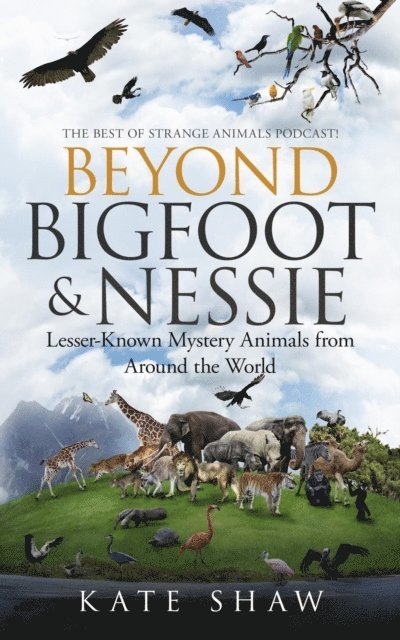
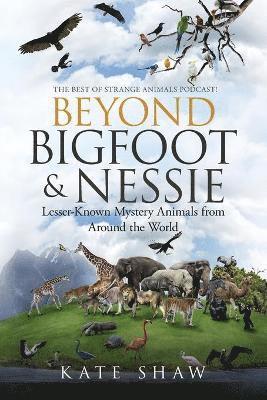
Beyond Bigfoot & Nessie
Lesser-Known Mystery Animals from Around the World
Av Kate Shaw
E-bok, 2022
260 kr
Lägg i varukorg
Most people have heard of Bigfoot and the Loch Ness Monster. Far fewer have heard of animals like the buru, a lungfish-like monster reported from India; Washington''s eagle, supposedly bigger than the bald eagle; the yemish of South America, also called the water tiger; or the Mongolian death worm. …
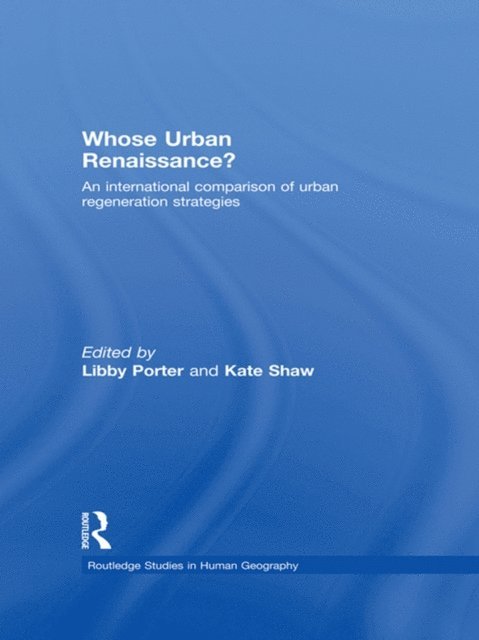
Whose Urban Renaissance?
An international comparison of urban regeneration strategies
Inbunden, 2008
3168 kr
Lägg i varukorg
The desire of governments for a 'renaissance' of their cities is a defining feature of contemporary urban policy. From Melbourne and Toronto to Johannesburg and Istanbul, government policies are successfully attracting investment and middle-class populations to their inner areas. Regeneration - or …
Whose Urban Renaissance?
An international comparison of urban regeneration strategies
Häftad, 2013
851 kr
Lägg i varukorg
The desire of governments for a 'renaissance' of their cities is a defining feature of contemporary urban policy. From Melbourne and Toronto to Johannesburg and Istanbul, government policies are successfully attracting investment and middle-class populations to their inner areas. Regeneration - or …
Whose Urban Renaissance?
An international comparison of urban regeneration strategies
E-bok, 2009
983 kr
Lägg i varukorg
The desire of governments for a ''renaissance'' of their cities is a defining feature of contemporary urban policy. From Melbourne and Toronto to Johannesburg and Istanbul, government policies are successfully attracting investment and middle-class populations to their inner areas. Regeneration - …
Whose Urban Renaissance?
An international comparison of urban regeneration strategies
E-bok, 2009
983 kr
Lägg i varukorg
The desire of governments for a ''renaissance'' of their cities is a defining feature of contemporary urban policy. From Melbourne and Toronto to Johannesburg and Istanbul, government policies are successfully attracting investment and middle-class populations to their inner areas. Regeneration - …
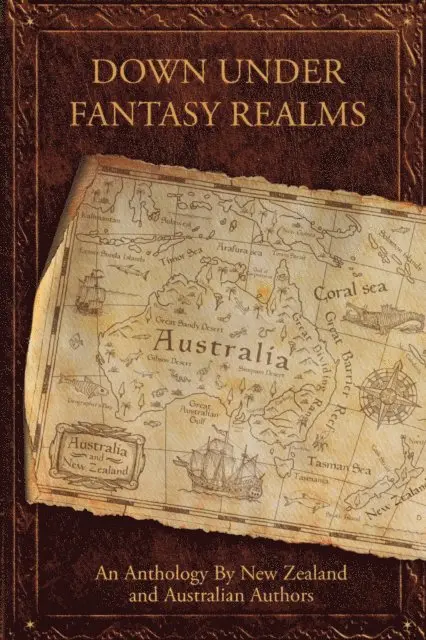
Down Under Fantasy Realms
An Anthology By New Zealand and Australian Authors
Av Kirsty Anderson, Kate Shaw m. fl.
E-bok, 2022
60 kr
Lägg i varukorg
Gathered here together are twenty fantastic stories by seven fabulous Antipodean authors - authors you may not be familiar with ... yet; authors you will want to read again and again. High fantasy and low, magical realism, retold fairy stories, and even a hint of science-fiction - it's all here. …
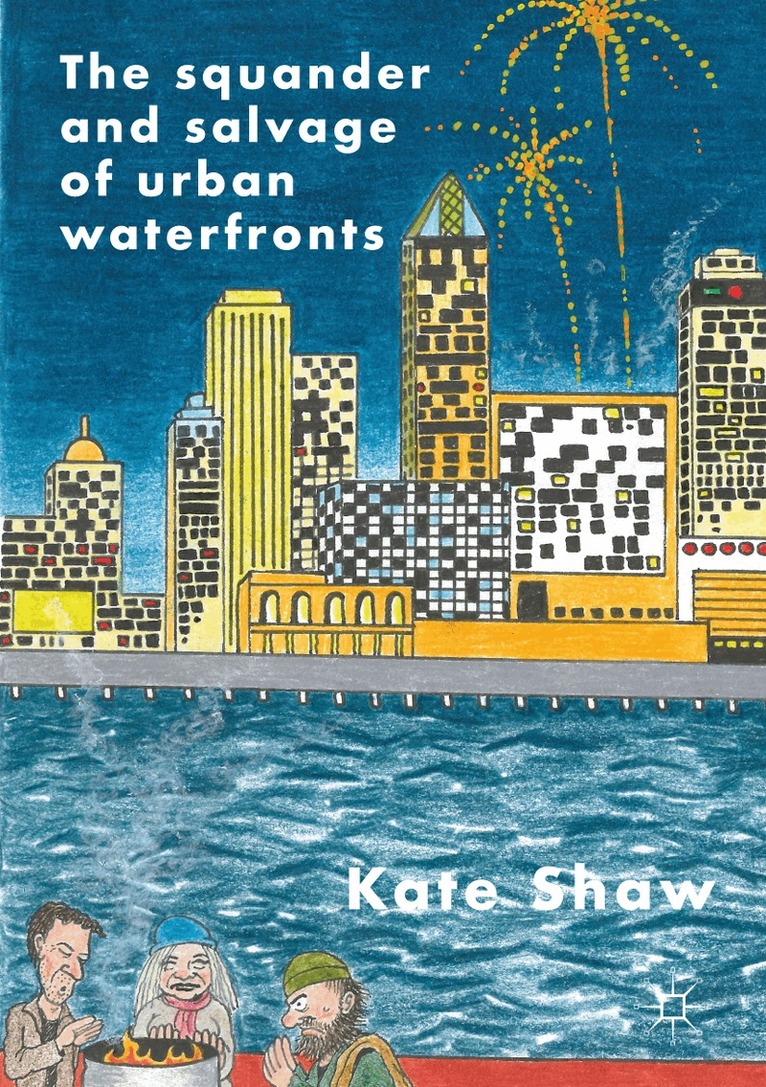
Squander and Salvage of Global Urban Waterfronts
Av Kate Shaw
Häftad, 2026
321 kr
Lägg i varukorg
The redevelopment of London Docklands set a new standard for urban regeneration. City governments all over the world now aspire to the high-rise, high-gloss, high-cost ‘office-residential-retail’ formula (just add iconic casino/luxury hotel/state-of-the-art stadium) that passes for mixed use in the …
Beyond Bigfoot & Nessie
Lesser-Known Mystery Animals from Around the World
Av Kate Shaw
Häftad, 2022
303 kr
Lägg i varukorg
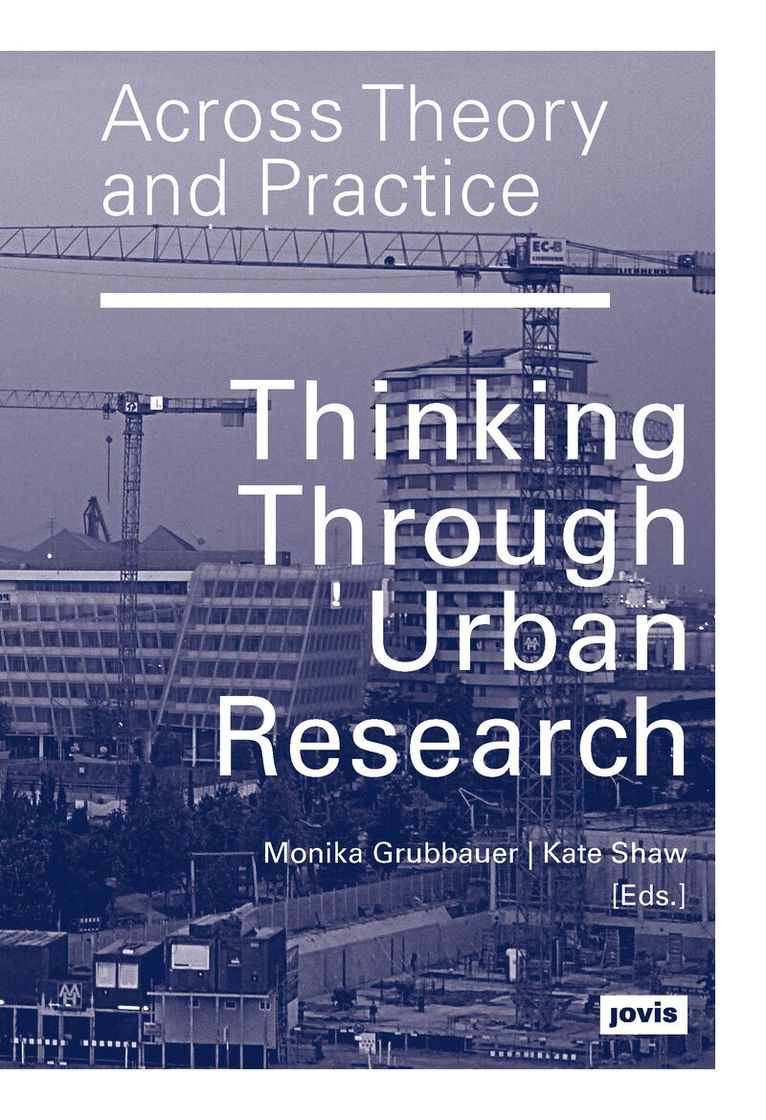
Across Theory and Practice
Thinking Through Urban Research
Av Monika Grubbauer, Kate Shaw m. fl.
Häftad, 2018
411 kr
Tillfälligt slut
How does theory relate to practice? How should practice inform theory?Scholars all over the world struggle with these questions, particularly in urban research which offers simultaneously a field of deep theory and a very practical place of work. For the study of contemporary urban development in …