
Kateb George Kateb – författare
Visar alla böcker från författaren . Handla med fri frakt och snabb leverans.
2 produkter
2 produkter
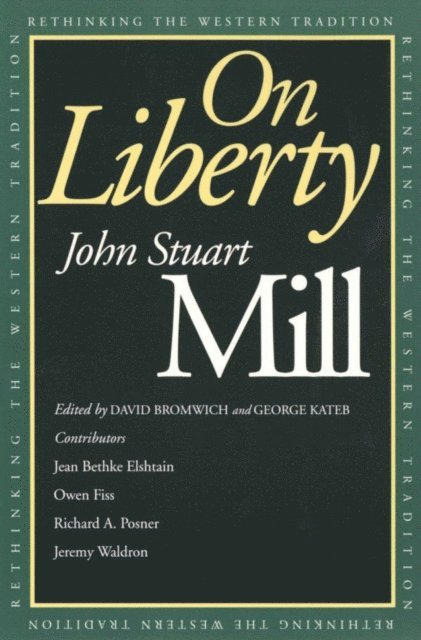
E-bok
PDF, Engelska, 2008268 kr
Läs direkt efter köp
Since its first publication in 1859, few works of political philosophy have provoked such continuous controversy as John Stuart Mill’s On Liberty, a passionate argument on behalf of freedom of self-expression. This classic work is now available in a new edition that also includes essays by distinguished scholars in a range of fields.The book begins with a biographical essay by David Bromwich and an interpretative essay by George Kateb. Then Jean Bethke Elshtain, Owen Fiss, Judge Richard A. Posner, and Jeremy Waldron present commentaries on the pertinence of Mill’s thinking to current debates. They discuss, for example, the uses of authority and tradition, the shifting legal boundaries of free speech and free action, the relation of personal liberty to market individualism, and the tension between the right to live as one pleases and the right to criticize anyone’s way of life.
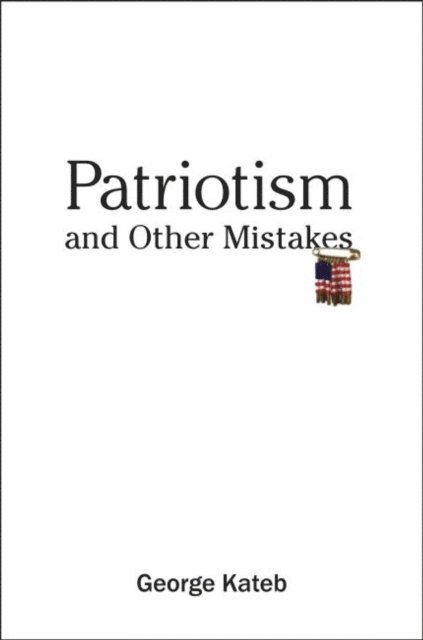
E-bok
PDF, Engelska, 2008316 kr
Läs direkt efter köp
George Kateb has been one of the most respected and influential political theorists of the last quarter century. His work stands apart from that of many of his contemporaries and resists easy summary. In these essays Kateb often admonishes himself, in Socratic fashion, to keep political argument as far as possible negative: to be willing to assert what we are not, and what we will not do, and to build modestly from there some account of what we are and what we ought to do.Drawing attention to the non-rational character of many motives that drive people to construct and maintain a political order, he urges greater vigilance in political life and cautions against “mistakes” not usually acknowledged as such. Patriotism is one such mistake, too often resulting in terrible brutality and injustices. He asks us to consider how commitments to ideals of religion, nation, race, ethnicity, manliness, and courage find themselves in the service of immoral ends, and he exhorts us to remember the dignity of the individual.The book is divided into three sections. In the first, Kateb discusses the expansion of state power (including such topics as surveillance) and the justifications for war recently made by American policy makers. The second section offers essays in moral psychology, and the third comprises fresh interpretations of major thinkers in the tradition of political thought, from Socrates to Arendt.