Katharina Pawlowski - Böcker
Visar alla böcker från författaren Katharina Pawlowski. Handla med fri frakt och snabb leverans.
4 produkter
4 produkter
1 593 kr
Skickas inom 10-15 vardagar
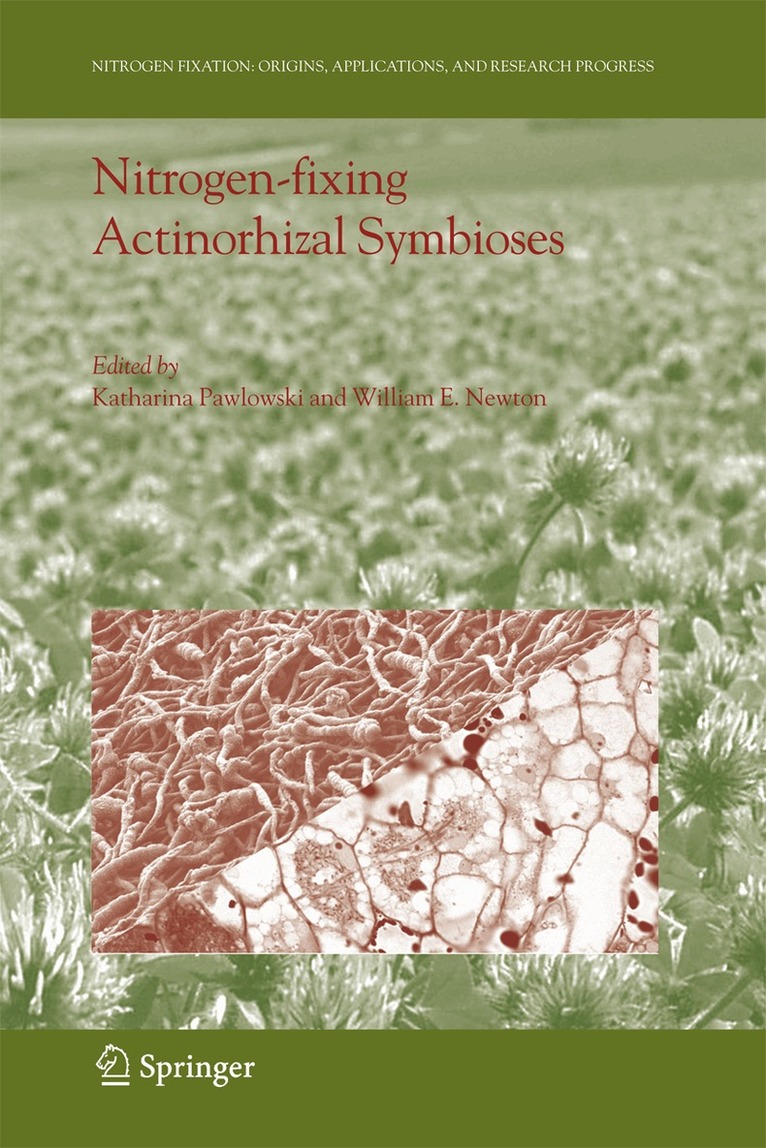
Nitrogen-fixing Actinorhizal Symbioses This book is part of a seven-volume series that was launched in 2004 and covers all aspects of nitrogen fixation from the biological systems to the industrial processes. Volume 6 covers nitrogen-fixing actinorhizal symbioses, which occur between soil actinomycetes of the genus Frankia and a diverse group of dicotyledonous plants, collectively called actinorhizal plants. These symbioses play vital roles in native ecosystems as well as important components in both forestry and land reclamation. The volume is divided into 11 chapters, all authored by well-known scientists in the field. As in previous volumes of this series, the first chapter presents an historical perspective and describes the development of actinorhizal research with its focus on the period after the first reproducible isolation of the responsible microorganism by John Torrey’s group in 1978. Very early on, the initial attempts to characterize the bacterium taxonomically had considered this endosymbiont as an obligate symbiotic bacterium and used its ability to form root nodules and its morphological characteristics within root-nodule cells as discriminative criteria to distinguish it from other actinomycetes. These efforts led to the emendation of the family Frankiaceae with the type genus Frankia and also to the definition of host-specificity groups based on inoculation experiments using crushed nodules. However, after Frankia strains were isolated from nodules and pure cultures became available, many of these early results had to be discarded. Chapter 2 describes the techniques used to obtain phenotypic, genotypic and phylogenetic information on the members of the genus Frankia.
1 593 kr
Skickas inom 10-15 vardagar
Endophytic prokaryotes can invade the tissue of the host plant without triggering defense reactions or disease symptoms. Instead, they promote the growth of the host plant due to their ability to fix atmospheric dinitrogen and/or to produce plant growth-promoting substances. This Microbiology Monographs volume presents up-to-date findings on the interactions between plants and beneficial prokaryotes, including the use of genomics for the analysis of plant-prokaryote symbioses and their evolution. Rhizobia-legume, actinorhizal and cyanobacterial symbioses are presented.
1 593 kr
Skickas inom 10-15 vardagar
Endophytic prokaryotes can invade the tissue of the host plant without triggering defense reactions or disease symptoms. Instead, they promote the growth of the host plant due to their ability to fix atmospheric dinitrogen and/or to produce plant growth-promoting substances.This Microbiology Monographs volume presents up-to-date findings on the interactions between plants and beneficial prokaryotes, including the use of genomics for the analysis of plant-prokaryote symbioses and their evolution. Rhizobia-legume, actinorhizal and cyanobacterial symbioses are presented.
1 593 kr
Skickas inom 10-15 vardagar
Nitrogen-fixing Actinorhizal Symbioses This book is part of a seven-volume series that was launched in 2004 and covers all aspects of nitrogen fixation from the biological systems to the industrial processes. Volume 6 covers nitrogen-fixing actinorhizal symbioses, which occur between soil actinomycetes of the genus Frankia and a diverse group of dicotyledonous plants, collectively called actinorhizal plants. These symbioses play vital roles in native ecosystems as well as important components in both forestry and land reclamation. The volume is divided into 11 chapters, all authored by well-known scientists in the field. As in previous volumes of this series, the first chapter presents an historical perspective and describes the development of actinorhizal research with its focus on the period after the first reproducible isolation of the responsible microorganism by John Torrey’s group in 1978. Very early on, the initial attempts to characterize the bacterium taxonomically had considered this endosymbiont as an obligate symbiotic bacterium and used its ability to form root nodules and its morphological characteristics within root-nodule cells as discriminative criteria to distinguish it from other actinomycetes. These efforts led to the emendation of the family Frankiaceae with the type genus Frankia and also to the definition of host-specificity groups based on inoculation experiments using crushed nodules. However, after Frankia strains were isolated from nodules and pure cultures became available, many of these early results had to be discarded. Chapter 2 describes the techniques used to obtain phenotypic, genotypic and phylogenetic information on the members of the genus Frankia.