Katherine C. Grier – författare
Visar alla böcker från författaren Katherine C. Grier. Handla med fri frakt och snabb leverans.
2 produkter
2 produkter
Häftad, Engelska, 2015
540 kr
Skickas inom 10-15 vardagar
Entertaining and informative, Pets in America is a portrait of Americans' relationships with the cats, dogs, birds, fishes, rodents, and other animals we call our own. More than 60 percent of U.S. households have pets, and America grows more pet-friendly every day. But as Katherine C. Grier demonstrates, the ways we talk about and treat our pets - as companions, as children, and as objects of beauty, status, or pleasure - have their origins long ago. Grier begins with a natural history of animals as pets, then discusses the changing role of pets in family life, new standards of animal welfare, the problems presented by borderline cases such as livestock pets, and the marketing of both animals and pet products. She focuses particularly on the period between 1840 and 1940, when the emotional, behavioral, and commercial characteristics of contemporary pet keeping were established. The story is filled with the warmth and humor of anecdotes from period diaries, letters, catalogs, and newspapers.Filled with illustrations reflecting the whimsy, the devotion, and the commerce that have shaped centuries of American pet keeping, Pets in America ultimately shows how the history of pets has evolved alongside changing ideas about human nature, child development, and community life. This book accompanies a museum exhibit, ""Pets in America,"" which opens at the McKissick Museum in Columbia, South Carolina, in December 2005 and will travel to five other cities from May 2006 through May 2008.
E-bok
PDF, Engelska, 2017273 kr
Läs direkt efter köp
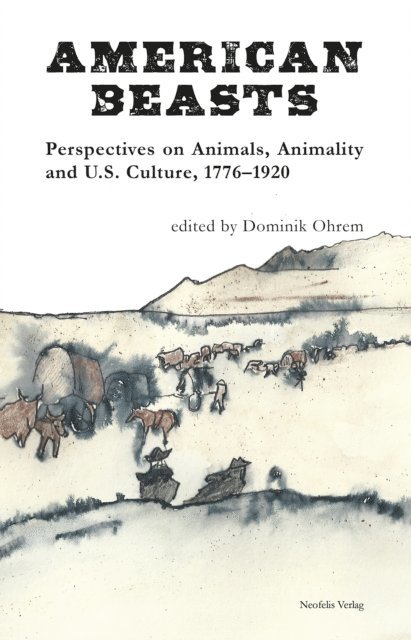
In American history, animals are everywhere. They are a ubiquitous presence in myriad historical, literary, biographical, scientific and other documents and narratives of the American past – a past that, just like the present, was shaped by a multiplicity of relations between humans and other creatures ranging from coexistence and conviviality to hostility, subjugation and extermination. While such quintessentially American species as the bison, the mustang or the grizzly continue to roam the discursive, imaginary and, now to a much lesser degree, the geographical spaces of the nation, the less iconic creatures of civilization – the various species of domesticated working and companion animals – have arguably played an even more critical role in the genesis of modern American culture and society throughout the ''long nineteenth century.''Until recently, however, despite their ubiquity in historical documents, social relations and cultural productions, animals have rarely been of serious interest to mainstream historians. American Beasts argues that an adequate understanding of American history, and indeed of ''human'' history more broadly, requires a sustained engagement with its multifaceted more-than-human dimensions.The contributions collected here offer various insights into the broad relevance of animality and human-animal relations – from the culture of pet-keeping and the role of animals and animality in the context of slavery and abolition to the emergence of animal athletes at the turn of the twentieth century – as aspects that have always influenced all areas of American society. In addition, by highlighting the ways in which human-animal relations crucially shaped the relations (of power) between different groups of humans, American Beasts shows that a stronger concern with animals and animality also allows us to address the complex intersections between the history of human-animal relations and the histories of (for example) race, class and gender in the United States in the time from the early national period to the Progressive Era.