Katherine R. Cooper – författare
Visar alla böcker från författaren Katherine R. Cooper. Handla med fri frakt och snabb leverans.
6 produkter
6 produkter
Inbunden, Engelska, 2022
1 364 kr
Skickas inom 5-8 vardagar
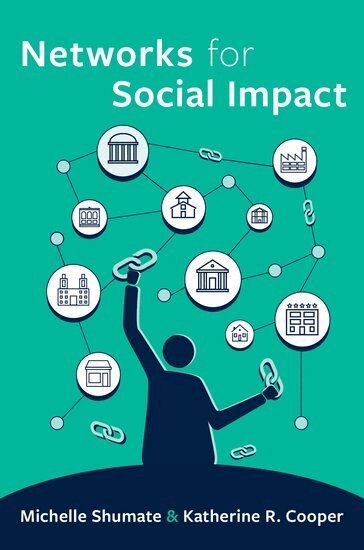
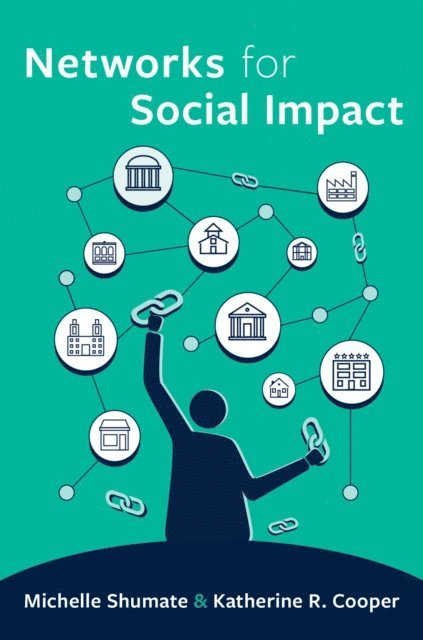
A broad review of how nonprofits, businesses, and governments work together to tackle social problemsNetworks for Social Impact takes a systems approach to explain how and when networks make a social impact. Michelle Shumate and Katherine R. Cooper argue that network design and management is not a one-size-fits-all formula. Instead, they show that the type of social issue, the mechanism for social impact, environment, and resources available each determine appropriate choices. Drawing on research from public administration, psychology, business, network science, social work, and communication, this book synthesizes what we know about how to best design and manage networks. It includes illustrations from thirty original case studies which describe groups of organizations addressing issues such as gender-based violence, educational outcomes, senior care, veterans' services, mental health and wellness, and climate change. Additionally, the volume examines critical issues that leaders address in creating and managing networks, including social issue analysis, network governance, securing and managing funding, dealing with power and conflict, using data effectively, and managing change. Each chapter includes tools for network leaders to use to handle these issues. This book is neither an overly idealistic, pro-collaboration account of the benefits of network approaches, nor is it a critical view of these efforts. Instead, this clear and concise volume highlights the opportunities and challenges of networks.
Häftad, Engelska, 2022
408 kr
Skickas inom 7-10 vardagar
A broad review of how nonprofits, businesses, and governments work together to tackle social problemsNetworks for Social Impact takes a systems approach to explain how and when networks make a social impact. Michelle Shumate and Katherine R. Cooper argue that network design and management is not a one-size-fits-all formula. Instead, they show that the type of social issue, the mechanism for social impact, environment, and resources available each determine appropriate choices. Drawing on research from public administration, psychology, business, network science, social work, and communication, this book synthesizes what we know about how to best design and manage networks. It includes illustrations from thirty original case studies which describe groups of organizations addressing issues such as gender-based violence, educational outcomes, senior care, veterans' services, mental health and wellness, and climate change. Additionally, the volume examines critical issues that leaders address in creating and managing networks, including social issue analysis, network governance, securing and managing funding, dealing with power and conflict, using data effectively, and managing change. Each chapter includes tools for network leaders to use to handle these issues. This book is neither an overly idealistic, pro-collaboration account of the benefits of network approaches, nor is it a critical view of these efforts. Instead, this clear and concise volume highlights the opportunities and challenges of networks.
E-bok
PDF, Engelska, 2021333 kr
Läs direkt efter köp
A broad review of how nonprofits, businesses, and governments work together to tackle social problemsNetworks for Social Impact takes a systems approach to explain how and when networks make a social impact. Michelle Shumate and Katherine R. Cooper argue that network design and management is not a one-size-fits-all formula. Instead, they show that the type of social issue, the mechanism for social impact, environment, and resources available each determine appropriate choices. Drawing on research from public administration, psychology, business, network science, social work, and communication, this book synthesizes what we know about how to best design and manage networks. It includes illustrations from thirty original case studies which describe groups of organizations addressing issues such as gender-based violence, educational outcomes, senior care, veterans'' services, mental health and wellness, and climate change. Additionally, the volume examines critical issues that leaders address in creating and managing networks, including social issue analysis, network governance, securing and managing funding, dealing with power and conflict, using data effectively, and managing change. Each chapter includes tools for network leaders to use to handle these issues. This book is neither an overly idealistic, pro-collaboration account of the benefits of network approaches, nor is it a critical view of these efforts. Instead, this clear and concise volume highlights the opportunities and challenges of networks.
E-bok
Engelska, 2021321 kr
Läs direkt efter köp
A broad review of how nonprofits, businesses, and governments work together to tackle social problemsNetworks for Social Impact takes a systems approach to explain how and when networks make a social impact. Michelle Shumate and Katherine R. Cooper argue that network design and management is not a one-size-fits-all formula. Instead, they show that the type of social issue, the mechanism for social impact, environment, and resources available each determine appropriate choices. Drawing on research from public administration, psychology, business, network science, social work, and communication, this book synthesizes what we know about how to best design and manage networks. It includes illustrations from thirty original case studies which describe groups of organizations addressing issues such as gender-based violence, educational outcomes, senior care, veterans'' services, mental health and wellness, and climate change. Additionally, the volume examines critical issues that leaders address in creating and managing networks, including social issue analysis, network governance, securing and managing funding, dealing with power and conflict, using data effectively, and managing change. Each chapter includes tools for network leaders to use to handle these issues. This book is neither an overly idealistic, pro-collaboration account of the benefits of network approaches, nor is it a critical view of these efforts. Instead, this clear and concise volume highlights the opportunities and challenges of networks.
Inbunden, Engelska, 2027
872 kr
Kommande
The Power of Hybridity encourages readers to see how different approaches can be combined to generate new insights in social impact organizing. This book has three goals: 1) to draw attention to hybridity and hybrid organizing as the reality of most, if not all, organizations in contemporary society; 2) to unpack the potential, possibilities, and challenges of hybridity for social impact organizing across diverse organizations in response to varied social issues; and 3) to explore how hybridity might shape the future of organizing, particularly as a catalyst for social and institutional change. Cooper and Fu build on past research to introduce a new model of hybridity that focuses on hybrid identities, forms, rationales, channels, actors, and contexts in social impact organizing. Insights from existing research offer implications for different forms of organizing (e.g. social service nonprofits, cross-sector networks, religious congregations, social ventures, benefit corporations, and corporate social responsibility programming) in response to varied social issues (including education, migration, gender-based violence, artificial intelligence, and climate change). Cooper and Fu focus on a cross-disciplinary review of existing research, while also introducing new research on including vulnerable stakeholders and incorporating artificial intelligence in social impact organizing. Implications of hybridity are offered for individuals, organizations, networks, communities, and society as a whole. Each chapter focuses on challenges in social impact organizing, with an invitation for different types of stakeholders to engage hybridity in response to the social issues that matter to them. The book includes discussion questions, case studies, and reflections for individual and group reflection, making this a resource for educators, researchers, students, practitioners, and policy makers interested in social issues.
Häftad, Engelska, 2027
276 kr
Kommande
The Power of Hybridity encourages readers to see how different approaches can be combined to generate new insights in social impact organizing. This book has three goals: 1) to draw attention to hybridity and hybrid organizing as the reality of most, if not all, organizations in contemporary society; 2) to unpack the potential, possibilities, and challenges of hybridity for social impact organizing across diverse organizations in response to varied social issues; and 3) to explore how hybridity might shape the future of organizing, particularly as a catalyst for social and institutional change. Cooper and Fu build on past research to introduce a new model of hybridity that focuses on hybrid identities, forms, rationales, channels, actors, and contexts in social impact organizing. Insights from existing research offer implications for different forms of organizing (e.g. social service nonprofits, cross-sector networks, religious congregations, social ventures, benefit corporations, and corporate social responsibility programming) in response to varied social issues (including education, migration, gender-based violence, artificial intelligence, and climate change). Cooper and Fu focus on a cross-disciplinary review of existing research, while also introducing new research on including vulnerable stakeholders and incorporating artificial intelligence in social impact organizing. Implications of hybridity are offered for individuals, organizations, networks, communities, and society as a whole. Each chapter focuses on challenges in social impact organizing, with an invitation for different types of stakeholders to engage hybridity in response to the social issues that matter to them. The book includes discussion questions, case studies, and reflections for individual and group reflection, making this a resource for educators, researchers, students, practitioners, and policy makers interested in social issues.