Katrin Grossmann – författare
Visar alla böcker från författaren Katrin Grossmann. Handla med fri frakt och snabb leverans.
5 produkter
5 produkter
Inbunden, Engelska, 2011
2 249 kr
Skickas inom 10-15 vardagar
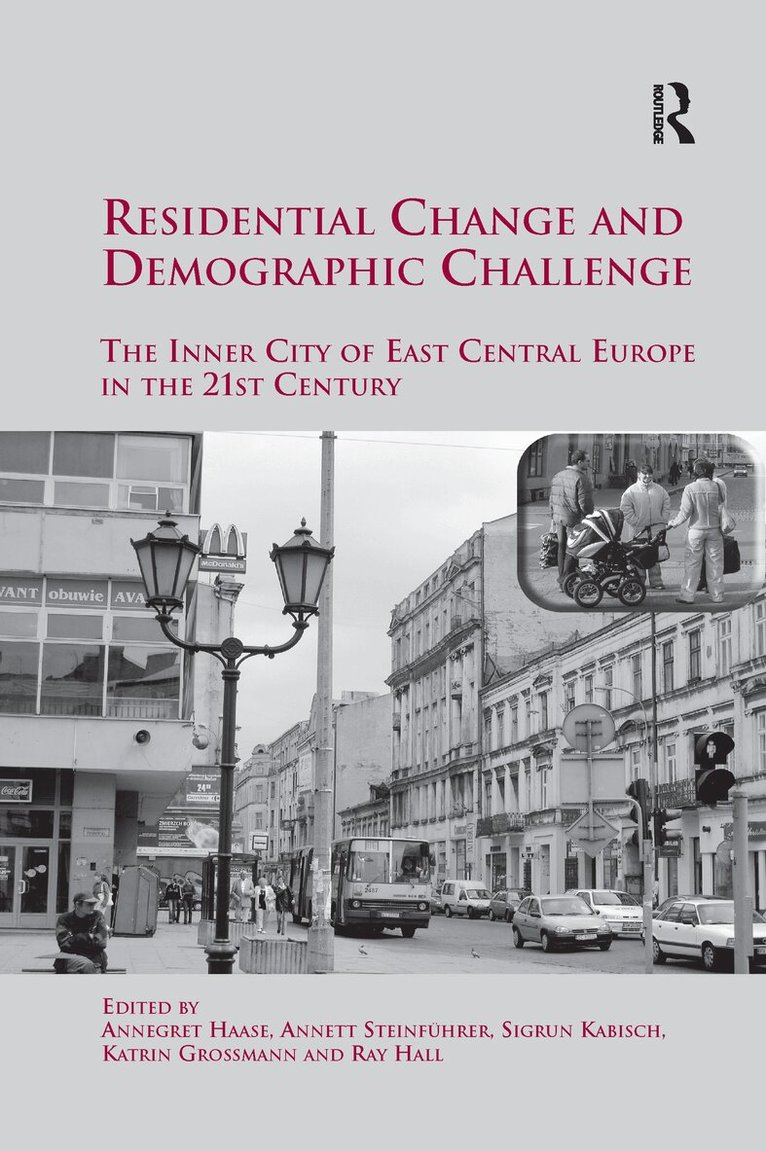
Going beyond the assumption that East Central European cities are still 'in transition' this book draws on the postsocialism paradigm to ask new questions about the impact of demographic change on residential developments in this region. Focussing on four second-order cities in this region, it examines Gdansk and Lódz in Poland and Brno and Ostrava in the Czech Republic as examples and deals with the nexus between urban development and demographic change for the context of East Central European cities. It provides a framework for linking urban and demographic research. It discusses how residential areas and urban developments cope with changes in population development, household types and different forms of in- and out-migration and goes on to explore parallels and differences in comparison with broader European patterns. This book will be useful to academics of urban planning and development especially in transition areas, Central and Eastern European studies, demographics and population studies, and sociology/social exclusion.
Häftad, Engelska, 2016
777 kr
Skickas inom 10-15 vardagar
Going beyond the assumption that East Central European cities are still 'in transition' this book draws on the postsocialism paradigm to ask new questions about the impact of demographic change on residential developments in this region. Focussing on four second-order cities in this region, it examines Gdansk and Lódz in Poland and Brno and Ostrava in the Czech Republic as examples and deals with the nexus between urban development and demographic change for the context of East Central European cities. It provides a framework for linking urban and demographic research. It discusses how residential areas and urban developments cope with changes in population development, household types and different forms of in- and out-migration and goes on to explore parallels and differences in comparison with broader European patterns. This book will be useful to academics of urban planning and development especially in transition areas, Central and Eastern European studies, demographics and population studies, and sociology/social exclusion.
E-bok
Engelska, 2016892 kr
Läs direkt efter köp
Going beyond the assumption that East Central European cities are still ''in transition'' this book draws on the postsocialism paradigm to ask new questions about the impact of demographic change on residential developments in this region. Focussing on four second-order cities in this region, it examines Gdansk and Lódz in Poland and Brno and Ostrava in the Czech Republic as examples and deals with the nexus between urban development and demographic change for the context of East Central European cities. It provides a framework for linking urban and demographic research. It discusses how residential areas and urban developments cope with changes in population development, household types and different forms of in- and out-migration and goes on to explore parallels and differences in comparison with broader European patterns. This book will be useful to academics of urban planning and development especially in transition areas, Central and Eastern European studies, demographics and population studies, and sociology/social exclusion.
E-bok
PDF, Engelska, 2016892 kr
Läs direkt efter köp
Going beyond the assumption that East Central European cities are still ''in transition'' this book draws on the postsocialism paradigm to ask new questions about the impact of demographic change on residential developments in this region. Focussing on four second-order cities in this region, it examines Gdansk and Lódz in Poland and Brno and Ostrava in the Czech Republic as examples and deals with the nexus between urban development and demographic change for the context of East Central European cities. It provides a framework for linking urban and demographic research. It discusses how residential areas and urban developments cope with changes in population development, household types and different forms of in- and out-migration and goes on to explore parallels and differences in comparison with broader European patterns. This book will be useful to academics of urban planning and development especially in transition areas, Central and Eastern European studies, demographics and population studies, and sociology/social exclusion.
Häftad, Tyska, 2016
665 kr
Skickas inom 10-15 vardagar
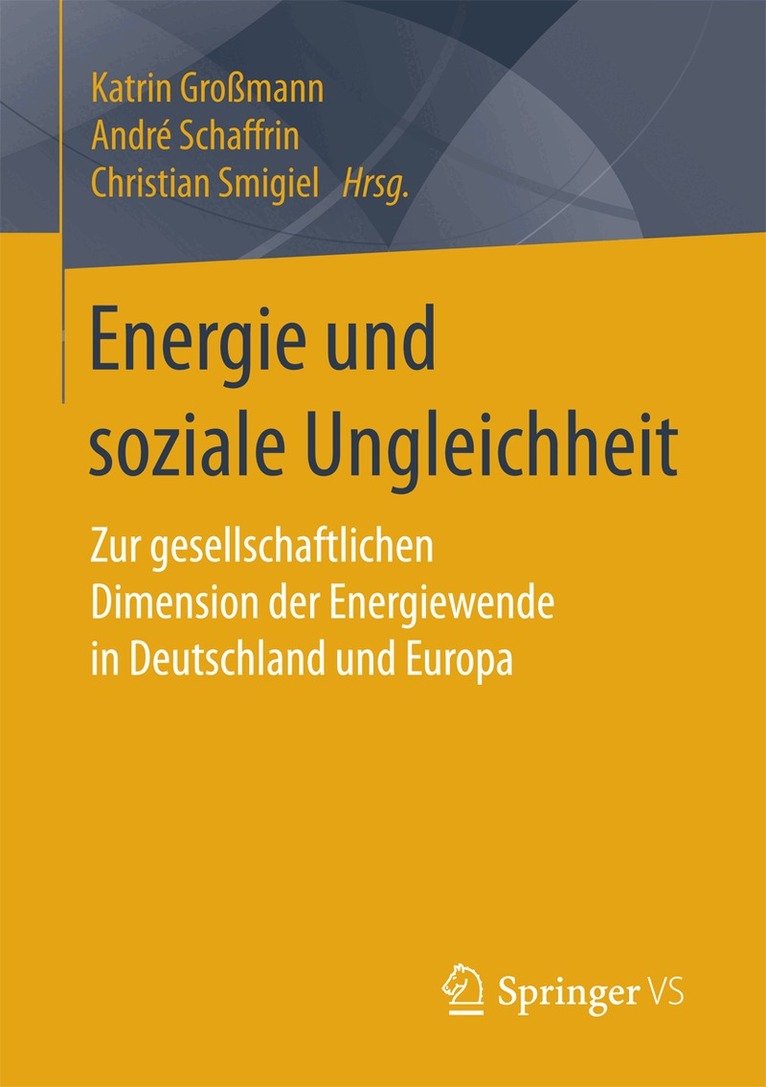
Der Sammelband gibt den aktuellen Stand zu Energiearmut, Energiepolitik und sozialer Ungleichheit wider und analysiert grundlegende Zusammenhänge und Determinanten in Deutschland und Europa. Seit Jahren, und nicht erst im Zuge der Energiewende, steigen in Deutschland die Energiekosten privater Haushalte. Dies trifft verschiedene soziale Gruppen in unterschiedlichem Maße, was wiederum unterschiedlich stark von wohlfahrtsstaatlichen Politiken abgefedert wird. Es ist jedoch der anhaltenden Debatte um steigende Strompreise für Privathaushalte im Zuge der Energiewende in Deutschland zu verdanken, dass Themen wie Energiearmut und Kostenbelastungen das Interesse der Öffentlichkeit geweckt haben. Gleichzeitig wurde deutlich, dass die wissenschaftliche Beschäftigung mit den Wechselwirkungen von Energiesystemen und sozialer Ungleichheit in Deutschland bis vor kurzem noch ein völlig unterbelichtetes Forschungsgebiet mit nur wenigen Pionierarbeiten war. Zu zeigen, welche Arbeiten in den vergangenen Jahren stattgefunden haben und welche Erkenntnisse dabei zutage gefördert wurden, ist das Ziel dieses Sammelbandes.