Katrin Ostertag – författare
Visar alla böcker från författaren Katrin Ostertag. Handla med fri frakt och snabb leverans.
7 produkter
7 produkter
E-bok
PDF, Engelska, 20121 367 kr
Läs direkt efter köp
(2) Do existing estimates of the no-regret potential stand up to are-evaluation within this framework? As a result of this analysis the size of previous estimates for no-regret potentials may be modified - in terms ofenergy savings or in financial terms. On the basis of these findings, we will approach the overriding third research question: (3) How large is the no-regret potential and what determines its size? The following chapter will provide a fuller account of the debate on no-regret potentials. This will be complemented by a detailed theory-based definition of no regret potentials in Chapter 2. The thesis will focus mostly on the micro-level of analysis. But we will also address the implications ofour findings for the analysis ofenergy saving measures and policies at more aggregate levels, notably within a feasibility study for adapting a model which represents the level of the national economy. The debate on no-regret potentials 1 origin, context, issues The term "no-regret potentials" was coined during the debate on climate change. It designates opportunities for the reduction of greenhouse gas (GHG) emissions ". . . that are worth undertaking whether or not there are climate-related reasons for doing so. " (IPCC 1996, p. 271). In the IPCC''s Third Assessment Report (TAR), no regret potentials are increasingly equated with GHG emission reduction potentials at negative (net) costs (lPCC 2001, p. 21).
E-bok
PDF, Tyska, 2013488 kr
Läs direkt efter köp
Del 43 - Technik, Wirtschaft und Politik
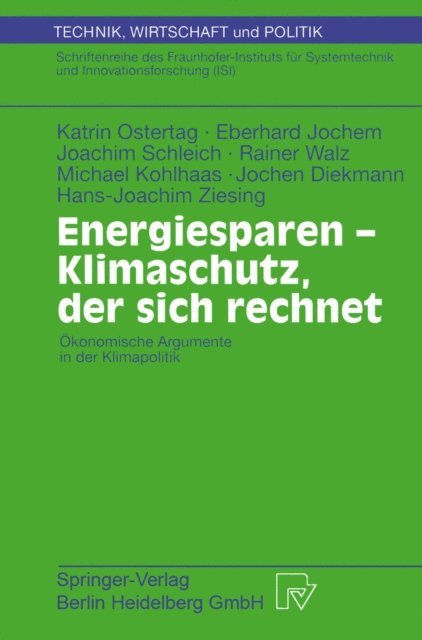
Energiesparen - Klimaschutz, der sich rechnet
Ökonomische Argumente in der Klimapolitik
Häftad, Tyska, 2000
767 kr
Skickas inom 10-15 vardagar
Del 15 - Technology, Innovation and Policy (ISI)
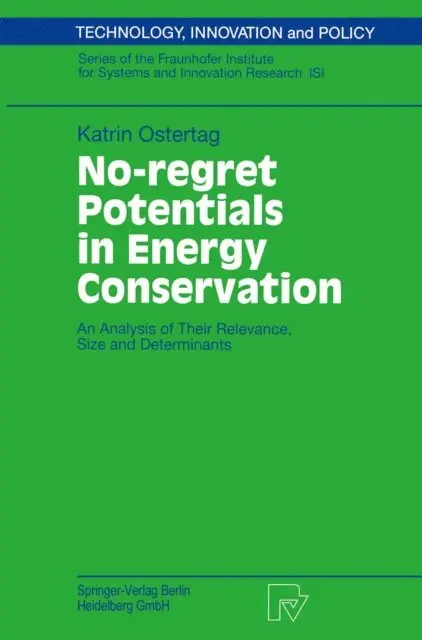
No-regret Potentials in Energy Conservation
An Analysis of Their Relevance, Size and Determinants
Häftad, Engelska, 2002
1 091 kr
Skickas inom 10-15 vardagar
(2) Do existing estimates of the no-regret potential stand up to are-evaluation within this framework? As a result of this analysis the size of previous estimates for no-regret potentials may be modified - in terms ofenergy savings or in financial terms. On the basis of these findings, we will approach the overriding third research question: (3) How large is the no-regret potential and what determines its size? The following chapter will provide a fuller account of the debate on no-regret potentials. This will be complemented by a detailed theory-based definition of no regret potentials in Chapter 2. The thesis will focus mostly on the micro-level of analysis. But we will also address the implications ofour findings for the analysis ofenergy saving measures and policies at more aggregate levels, notably within a feasibility study for adapting a model which represents the level of the national economy. The debate on no-regret potentials 1 origin, context, issues The term "no-regret potentials" was coined during the debate on climate change. It designates opportunities for the reduction of greenhouse gas (GHG) emissions ". . . that are worth undertaking whether or not there are climate-related reasons for doing so. " (IPCC 1996, p. 271). In the IPCC's Third Assessment Report (TAR), no regret potentials are increasingly equated with GHG emission reduction potentials at negative (net) costs (lPCC 2001, p. 21).
Inbunden, Engelska, 2011
1 091 kr
Skickas inom 10-15 vardagar
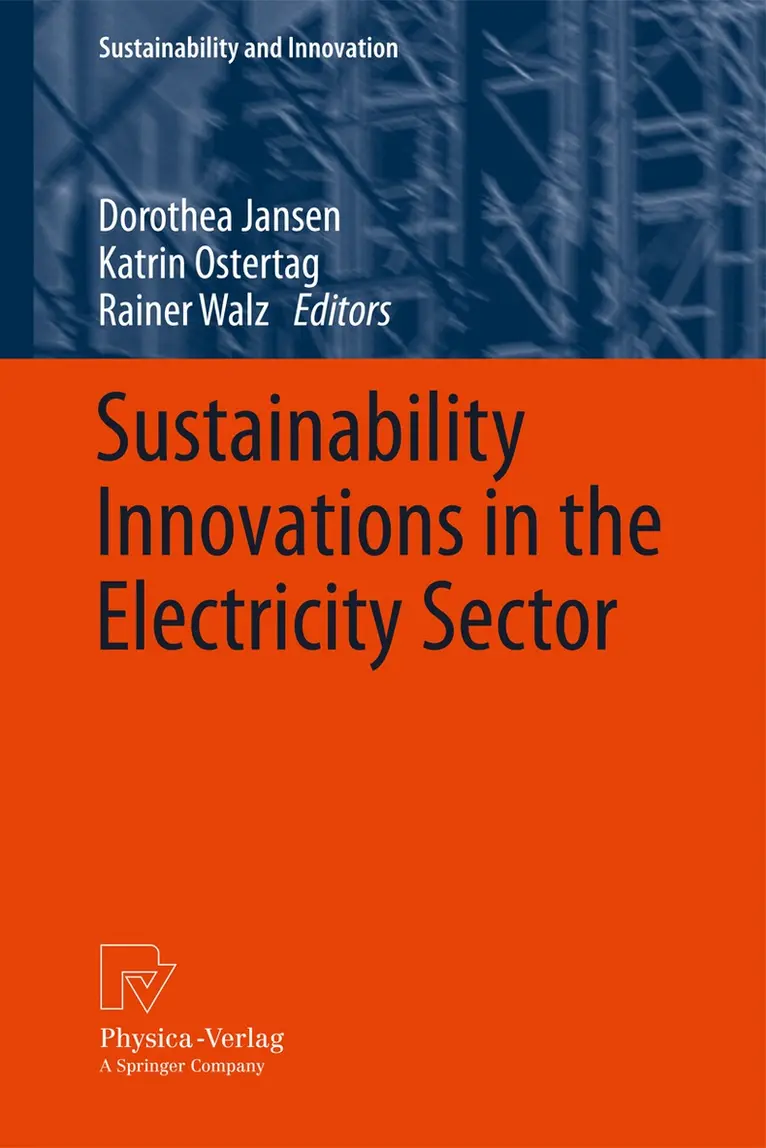
The future of modern societies depends on their ability to deal with the challenge of climate change in the coming decades. One essential component is a better understanding of innovation processes in the energy sector. This book focuses on sustainability innovations in renewable energies, combined heat and power, and energy service contracting, and analyses the institutions, actors and functions within the innovation system. Of particular interest is the question of whether the joint effect of EU-driven market liberalization and climate policies will succeed in establishing market forces that will drive actors towards more climate-friendly energy production. A special focus is on the role of local utilities in the electricity sector as opposed to large transmission net operators or regional net operators. The countries covered in the contributions include Germany, Denmark, the UK, Switzerland, and the Netherlands.
E-bok
PDF, Engelska, 20111 416 kr
Läs direkt efter köp
The future of modern societies depends on their ability to deal with the challenge of climate change in the coming decades. One essential component is a better understanding of innovation processes in the energy sector. This book focuses on sustainability innovations in renewable energies, combined heat and power, and energy service contracting, and analyses the institutions, actors and functions within the innovation system. Of particular interest is the question of whether the joint effect of EU-driven market liberalization and climate policies will succeed in establishing market forces that will drive actors towards more climate-friendly energy production. A special focus is on the role of local utilities in the electricity sector as opposed to large transmission net operators or regional net operators. The countries covered in the contributions include Germany, Denmark, the UK, Switzerland, and the Netherlands.
Häftad, Engelska, 2013
1 091 kr
Skickas inom 10-15 vardagar
The future of modern societies depends on their ability to deal with the challenge of climate change in the coming decades. One essential component is a better understanding of innovation processes in the energy sector. This book focuses on sustainability innovations in renewable energies, combined heat and power, and energy service contracting, and analyses the institutions, actors and functions within the innovation system. Of particular interest is the question of whether the joint effect of EU-driven market liberalization and climate policies will succeed in establishing market forces that will drive actors towards more climate-friendly energy production. A special focus is on the role of local utilities in the electricity sector as opposed to large transmission net operators or regional net operators. The countries covered in the contributions include Germany, Denmark, the UK, Switzerland, and the Netherlands.