
Kaufman George G Kaufman – författare
Visar alla böcker från författaren . Handla med fri frakt och snabb leverans.
15 produkter
15 produkter
E-bok
Engelska, 20161 571 kr
Läs direkt efter köp
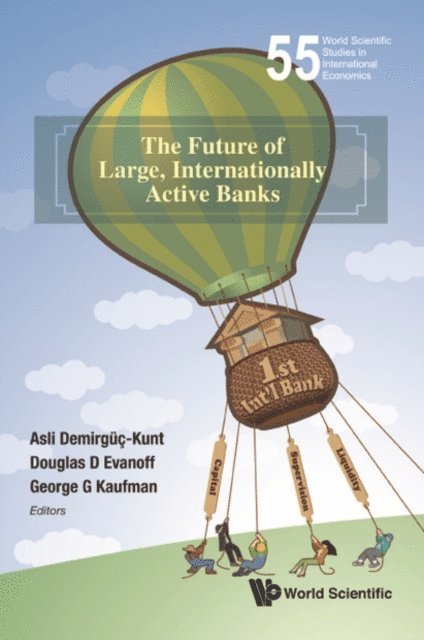
The Great Financial Crisis of 2007-2010 has had a major impact on large cross-border banks, which are widely blamed for the start and severity of the crisis. As a result, much public policy, both in the United States and elsewhere, has been directed at making these banks safer and less influential by reducing their size and permissible powers through increased government regulation.At the Federal Reserve Bank of Chicago''s 18th annual International Banking Conference, held in November 2015, the status of these large cross-border banks was critically evaluated. In collaboration with the World Bank, the conference held discussions on the current regulatory landscape for large and internationally active financial institutions; the impact of regulation on bank permissible activities and international trade; improvements in risk management; necessary repairs to the bank safety net; the resolution of insolvent banks operating across national borders; corporate governance for banks in the new environment; implications for market and government discipline; and, progress in achieving international cooperation.Contributors include international policymakers, practitioners, researchers, and academics from more than 30 countries. The papers from the conference are collected in this volume.
E-bok
Engelska, 20171 556 kr
Läs direkt efter köp
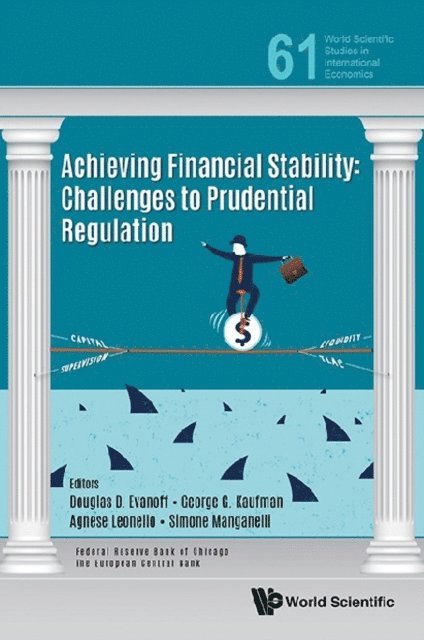
The Great Financial Crisis of 2007-2010 exposed the existence of significant imperfections in the financial regulatory framework that encouraged excessive risk-taking and increased system vulnerabilities. The resulting high cost of the crisis in terms of lost aggregate income and wealth, and increased unemployment has reinforced the need to improve financial stability within and across countries via changes in traditional microprudential regulation, as well as the introduction of new macroprudential regulations. Amongst the questions raised are:
E-bok
Engelska, 20181 478 kr
Läs direkt efter köp
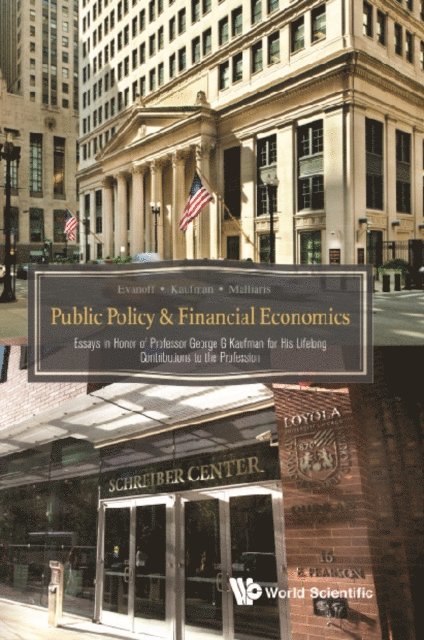
The central goal of this volume was to assemble outstanding scholars and policymakers in the field of financial markets and institutions and have them articulate significant market developments in their particular areas of expertise during the past few decades.Not just a celebratory volume, Public Policy and Financial Economics selected internationally recognized financial economists who have worked with Professor Kaufman during his years of scholarly research, and have a combined mastery of specialized financial markets themes and, very importantly, knowledge of public policies in the areas. All 15 chapters offer unique, innovative, and exciting expositions of several critical topics in financial economics.
E-bok
Engelska, 20181 265 kr
Läs direkt efter köp
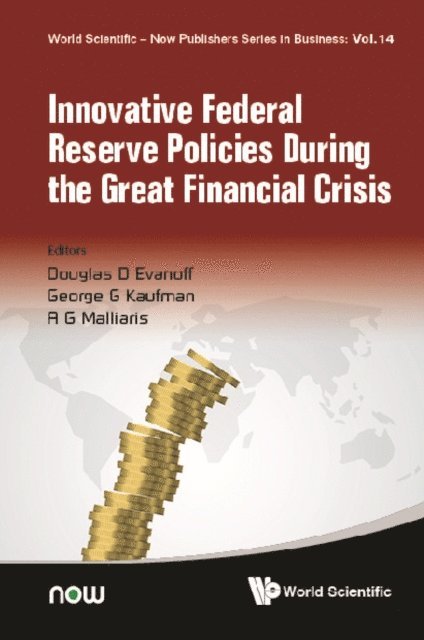
This book, Innovative Federal Policies During the Great Financial Crisis, contains discussions of unconventional monetary policies, policy changes to address systemic and payments systems risks, new macroprudential policies, the ''stretching'' of the financial safety net, changes in the Fed''s liquidity funding facility (the discount window), use of the Fed''s balance sheet as a tool of monetary policy, and alternative means to deal with real-estate asset bubbles and potential financial instability.The 10 chapters in this book offer a unique analysis of several innovative approaches by the Federal Reserve that contributed to the stabilization of the US economy following the Great Recession. What unique policies were implemented? Toward what goal? Were they effective? Were there unintended consequences? Additionally, but less thoroughly, events in the Euro market are also discussed, and policies (and their impact) of the ECB are critiqued.Based on papers presented at the 91st Annual Conference of the Western Economic Association International Meetings in Portland, Oregon, 2016, Innovative Federal Policies During the Great Financial Crisis adds significantly to the debate over why innovative or unconventional policies were needed, how they were implemented and how effective they were.
E-bok
PDF, Engelska, 2011718 kr
Läs direkt efter köp
This book is a collection of papers presented in the conference held at the Federal Reserve Bank of Chicago in September 2010, that examines the role of macroprudential regulation in the financial industry. Shocked by the experience of the last few years, many argue that the more traditional microprudential regulatory tools are inadequate to create a safe and stable financial system. The microprudential paradigm relies on the presumption that the financial system as a whole can be made safe by ensuring individual financial institutions are made safe. This ignores interconnections and externalities, whereby the actions of one financial institution or events in financial markets can lead to spillover effects that adversely affect general market conditions, other financial institutions, and ultimately the economy as a whole. Instead, it is argued, there is a need for both microprudential approaches to regulate individual institutions and macroprudential approaches to manage the overall financial system risks.Conference participants discussed macroprudential regulation and related issues, including: What are the theoretical motivations for macroprudential regulation? How would it interact with other regulatory and macroeconomic policies, especially monetary policy? What would be the specific macroprudential tools? Who should have control over the macroprudential tools? How should a macroprudential regulator be structured? Where should it be housed? How can macroprudential policies be structured across national borders? What role, if any, can market discipline play in supporting macroprudential objectives?Concentrating on public policy issues, the conference featured keynote addresses by influential past and present public policy figures including: Paul Volcker, Chairman of the US President''s Economic Recovery Advisory Board and former Chairman of the Federal Reserve System; Tommaso Padoa-Schioppa, Chairman, Promontory Financial Group Europe and Former Chairman of the Basel Committee on Banking Supervision; Jaime Caruana, General Manager of the Bank for International Settlements and Former Chairman of the Basel Committee on Banking Supervision; and Charles Taylor, Director of the Pew Charitable Trust Financial Reform Project and Former Executive Director of the Group of Thirty.
E-bok
Engelska, 2013823 kr
Läs direkt efter köp
The two most topical issues in current financial markets deal with the causes of the recent financial crisis and the means to prevent future crises. This book addresses the latter and stresses a major shift in most countries toward a better understanding of financial stability and how it can be achieved. In particular, the papers in this volume examine the recent change in emphasis at central banks with regard to financial stability. For example: What were the cross-country differences in emphasis on financial stability in the past? Did these differences appear to affect the extent of the adverse impact of the financial crisis on individual countries? What are perceived to be the major future threats to financial stability? These and related issues are discussed in the book by well-known experts in the field — some of the best minds in the world pursuing financial stability. Following the global financial crisis, significant reforms have been initiated in many countries to address financial stability more directly, frequently focusing on macroprudential policy frameworks in which central banks play a more active role.
E-bok
PDF, Engelska, 2011793 kr
Läs direkt efter köp
The recent global financial crisis has caused massive upheavals worldwide. The papers in this volume analyze whether financial principles seem to have shifted in recent years, and what that may mean for international financial markets and regulation. What “broke” in the current crisis? Is there no “playbook” on how to respond to systemic crises? What is the optimal role of the state in dealing with crises? How should asset bubbles be addressed in the future? Do we need a major overhaul of governance in the industry? What means exist to address systemic crises? What reforms are needed? These and related issues are discussed by an impressive list of well-known scholars, policymakers and practitioners, with an emphasis on the implications for public policy.

E-bok
PDF, Engelska, 2009808 kr
Läs direkt efter köp
Since the summer of 2007, credit markets in almost all industrial countries have been in substantial turmoil and this has become the focus of intense policy debates. The papers in this volume are contributed by the world''s leading financial experts and constitute a thorough examination of the first credit market turmoil of the 21st Century. They provide an overview of the main causes, transmission mechanisms and economic implications of what by now has become a major systemic financial crisis. They assess the most important policy considerations and conclude about how to stabilize financial systems, attenuate repercussions on the real economy and shape future regulatory structures. The analyses, conclusions, and recommendations can be expected to influence both public and private policies to mitigate, if not prevent, such crises in the future.
E-bok
PDF, Engelska, 2009917 kr
Läs direkt efter köp
The impact of globalization of financial markets is a highly debated topic, particularly in recent months when the issue of globalization and contagion of financial distress has become a focus of intense policy debate. The papers in this volume provide an up-to-date overview of the key issues in this debate. While most of the contributions were prepared after the initial outbreak of the current global turmoil and financial crisis, they identify the relative strengths of the risk diversification and risk transmission processes and examine the empirical evidence to date. The book considers the relative roles of banks, nonbank financial institutions and capital markets in both risk diversification and risk transmission. It then evaluates the current status of crisis resolution in a global context, and speculates where to go from here in terms of understanding, resolution, prevention and public policy.
E-bok
PDF, Engelska, 2007914 kr
Läs direkt efter köp
This book explores the potential and problems of bank safety and efficiency arising from the rapidly growing area of cross-border banking in the form of branches or subsidiaries with primarily only national prudential regulation. There are likely to be differences in the treatment of the same bank operating in different countries or of different banks from different home countries operating in the same country with respect to deposit insurance provisions, declaration of insolvency, resolution of insolvencies, and lender of last resort protection. The book identifies these protection problems and discusses possible solutions, such as greater cross-border cooperation, harmonization and organizations.The contributors to this book include experts from different countries and from a wide range of affiliations, including academia, regulators, practitioners, and international organizations.
E-bok
PDF, Engelska, 2006885 kr
Läs direkt efter köp
Cross-border banking, while having the potential for a more efficient financial sector, also creates potential challenges for bank supervisors and regulators. It requires cooperation by regulatory authorities across jurisdictions and a clear delineation of authority and responsibility. That delineation is typically not present and regulatory authorities often have significantly different incentives to respond when cross-border-active banks encounter difficulties. Most of these issues have only begun to be seriously evaluated.This volume, one of the first attempts to address these issues, brings together experts and regulators from different countries. The wide range of topics discussed include: the current landscape of cross-border bank activity, the resulting competitive implications, emerging challenges for prudential regulation, safety net concerns, failure resolution issues, and the potential future evolution of international banking.This book has been selected for coverage in:• Index to Social Sciences & Humanities Proceedings® (ISSHP® / ISI Proceedings)• Index to Social Sciences & Humanities Proceedings (ISSHP CDROM version/ISI Proceedings)
E-bok
PDF, Engelska, 2005978 kr
Läs direkt efter köp
Bank failures, like illness and taxes, are almost a certainty at some time in the future. What is less certain is their cost to and adverse implications for macroeconomies. Past failures have frequently been resolved at very high cost to society. However, the cost could be reduced through having a well-developed, credible and widely publicized plan ready to put into action by policymakers. If no such plan is ready when a large bank approaches insolvency, political pressures are likely to influence the response of regulators.Minimizing immediate, short-run costs are likely to outweigh minimizing further out, longer-run and longer-lasting costs, even if these delayed costs promise to be substantially greater. Stated differently, today will win out over tomorrow and politics will trump economics. How best to prevent such unfavorable outcomes is the major theme of this volume. The articles presented review past insolvency resolutions, draw lessons from these resolutions, discuss impediments to efficient resolutions — including cross-country, cross-regulator, and institutional challenges — and recommend how to move forward.
E-bok
Engelska, 2013871 kr
Läs direkt efter köp
As a result of the recent financial crisis, there has been significant public debate on the role of the financial sector in bringing about the “Great Depression.” More generally, there has been debate about whether the current industry structure has enhanced social welfare or served a detrimental role.This book is a collection of papers presented at the conference held at the Federal Reserve Bank of Chicago, in November 2012 that examined the social value of the financial sector as currently structured. Issues evaluated include what are the perceived benefits and costs of the current financial system? How valuable have industry innovations been for society? Should regulation be used to “move” the industry in a direction thought to be more valuable for society? Should “big” banks be broken up? What are the welfare implications of the current industry structure? In the book, leading industry scholars debate these issues with a goal of influencing public policy toward the industry.
E-bok
Engelska, 2015841 kr
Läs direkt efter köp
Although there have been numerous studies of the causes and consequences of the Great Financial Crisis of 2007-2010 in the US and abroad, many of these were undertaken only for a small number of countries and before the financial and economic effects were fully realized and before various governmental policy responses were decided upon and actually implemented. This book aims to fill these voids by providing a more thorough assessment now that the worst events and the regulatory reforms are sufficiently behind us and much more information about these developments is available. It reviews and analyzes the causes and consequences of and the regulatory responses to the Great Financial Crisis, particularly from a public policy viewpoint. In the process, it explores such intriguing questions as: What caused the crisis? How did the crisis differ across countries? What is the outlook for another crisis, and when? This is a must read for those who are trying to find answers to these questions.
E-bok
Engelska, 2015846 kr
Läs direkt efter köp
Ever since the Great Recession, the global financial regulatory system has undergone significant changes. But have these changes been sufficient? Have they created a new problem of over-regulation? Is the system currently in a better position than in the pre-Recession years, or have we not adequately addressed the basic causes of the financial crisis and resulting Great Recession?These were the questions and issues addressed in the seventeenth annual international banking conference held at the Federal Reserve Bank of Chicago in November 2014. In collaboration with the Bank of England, the theme of the conference was to examine the state of the new global financial system as it has evolved in response to significant market changes and regulatory reforms triggered by the global financial crisis. The papers from that conference are collected in this volume, with contributions from an international array of government officials, regulators, industry practitioners and academics.