Keith R. Mitchelson – författare
Visar alla böcker från författaren Keith R. Mitchelson. Handla med fri frakt och snabb leverans.
8 produkter
8 produkter
E-bok
PDF, Engelska, 20112 611 kr
Läs direkt efter köp
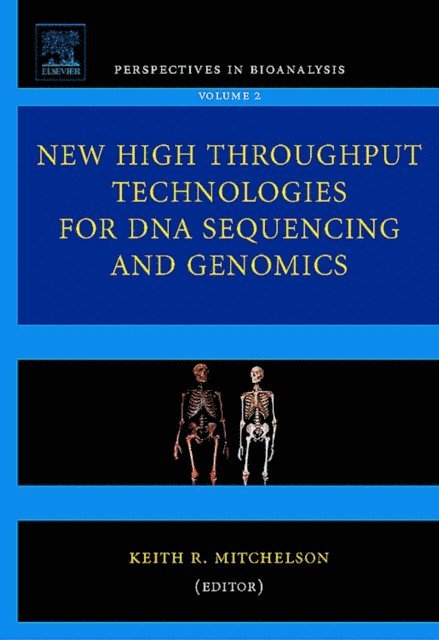
Since the independent invention of DNA sequencing by Sanger and by Gilbert 30 years ago, it has grown from a small scale technique capable of reading several kilobase-pair of sequence per day into today''s multibillion dollar industry. This growth has spurred the development of new sequencing technologies that do not involve either electrophoresis or Sanger sequencing chemistries. Sequencing by Synthesis (SBS) involves multiple parallel micro-sequencing addition events occurring on a surface, where data from each round is detected by imaging. New High Throughput Technologies for DNA Sequencing and Genomics is the second volume in the Perspectives in Bioanalysis series, which looks at the electroanalytical chemistry of nucleic acids and proteins, development of electrochemical sensors and their application in biomedicine and in the new fields of genomics and proteomics. The authors have expertly formatted the information for a wide variety of readers, including new developments that will inspire students and young scientists to create new tools for science and medicine in the 21st century.Reviews of complementary developments in Sanger and SBS sequencing chemistries, capillary electrophoresis and microdevice integration, MS sequencing and applications set the framework for the book.* ''Hot Topic'' with DNA sequencing continuing as a major research activity in many areas of life science and medicine.* Bringing together new developments in DNA sequencing technology* Reviewing issues relevant to the new applications used
Del 2 - Perspectives in Bioanalysis
New High Throughput Technologies for DNA Sequencing and Genomics
Inbunden, Engelska, 2007
2 499 kr
Skickas inom 10-15 vardagar
Since the independent invention of DNA sequencing by Sanger and by Gilbert 30 years ago, it has grown from a small scale technique capable of reading several kilobase-pair of sequence per day into today's multibillion dollar industry. This growth has spurred the development of new sequencing technologies that do not involve either electrophoresis or Sanger sequencing chemistries. Sequencing by Synthesis (SBS) involves multiple parallel micro-sequencing addition events occurring on a surface, where data from each round is detected by imaging. New High Throughput Technologies for DNA Sequencing and Genomics is the second volume in the Perspectives in Bioanalysis series, which looks at the electroanalytical chemistry of nucleic acids and proteins, development of electrochemical sensors and their application in biomedicine and in the new fields of genomics and proteomics. The authors have expertly formatted the information for a wide variety of readers, including new developments that will inspire students and young scientists to create new tools for science and medicine in the 21st century.Reviews of complementary developments in Sanger and SBS sequencing chemistries, capillary electrophoresis and microdevice integration, MS sequencing and applications set the framework for the book.* 'Hot Topic' with DNA sequencing continuing as a major research activity in many areas of life science and medicine.* Bringing together new developments in DNA sequencing technology* Reviewing issues relevant to the new applications used
Inbunden, Engelska, 2001
1 082 kr
Skickas inom 10-15 vardagar
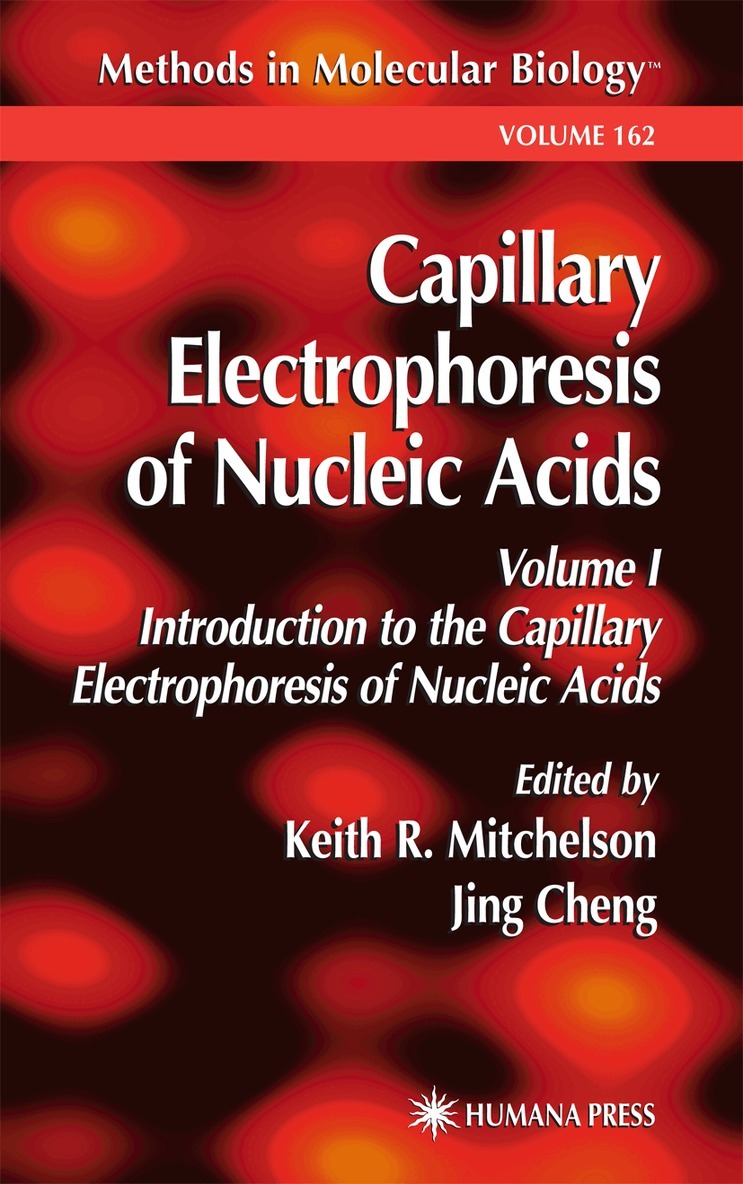
The development of PCR, which enables extremely small amounts of DNA to be amplified, led to the rapid development of a multiplicity of a- lytical procedures to utilize this new resource for analysis of genetic variation and for the detection of disease causing mutations. The advent of capillary electrophoresis (CE), with its power to separate and analyze very small amounts of DNA, has also stimulated researchers to develop analytical procedures for the CE format. The advantages of CE in terms of speed and reproducibility of analysis are manifold. Further, the high sensitivity of detection, and the ab- ity to increase sample throughput with parallel analysis, has led to the creation of a full range of analysis of DNA molecules, from modified DNA-adducts and single–strand oligonucleotides through to PCR-amplified DNA fragments and whole chromosomes. Capillary Electrophoresis of Nucleic Acids focuses on such analytical protocols, which can be used for detection and analysis of mutations and modification, from precise DNA loci through to entire genomes of organisms. Important practical considerations for CE, such as the choice of separation media, electrophoresis conditions, and the influence of buffer additives and dyes on DNA mobility, are discussed in several key chapters and within particular applications.
Inbunden, Engelska, 2000
1 620 kr
Skickas inom 10-15 vardagar
The development of PCR, which enables extremely small amounts of DNA to be amplified, led to the rapid development of a multiplicity of a- lytical procedures that permit use of this new resource for the analysis of genetic variation and for the detection of disease-causing mutations. The advent of capillary electrophoresis (CE), with its power to separate and a- lyze very small amounts of DNA, has also stimulated researchers to develop analytical procedures for the CE format. The advantages of CE in terms of speed and reproducibility of analyses are manifold. Furthermore, the high s- sitivity of detection, and the ability to increase sample throughput with par- lel analysis, has led to the creation of a full range of analysis of DNA molecules, from modified DNA adducts and single-strand oligonucleotides through PCR-amplified DNA fragments and whole chromosomes. Capillary Elect- phoresis of Nucleic Acids focuses on analytical protocols that can be used for detection and analysis of mutations and modification, from precise DNA loci through entire genomes of organisms. Important practical considerations for CE, such as the choice of separation media, electrophoresis conditions, and the influence of buffer additives and dyes on DNA mobility, are discussed in several key chapters and within particular applications.
E-bok
Engelska, 20082 049 kr
Läs direkt efter köp
The development of PCR, which enables extremely small amounts of DNA to be amplified, led to the rapid development of a multiplicity of a- lytical procedures that permit use of this new resource for the analysis of genetic variation and for the detection of disease-causing mutations. The advent of capillary electrophoresis (CE), with its power to separate and a- lyze very small amounts of DNA, has also stimulated researchers to develop analytical procedures for the CE format. The advantages of CE in terms of speed and reproducibility of analyses are manifold. Furthermore, the high s- sitivity of detection, and the ability to increase sample throughput with par- lel analysis, has led to the creation of a full range of analysis of DNA molecules, from modified DNA adducts and single-strand oligonucleotides through PCR-amplified DNA fragments and whole chromosomes. Capillary Elect- phoresis of Nucleic Acids focuses on analytical protocols that can be used for detection and analysis of mutations and modification, from precise DNA loci through entire genomes of organisms. Important practical considerations for CE, such as the choice of separation media, electrophoresis conditions, and the influence of buffer additives and dyes on DNA mobility, are discussed in several key chapters and within particular applications.
E-bok
Engelska, 20081 416 kr
Läs direkt efter köp
The development of PCR, which enables extremely small amounts of DNA to be amplified, led to the rapid development of a multiplicity of a- lytical procedures to utilize this new resource for analysis of genetic variation and for the detection of disease causing mutations. The advent of capillary electrophoresis (CE), with its power to separate and analyze very small amounts of DNA, has also stimulated researchers to develop analytical procedures for the CE format. The advantages of CE in terms of speed and reproducibility of analysis are manifold. Further, the high sensitivity of detection, and the ab- ity to increase sample throughput with parallel analysis, has led to the creation of a full range of analysis of DNA molecules, from modified DNA-adducts and single–strand oligonucleotides through to PCR-amplified DNA fragments and whole chromosomes. Capillary Electrophoresis of Nucleic Acids focuses on such analytical protocols, which can be used for detection and analysis of mutations and modification, from precise DNA loci through to entire genomes of organisms. Important practical considerations for CE, such as the choice of separation media, electrophoresis conditions, and the influence of buffer additives and dyes on DNA mobility, are discussed in several key chapters and within particular applications.
Häftad, Engelska, 2011
1 080 kr
Skickas inom 10-15 vardagar
The development of PCR, which enables extremely small amounts of DNA to be amplified, led to the rapid development of a multiplicity of a- lytical procedures to utilize this new resource for analysis of genetic variation and for the detection of disease causing mutations. The advent of capillary electrophoresis (CE), with its power to separate and analyze very small amounts of DNA, has also stimulated researchers to develop analytical procedures for the CE format. The advantages of CE in terms of speed and reproducibility of analysis are manifold. Further, the high sensitivity of detection, and the ab- ity to increase sample throughput with parallel analysis, has led to the creation of a full range of analysis of DNA molecules, from modified DNA-adducts and single–strand oligonucleotides through to PCR-amplified DNA fragments and whole chromosomes. Capillary Electrophoresis of Nucleic Acids focuses on such analytical protocols, which can be used for detection and analysis of mutations and modification, from precise DNA loci through to entire genomes of organisms. Important practical considerations for CE, such as the choice of separation media, electrophoresis conditions, and the influence of buffer additives and dyes on DNA mobility, are discussed in several key chapters and within particular applications.
Häftad, Engelska, 2010
1 616 kr
Skickas inom 10-15 vardagar
The development of PCR, which enables extremely small amounts of DNA to be amplified, led to the rapid development of a multiplicity of a- lytical procedures that permit use of this new resource for the analysis of genetic variation and for the detection of disease-causing mutations. The advent of capillary electrophoresis (CE), with its power to separate and a- lyze very small amounts of DNA, has also stimulated researchers to develop analytical procedures for the CE format. The advantages of CE in terms of speed and reproducibility of analyses are manifold. Furthermore, the high s- sitivity of detection, and the ability to increase sample throughput with par- lel analysis, has led to the creation of a full range of analysis of DNA molecules, from modified DNA adducts and single-strand oligonucleotides through PCR-amplified DNA fragments and whole chromosomes. Capillary Elect- phoresis of Nucleic Acids focuses on analytical protocols that can be used for detection and analysis of mutations and modification, from precise DNA loci through entire genomes of organisms. Important practical considerations for CE, such as the choice of separation media, electrophoresis conditions, and the influence of buffer additives and dyes on DNA mobility, are discussed in several key chapters and within particular applications.