Keith S. Taber – författare
Visar alla böcker från författaren Keith S. Taber. Handla med fri frakt och snabb leverans.
17 produkter
17 produkter
Häftad, Engelska, 2019
655 kr
Skickas inom 10-15 vardagar
This book offers an overview of programmes designed to support the learning of gifted and talented students in STEM subjects, both to allow them to meet their potential and to encourage them to proceed towards careers in STEM areas. The chapters from a range of national contexts report on perspectives, approaches and projects in gifted education in STEM subjects. These contributions provide a picture of the state of research and practice in this area, both to inform further research and development, and to support classroom teachers in their day-to-day work. Chapters have been written with practitioners in mind, but include relevant scholarly citations to the literature. The book includes some contributions illustrating research and practice in specific STEM areas, and others which bridge across different STEM subjects. The volume also includes an introductory theoretical chapter exploring the implications for gifted learners of how 'STEM' is understood and organized within the school curriculums.
Inbunden, Engelska, 2007
2 572 kr
Skickas inom 10-15 vardagar
Science is central to our modern technological society, yet many of the most able pupils who could become the scientists of tomorrow turn away from science as soon as they have a choice in their studies. Science is often seen to be difficult or boring, and fails to engage or challenge those who are most suited to excel in scientific studies.This book asks what classroom teachers can do to make sure that their science teaching is stimulating and challenging for their students. Topics covered include:what do we mean by gifted and able children? gifted children that slip through the net challenging science through modelling asking questions in science exploring topical issues challenging science through talk after-school enrichment. Set in the wider context of debates about the provision for those labelled ‘gifted’ and ‘exceptionally able’, this book explores the meaning of these categories, and considers what they may imply in such approaches as setting, streaming, acceleration and enrichment.
Häftad, Engelska, 2007
479 kr
Skickas inom 10-15 vardagar
Science is central to our modern technological society, yet many of the most able pupils who could become the scientists of tomorrow turn away from science as soon as they have a choice in their studies. Science is often seen to be difficult or boring, and fails to engage or challenge those who are most suited to excel in scientific studies.This book asks what classroom teachers can do to make sure that their science teaching is stimulating and challenging for their students. Topics covered include:what do we mean by gifted and able children? gifted children that slip through the net challenging science through modelling asking questions in science exploring topical issues challenging science through talk after-school enrichment. Set in the wider context of debates about the provision for those labelled ‘gifted’ and ‘exceptionally able’, this book explores the meaning of these categories, and considers what they may imply in such approaches as setting, streaming, acceleration and enrichment.
Inbunden, Engelska, 2014
2 167 kr
Skickas inom 10-15 vardagar
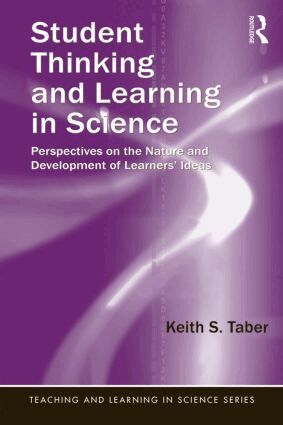
This readable and informative survey of key ideas about students’ thinking in science builds a bridge between theory and practice by offering clear accounts from research, and showing how they relate to actual examples of students talking about widely taught science topics. Focused on secondary students and drawing on perspectives found in the international research literature, the goal is not to offer a comprehensive account of the vast literature, but rather to provide an overview of the current state of the field suitable for those who need an understanding of core thinking about learners’ ideas in science, including science education students in teacher preparation and higher degree programs, and classroom teachers, especially those working with middle school, high school, or college level students. Such understanding can inform and enrich science teaching in ways which are more satisfying for teachers, less confusing and frustrating for learners, and so ultimately can lead to both greater scientific literacy and more positive attitudes to science.
Häftad, Engelska, 2014
709 kr
Skickas inom 10-15 vardagar
This readable and informative survey of key ideas about students’ thinking in science builds a bridge between theory and practice by offering clear accounts from research, and showing how they relate to actual examples of students talking about widely taught science topics. Focused on secondary students and drawing on perspectives found in the international research literature, the goal is not to offer a comprehensive account of the vast literature, but rather to provide an overview of the current state of the field suitable for those who need an understanding of core thinking about learners’ ideas in science, including science education students in teacher preparation and higher degree programs, and classroom teachers, especially those working with middle school, high school, or college level students. Such understanding can inform and enrich science teaching in ways which are more satisfying for teachers, less confusing and frustrating for learners, and so ultimately can lead to both greater scientific literacy and more positive attitudes to science.
Inbunden, Engelska, 2019
2 100 kr
Skickas inom 10-15 vardagar
Chemistry is a subject that has the power to engage and enthuse students but also to mystify and confound them. Effective chemistry teaching requires a strong foundation of subject knowledge and the ability to transform this into teachable content which is meaningful for students. Drawing on pedagogical principles and research into the difficulties that many students have when studying chemical concepts, this essential text presents the core ideas of chemistry to support new and trainee chemistry teachers, including non-specialists.The book focuses on the foundational ideas that are fundamental to and link topics across the discipline of chemistry and considers how these often complex notions can be effectively presented to students without compromising on scientific authenticity. Chapters cover: the nature of chemistry as a science the chemistry triplet substances and purity in chemistry the periodic table energy in chemistry and chemical bonding contextualising and integrating chemical knowledge Whilst there are a good many books describing chemistry and many others that offer general pedagogic guidance on teaching science, Foundations for Teaching Chemistry provides accounts of core chemical topics from a teaching perspective and offers new and experienced teachers support in developing their own ‘chemical knowledge for teaching’.
Häftad, Engelska, 2019
358 kr
Skickas inom 10-15 vardagar
Chemistry is a subject that has the power to engage and enthuse students but also to mystify and confound them. Effective chemistry teaching requires a strong foundation of subject knowledge and the ability to transform this into teachable content which is meaningful for students. Drawing on pedagogical principles and research into the difficulties that many students have when studying chemical concepts, this essential text presents the core ideas of chemistry to support new and trainee chemistry teachers, including non-specialists.The book focuses on the foundational ideas that are fundamental to and link topics across the discipline of chemistry and considers how these often complex notions can be effectively presented to students without compromising on scientific authenticity. Chapters cover: the nature of chemistry as a science the chemistry triplet substances and purity in chemistry the periodic table energy in chemistry and chemical bonding contextualising and integrating chemical knowledge Whilst there are a good many books describing chemistry and many others that offer general pedagogic guidance on teaching science, Foundations for Teaching Chemistry provides accounts of core chemical topics from a teaching perspective and offers new and experienced teachers support in developing their own ‘chemical knowledge for teaching’.
Inbunden, Engelska, 2017
2 100 kr
Skickas inom 10-15 vardagar
This book offers an overview of programmes designed to support the learning of gifted and talented students in STEM subjects, both to allow them to meet their potential and to encourage them to proceed towards careers in STEM areas. The chapters from a range of national contexts report on perspectives, approaches and projects in gifted education in STEM subjects. These contributions provide a picture of the state of research and practice in this area, both to inform further research and development, and to support classroom teachers in their day-to-day work. Chapters have been written with practitioners in mind, but include relevant scholarly citations to the literature. The book includes some contributions illustrating research and practice in specific STEM areas, and others which bridge across different STEM subjects. The volume also includes an introductory theoretical chapter exploring the implications for gifted learners of how 'STEM' is understood and organized within the school curriculums.
Häftad, Engelska, 2018
458 kr
Skickas inom 10-15 vardagar
Worried about teaching natural selection, submicroscopic particle models or circuits? Keith S. Taber explores a range of issues faced in secondary science teaching and discusses strategies for teaching the nature of scientific knowledge, making practical work effective and challenging gifted young scientists.MasterClass in Science Education shows how to become a master science teacher by developing and adopting the habits and mind-set of a teacher-as-scientist. The author introduces the three pillars of this approach: subject knowledge, pedagogic knowledge, and classroom research. The body of subject knowledge in the sciences is both vast and constantly evolving as it is challenged, updated and developed, and this text supports you to understand the dynamic nature of knowledge and the implications this has for your teaching. Taber shows how to use a knowledge-in-action approach, enacting knowledge in the complex and dynamic classroom environment. He supports you to critically examine classroom experiences, drawing on a wide-range of research-informed perspectives that offer insights into facilitating effective student learning. He also guides you to understand how to use recommendations from published research studies as components of a toolkit to improve your teaching and learning.
Inbunden, Engelska, 2018
1 601 kr
Skickas inom 10-15 vardagar
Worried about teaching natural selection, submicroscopic particle models or circuits? Keith S. Taber explores a range of issues faced in secondary science teaching and discusses strategies for teaching the nature of scientific knowledge, making practical work effective and challenging gifted young scientists.MasterClass in Science Education shows how to become a master science teacher by developing and adopting the habits and mind-set of a teacher-as-scientist. The author introduces the three pillars of this approach: subject knowledge, pedagogic knowledge, and classroom research. The body of subject knowledge in the sciences is both vast and constantly evolving as it is challenged, updated and developed, and this text supports you to understand the dynamic nature of knowledge and the implications this has for your teaching. Taber shows how to use a knowledge-in-action approach, enacting knowledge in the complex and dynamic classroom environment. He supports you to critically examine classroom experiences, drawing on a wide-range of research-informed perspectives that offer insights into facilitating effective student learning. He also guides you to understand how to use recommendations from published research studies as components of a toolkit to improve your teaching and learning.
Inbunden, Engelska, 2019
1 732 kr
Skickas inom 5-8 vardagar
The features of chemistry that make it such a fascinating and engaging subject to teach also contribute to it being a challenging subject for many learners. Chemistry draws upon a wide range of abstract concepts, which are embedded in a large body of theoretical knowledge. As a science, chemistry offers ideas that are the products of scientists’ creative imaginations, and yet which are motivated and constrained by observations of natural phenomena. Chemistry is often discussed and taught largely in terms of non-observable theoretical entities - such as molecules and electrons and orbitals - which probably seem as familiar and real to a chemistry teacher as Bunsen burners: and, yet, comprise a realm as alien and strange to many students as some learners’ own alternative conceptions (‘misconceptions’) may appear to the teacher.All chemistry teachers know that chemistry is a conceptual subject, especially at the upper end of secondary school and at university level, and that some students struggle to understand many chemical ideas. This book offers a step-by-step analysis and discussion of just why some students find chemistry difficult, by examining the nature of chemistry concepts, and how they are communicated and learnt. The book considers the idea of concepts itself; draws upon case studies of how canonical chemical concepts have developed; explores how chemical concepts become represented in curriculum and in classroom teaching; and discusses how conceptual learning and development occurs. This book will be invaluable to anyone interested in teaching and learning and offers guidance to teachers looking to make sense of, and respond to, the challenges of teaching chemistry.
Inbunden, Engelska, 2024
1 665 kr
Skickas inom 5-8 vardagar
How should chemistry be taught in schools, colleges, and universities? Chemical Pedagogy discusses teaching approaches and techniques, the reasoning behind them, and the evidence for their effectiveness.The book surveys a wide range of different pedagogic strategies and tactics that have been recommended to better engage learners and provide more effective chemistry teaching. These accounts are supported by an initial introduction to some key ideas and debates about pedagogy - the science of teaching. Chemical Pedagogy discusses how teaching innovations can be tested to inform research-based practice. Through this book, the author explores the challenges of carrying out valid experimental studies in education, and the impediments to generalising study results to diverse teaching and learning contexts. As a result, the author highlights both the need to read published studies critically and the value of teachers and lecturers testing out recommended innovations in their own classrooms.Chemical Pedagogy introduces core principles – from research into human cognition and learning – to provide a theoretical perspective on how to best teach for engagement and understanding. An examination of some of the more contentious debates about pedagogy leads to the advice to seek ‘optimally guided instruction’ which balances the challenge offered to learners with the level of support provided. This provides a framework for discussing a wide range of teaching approaches and techniques that have been recommended to those teaching chemistry across educational levels, including both those intended to replace ‘teaching from the front’ and others that can be built into traditional lecture courses to enhance the learning experience.
Häftad, Engelska, 2022
444 kr
Skickas inom 5-8 vardagar
The features of chemistry that make it such a fascinating and engaging subject to teach also contribute to it being a challenging subject for many learners. Chemistry draws upon a wide range of abstract concepts, which are embedded in a large body of theoretical knowledge. As a science, chemistry offers ideas that are the products of scientists’ creative imaginations, and yet which are motivated and constrained by observations of natural phenomena. Chemistry is often discussed and taught largely in terms of non-observable theoretical entities - such as molecules and electrons and orbitals - which probably seem as familiar and real to a chemistry teacher as Bunsen burners: and, yet, comprise a realm as alien and strange to many students as some learners’ own alternative conceptions (‘misconceptions’) may appear to the teacher.All chemistry teachers know that chemistry is a conceptual subject, especially at the upper end of secondary school and at university level, and that some students struggle to understand many chemical ideas. This book offers a step-by-step analysis and discussion of just why some students find chemistry difficult, by examining the nature of chemistry concepts, and how they are communicated and learnt. The book considers the idea of concepts itself; draws upon case studies of how canonical chemical concepts have developed; explores how chemical concepts become represented in curriculum and in classroom teaching; and discusses how conceptual learning and development occurs. This book will be invaluable to anyone interested in teaching and learning and offers guidance to teachers looking to make sense of, and respond to, the challenges of teaching chemistry.
Inbunden, Engelska, 2009
1 620 kr
Skickas inom 10-15 vardagar
Exploring one of the central themes in science education theory, this volume examines how science education can be considered as a scientific activity within a broad post-positivist notion of science.Many students find learning science extremely problematic, whatever level of education they have reached. At the end of the 1970s a new approach to tackling learning difficulties in science was developed, drawing on ideas from psychology and cognitive science, and centred on the way students build up new knowledge in reference to their existing ideas. ‘Constructivism’ became the dominant paradigm in science education research for two decades, spawning a vast body of literature reporting aspects of learners’ ideas in different science topics. However, Constructivism came under fire as it was recognised that the research did not offer immediate and simple prescriptions for effective science teaching. The whole approach was widely criticised, in particular by those who saw it as having ‘anti-science’ leanings.In this book, the notion of scientific research programmes is used to understand the development, limitations and potential of constructivism. It is shown that constructivist work in science education fits into a coherent programme exploring the contingencies of learning science. The author goes further to address criticisms of constructivism; evaluate progress in the field; and suggest directions for future research. It is concluded that constructivism has provided the foundations for a progressive research programme that continues to guide enquiry into learning and teaching science.
Häftad, Engelska, 2010
1 620 kr
Skickas inom 10-15 vardagar
Exploring one of the central themes in science education theory, this volume examines how science education can be considered as a scientific activity within a broad post-positivist notion of science.Many students find learning science extremely problematic, whatever level of education they have reached. At the end of the 1970s a new approach to tackling learning difficulties in science was developed, drawing on ideas from psychology and cognitive science, and centred on the way students build up new knowledge in reference to their existing ideas. ‘Constructivism’ became the dominant paradigm in science education research for two decades, spawning a vast body of literature reporting aspects of learners’ ideas in different science topics. However, Constructivism came under fire as it was recognised that the research did not offer immediate and simple prescriptions for effective science teaching. The whole approach was widely criticised, in particular by those who saw it as having ‘anti-science’ leanings.In this book, the notion of scientific research programmes is used to understand the development, limitations and potential of constructivism. It is shown that constructivist work in science education fits into a coherent programme exploring the contingencies of learning science. The author goes further to address criticisms of constructivism; evaluate progress in the field; and suggest directions for future research. It is concluded that constructivism has provided the foundations for a progressive research programme that continues to guide enquiry into learning and teaching science.
Inbunden, Engelska, 2014
1 405 kr
Skickas inom 10-15 vardagar
Modeling Learners and Learning in Science Education
Häftad, Engelska, 2016
1 405 kr
Skickas inom 10-15 vardagar
This book looks at the centrality of models for knowledge claims in science education and explores the modeling of mental processes, knowledge, cognitive development, and conceptual learning.