Kelechi A. Kalu – författare
Visar alla böcker från författaren Kelechi A. Kalu. Handla med fri frakt och snabb leverans.
14 produkter
14 produkter
Inbunden, Engelska, 2021
2 137 kr
Skickas inom 10-15 vardagar
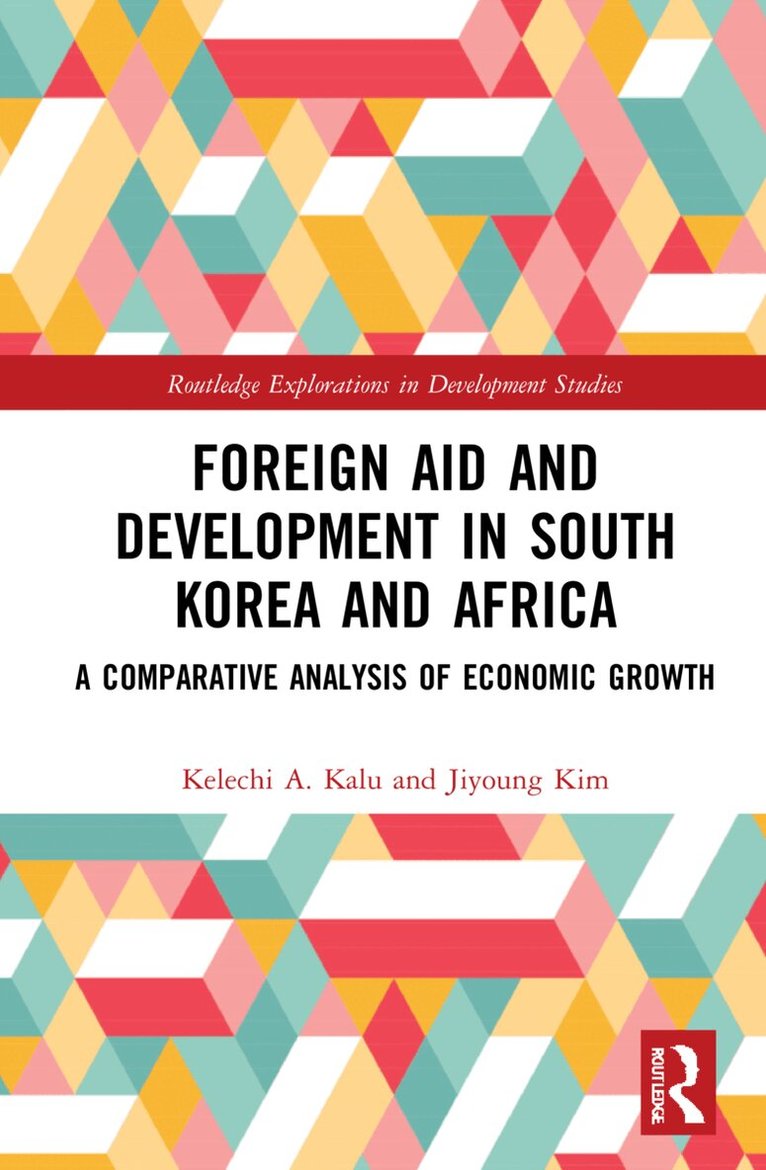
This book compares the rapid development of South Korea over the past 70 years with selected countries in sub-Saharan Africa to assess what factors contributed to the country’s success story, and why it is that countries that were comparable in the past continue to experience challenges in achieving and sustaining economic growth. In the 1950s, South Korea’s GDP per capita was $876, roughly comparable with that of Cote d’Ivoire and somewhat below Ghana’s. The country’s subsequent transformation from a war-ravaged, international aid-dependent economy to the 13th largest economy in the world has been the focus of considerable international admiration and attention. But how was it that South Korea succeeded in multiplying its GDP per capita by a factor of 23, while other Less Developed Countries continue to experience challenges? This book compares South Korea’s politics of development and foreign assistance with that of Ghana, Nigeria, and Zambia, which were also major recipients of the U.S. aid, to investigate the specific contexts that made it possible for South Korea to achieve success. Overall, this book argues that effective state capacity in South Korea’s domestic and international politics provided an anchor for diplomatic engagement with donors and guided domestic political actors in the effective use of aid for economic development. This book will be of interest to researchers and students working on development, comparative political economy, and foreign aid, and to policy makers and practitioners looking for a greater understanding of comparative development trajectories.
Häftad, Engelska, 2023
644 kr
Skickas inom 10-15 vardagar
This book compares the rapid development of South Korea over the past 70 years with selected countries in sub-Saharan Africa to assess what factors contributed to the country’s success story, and why it is that countries that were comparable in the past continue to experience challenges in achieving and sustaining economic growth. In the 1950s, South Korea’s GDP per capita was $876, roughly comparable with that of Cote d’Ivoire and somewhat below Ghana’s. The country’s subsequent transformation from a war-ravaged, international aid-dependent economy to the 13th largest economy in the world has been the focus of considerable international admiration and attention. But how was it that South Korea succeeded in multiplying its GDP per capita by a factor of 23, while other Less Developed Countries continue to experience challenges? This book compares South Korea’s politics of development and foreign assistance with that of Ghana, Nigeria, and Zambia, which were also major recipients of the U.S. aid, to investigate the specific contexts that made it possible for South Korea to achieve success. Overall, this book argues that effective state capacity in South Korea’s domestic and international politics provided an anchor for diplomatic engagement with donors and guided domestic political actors in the effective use of aid for economic development. This book will be of interest to researchers and students working on development, comparative political economy, and foreign aid, and to policy makers and practitioners looking for a greater understanding of comparative development trajectories.
Inbunden, Engelska, 2013
2 206 kr
Skickas inom 10-15 vardagar
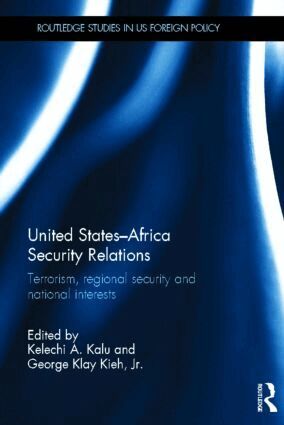
United States-Africa relations have experienced four major cycles. The first cycle was during the Cold War(1960-1990). During this period, the U.S. developed a one-sided relationship with various African states in which the latter served as "foot soldiers" for the U.S. in its competition with the Soviet Union for global domination. Among other things, the various client African states provided the U.S. with access to airfields, deep water ports and sites for the establishment of various intelligence gathering facilities. In addition, the U.S. used various groups like UNITA led by Jonas Savimbi in Angola to undermine and fight pro-Soviet regimes on the continent.The second cycle of the relationship covered the period 1991-1998. During this time, the U.S. scaled down its security activities in Africa. The major reason was that with the end of the Cold War Africa(with few exceptions like Egypt) was no longer a major front for the promotion of U.S. Security interests.The third cycle commenced in 1998 and ended in 2001. This period was characterized by the U.S.’ search for an approach to frame its security relations with Africa. In this vein, the U.S. undertook various military-security initiatives .The fourth cycle began after the 9/11 terrorist attacks against the American homeland. Since then, the U.S. has expanded the scope of its security relations with Africa, as reflected in the establishment of various initiatives and programs. At the core is the prosecution of the American "war on terror."Against this backdrop, this book examines some of the major dimensions of the U.S.’ security relations with Africa, including American security interests on the continent, the "war on terror," AFRICOM, and military cooperation. Using the book’s integrative theoretical framework, each of the chapters in the volume examines the various factors that shape the issue of focus.
Inbunden, Engelska, 2004
2 201 kr
Skickas inom 10-15 vardagar
Agenda Setting and Public Policy in Africa examines how decision makers have managed and mismanaged public policy issues in sub-Saharan Africa. It analyses the neglected issue of how ideas about public policy are generated, by whom and for what purpose. Persistent problems such as political instability, environmental pollution, famine, hunger, desertification, rent-seeking and incessant intra-conflicts across the continent are explored in a systematic and structured manner. Each contributor proffers convincing solutions to clearly identified problems. Well-researched and solution orientated, this book will engage scholars and policy makers who are interested in public policy and development issues in Africa.
Häftad, Engelska, 2018
529 kr
Skickas inom 10-15 vardagar
United States-Africa relations have experienced four major cycles. The first cycle was during the Cold War(1960-1990). During this period, the U.S. developed a one-sided relationship with various African states in which the latter served as "foot soldiers" for the U.S. in its competition with the Soviet Union for global domination. Among other things, the various client African states provided the U.S. with access to airfields, deep water ports and sites for the establishment of various intelligence gathering facilities. In addition, the U.S. used various groups like UNITA led by Jonas Savimbi in Angola to undermine and fight pro-Soviet regimes on the continent.The second cycle of the relationship covered the period 1991-1998. During this time, the U.S. scaled down its security activities in Africa. The major reason was that with the end of the Cold War Africa(with few exceptions like Egypt) was no longer a major front for the promotion of U.S. Security interests.The third cycle commenced in 1998 and ended in 2001. This period was characterized by the U.S.’ search for an approach to frame its security relations with Africa. In this vein, the U.S. undertook various military-security initiatives .The fourth cycle began after the 9/11 terrorist attacks against the American homeland. Since then, the U.S. has expanded the scope of its security relations with Africa, as reflected in the establishment of various initiatives and programs. At the core is the prosecution of the American "war on terror."Against this backdrop, this book examines some of the major dimensions of the U.S.’ security relations with Africa, including American security interests on the continent, the "war on terror," AFRICOM, and military cooperation. Using the book’s integrative theoretical framework, each of the chapters in the volume examines the various factors that shape the issue of focus.
Häftad, Engelska, 2008
364 kr
Skickas inom 5-8 vardagar
Inbunden, Engelska, 2021
1 156 kr
Skickas inom 10-15 vardagar
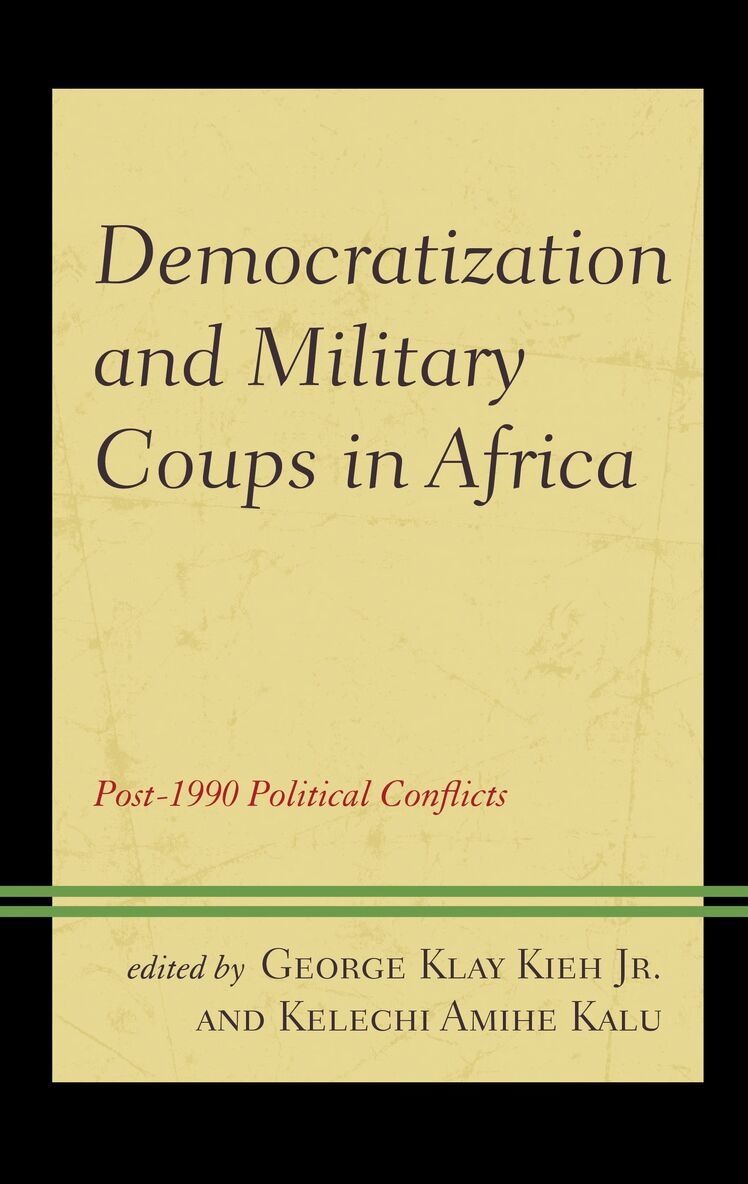
Democratization and Military Coups in Africa: Post-1990 Political Conflicts studies the seemingly endless cycle of coups that have occurred in Africa since the “Free Officers Coup” of 1952 in Egypt. Unfortunately, after more than three decades of the “third wave of democratization” that began in the 1990’s, military coups remain a firm figure on the African political landscape. Although the Organization of African Unity (OAU) and its successor, the African Union (AU), have developed and implemented anti-coup norms, they have not deterred coup-makers.Contributors to this volume analyze the major fault lines in the body politics of African states that have created the conditions for coup-making and offer suggestions for ending the cycle of coups. Using countries such as Burkina Faso, Cote d'Ivoire, Egypt, Mauritania, Sierra Leone, and Sudan as case studies, each chapter studies the causes, effects, and evolution of military coups in Africa in order to show that eliminating military coups will require identifying and addressing the root causes of the coup in each affected state.
Häftad, Engelska, 2023
440 kr
Skickas inom 10-15 vardagar
Democratization and Military Coups in Africa: Post-1990 Political Conflicts studies the seemingly endless cycle of coups that have occurred in Africa since the “Free Officers Coup” of 1952 in Egypt. Unfortunately, after more than three decades of the “third wave of democratization” that began in the 1990’s, military coups remain a firm figure on the African political landscape. Although the Organization of African Unity (OAU) and its successor, the African Union (AU), have developed and implemented anti-coup norms, they have not deterred coup-makers.Contributors to this volume analyze the major fault lines in the body politics of African states that have created the conditions for coup-making and offer suggestions for ending the cycle of coups. Using countries such as Burkina Faso, Cote d'Ivoire, Egypt, Mauritania, Sierra Leone, and Sudan as case studies, each chapter studies the causes, effects, and evolution of military coups in Africa in order to show that eliminating military coups will require identifying and addressing the root causes of the coup in each affected state.
Inbunden, Engelska, 2021
1 292 kr
Skickas inom 10-15 vardagar
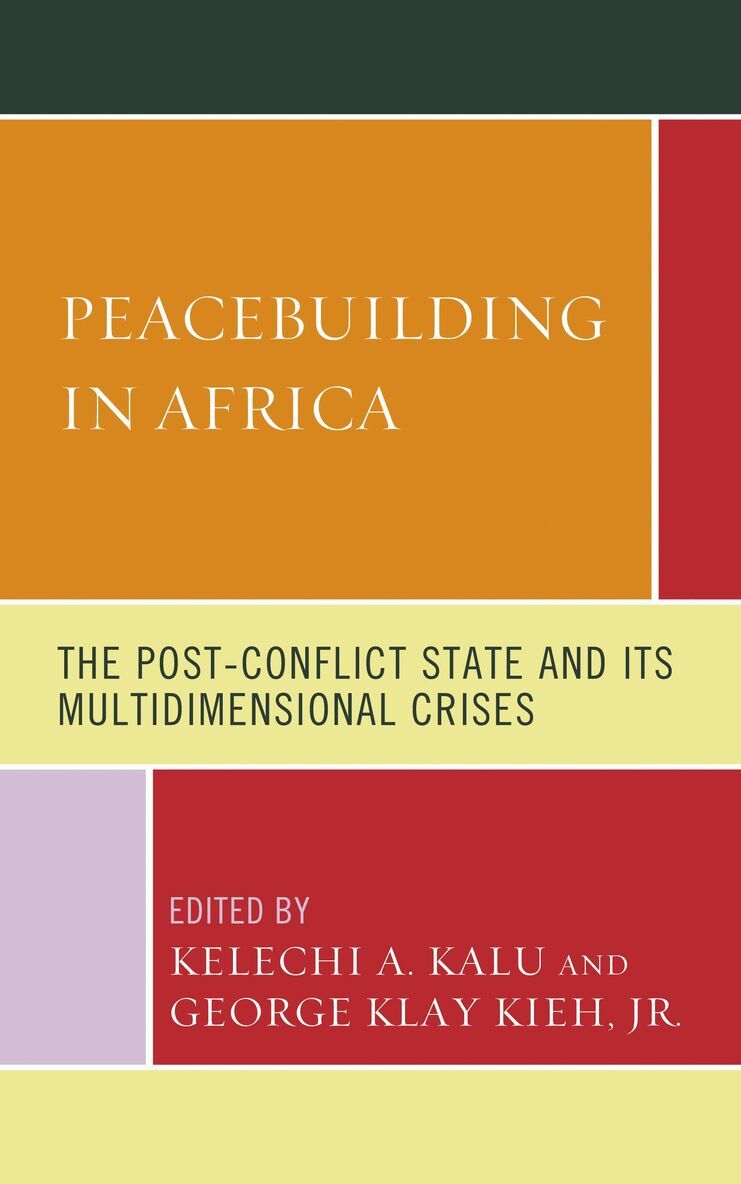
Peacebuilding in Africa: The Post-Conflict State and Its Multidimensional Crises argues that building enduring peace in post-conflict states in Africa requires comprehensive, state-specific approaches that address the multidimensional crises that generated civil conflict and instabilities in these countries. Contributors examine states such as Burundi, the Democratic Republic of the Congo, Liberia, Rwanda, Sierra Leone, South Sudan, and Sudan to demonstrate that peacebuilding projects in each of these states must address the cultural, economic, political, and social root causes of their respective underlying civil conflicts. In addition, contributors prove that peacebuilding projects must be shaped by the centrality of human security: the respect for ethno-cultural diversity, the advancement of human material well-being, the protection of political rights and civil liberties, and the redesigning of the military and security architecture to ensure the safety of all citizens from both internal and external threats.
Inbunden, Engelska, 2022
1 539 kr
Skickas inom 10-15 vardagar
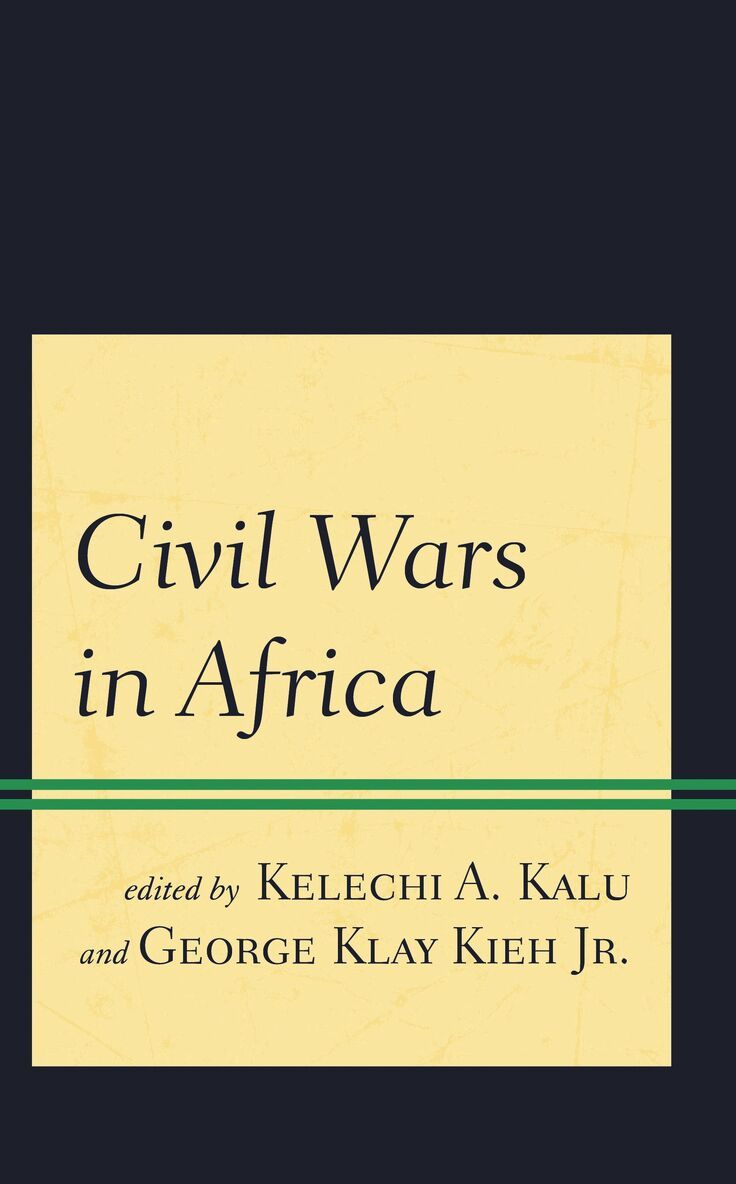
Civil Wars in Africa, edited by Kelechi A. Kalu and George Klay Kieh, Jr., examines civil conflicts throughout various African countries. They argue that civil wars in Africa are by-products of the contradictions and crises engendered by the post-colonial state-building and nation-building projects in Africa. With few exceptions, the post-colonial states in Africa have failed to build societies that invest in the material well-being of their citizens; protect their political, civil, and other rights; promote accountability, transparency, the rule of law, judicial independence, and the holding of free and fair elections; and promote ethnic pluralism, tolerance, mutual respect, and peaceful co-existence, among others. In addition, the contributors show that the post-colonial states in Africa have been ruled by corrupt and autocratic leaders, who are obsessed with the maintenance of state power as the pathway to ensuring the private accumulation of wealth through sundry illegal means, including bribery, extortion, and theft of public funds. In sum, this volume addresses how the failure of the post-colonial African state to shepherd the process of building democratic societies based on the centrality of human security has led to the erosion of the legitimacy of the state and its custodians. Thus, once the contradictions and crises reached their crescendo, these post-colonial societies than implode into civil wars, even at the micro-level.
Häftad, Engelska, 2024
509 kr
Skickas inom 10-15 vardagar
Civil Wars in Africa, edited by Kelechi A. Kalu and George Klay Kieh, Jr., examines civil conflicts throughout various African countries. They argue that civil wars in Africa are by-products of the contradictions and crises engendered by the post-colonial state-building and nation-building projects in Africa. With few exceptions, the post-colonial states in Africa have failed to build societies that invest in the material well-being of their citizens; protect their political, civil, and other rights; promote accountability, transparency, the rule of law, judicial independence, and the holding of free and fair elections; and promote ethnic pluralism, tolerance, mutual respect, and peaceful co-existence, among others. In addition, the contributors show that the post-colonial states in Africa have been ruled by corrupt and autocratic leaders, who are obsessed with the maintenance of state power as the pathway to ensuring the private accumulation of wealth through sundry illegal means, including bribery, extortion, and theft of public funds. In sum, this volume addresses how the failure of the post-colonial African state to shepherd the process of building democratic societies based on the centrality of human security has led to the erosion of the legitimacy of the state and its custodians. Thus, once the contradictions and crises reached their crescendo, these post-colonial societies than implode into civil wars, even at the micro-level.
Inbunden, Engelska, 2023
1 224 kr
Skickas inom 10-15 vardagar
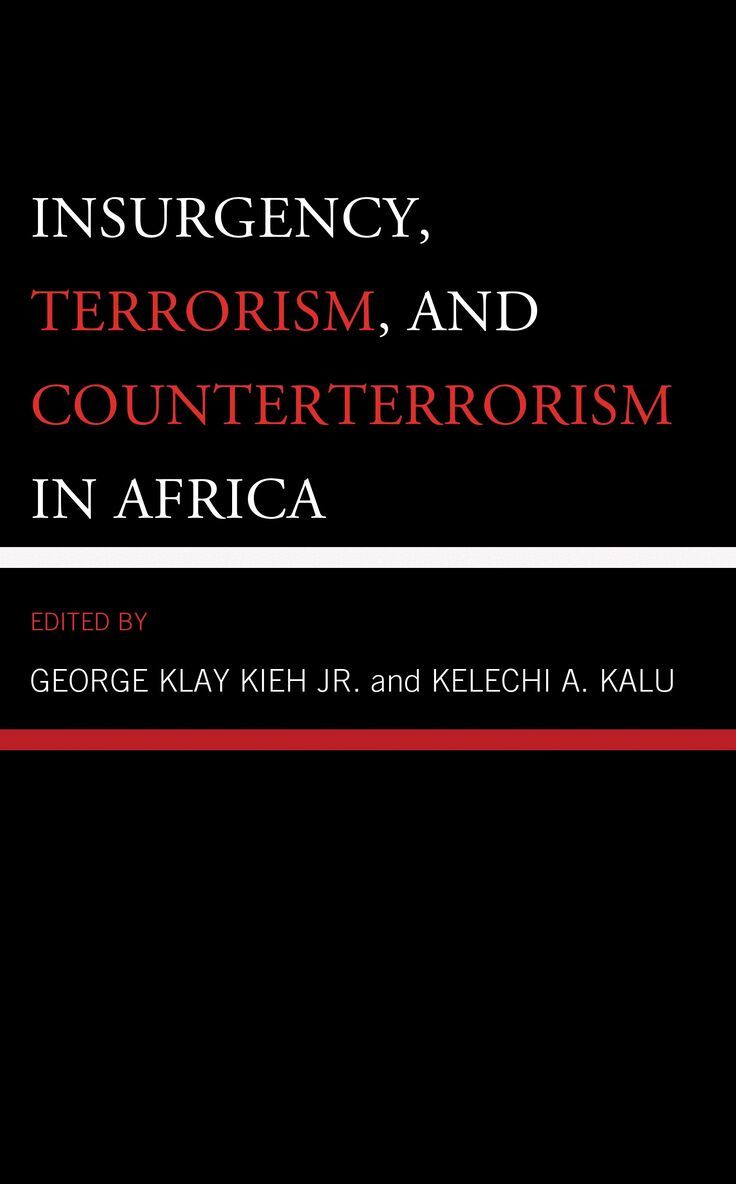
Insurgency, Terrorism, and Counterterrorism in Africa, edited by George Klay Kieh, Jr. and Kelechi A. Kalu, addresses the need for a systematic understanding and examination of insurgent movements and terrorist organizations, as well as state policies that instigate intrastate conflicts in African states. It examines and documents the tactics that are used by anti-government forces, states’ counterterrorism responses, and the human security impacts of insecurity on citizens across various communities in Africa. The contributors’ extensive research methods include case studies that explore activities of terrorist organizations like Al Shabaab, Al Qaeda, Boko Haram, and the Islamic State. It presents new and productive insights about counterterrorism strategies deployed by selected African states, the African Union, and the U.S. A historically rich and politically focused analysis of states as co-conspirators in terrorism-induced insecurity in Africa, this book challenges existing literature on terrorism that largely focuses on the actions of non-state entities. It provides practical insights to policymakers that desire to end insecurity and promote inclusive governance in Africa.
Häftad, Engelska, 2025
413 kr
Skickas inom 10-15 vardagar
Insurgency, Terrorism, and Counterterrorism in Africa, edited by George Klay Kieh, Jr. and Kelechi A. Kalu, addresses the need for a systematic understanding and examination of insurgent movements and terrorist organizations, as well as state policies that instigate intrastate conflicts in African states. It examines and documents the tactics that are used by anti-government forces, states’ counterterrorism responses, and the human security impacts of insecurity on citizens across various communities in Africa. The contributors’ extensive research methods include case studies that explore activities of terrorist organizations like Al Shabaab, Al Qaeda, Boko Haram, and the Islamic State. It presents new and productive insights about counterterrorism strategies deployed by selected African states, the African Union, and the U.S. A historically rich and politically focused analysis of states as co-conspirators in terrorism-induced insecurity in Africa, this book challenges existing literature on terrorism that largely focuses on the actions of non-state entities. It provides practical insights to policymakers that desire to end insecurity and promote inclusive governance in Africa.
Häftad, Engelska, 2013
549 kr
Skickas inom 5-8 vardagar