Kelly Enright - Böcker
Visar alla böcker från författaren Kelly Enright. Handla med fri frakt och snabb leverans.
3 produkter
3 produkter
1 161 kr
Skickas inom 5-8 vardagar
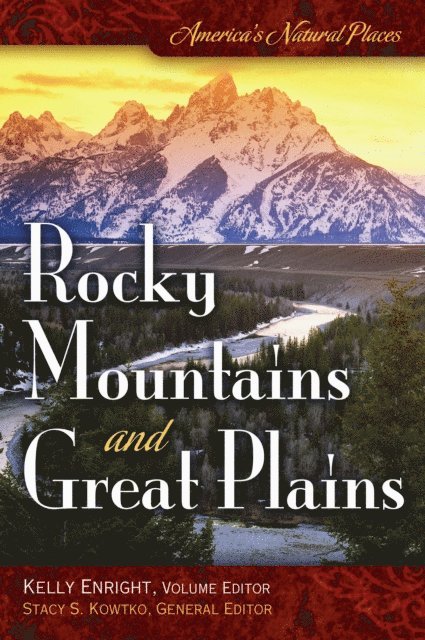
From Rocky Mountain National Park in Colorado to the Tallgrass Prairie National Preserve in Kansas, this volume provides a snapshot of the most spectacular and important natural places in the Great Plains and Rocky Mountains.America's Natural Places: Rocky Mountains and Great Plains examines over 50 of the most spectacular and important areas of this region, with each entry describing the importance of the area, the flora and fauna that it supports, threats to the survival of the region, and what is being done to protect it. Organized by state within the volume, this work informs readers about the wide variety of natural areas across the Rocky Mountains and Great Plains and identifies places that may be near them that demonstrate the importance of preserving such regions.
285 kr
Tillfälligt slut
The inspiring story of the legendary couple whose wildlife films transformed America's perceptions of exotic places.
387 kr
Skickas inom 11-20 vardagar
Danger in the Congo! The unexplored Amazon! Long perceived as a place of mystery and danger, and more recently as a fragile system requiring our protection, the tropical forest captivated America for over a century. In The Maximum of Wilderness, Kelly Enright traces the representation of tropical forests (what Americans have typically thought of as “jungles”) and their place in both our perception of “wildness” and the globalisation of the environmental movement. In the early twentieth century, jungle adventure (as depicted by countless books and films, from Burroughs’s Tarzan novels to King Kong) had enormous mass appeal. Concurrent with the proliferation of a popular image of the jungle that masked many of its truths was the work of American naturalists who sought to represent an “authentic” view of tropical nature through museums, zoological and botanical gardens, books, and film. Enright examines the relationship between popular and scientific representations of the forest through the lives and work of Martin and Osa Johnson (who with films such as Congorilla and Simba blended authenticity with adventure), as well as renowned naturalists John Muir, William Beebe, David Fairchild, and Richard Evans Schultes. The author goes on to explore a startling shift at midcentury in the perception of the tropical forest—from the “jungle,” a place that endangers human life, to the “rain forest,” a place that is itself endangered.