Kenji Watanabe – författare
Visar alla böcker från författaren Kenji Watanabe. Handla med fri frakt och snabb leverans.
3 produkter
3 produkter
Inbunden, Engelska, 2013
868 kr
Skickas inom 11-20 vardagar
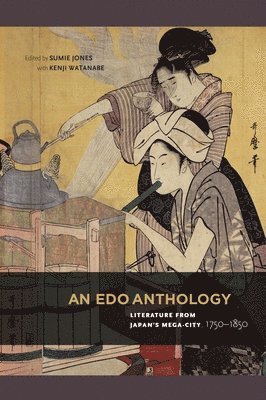
During the eighteenth century, Edo (today’s Tokyo) became the world’s largest city, quickly surpassing London and Paris. Its rapidly expanding population and flourishing economy encouraged the development of a thriving popular culture. Innovative and ambitious young authors and artists soon began to look beyond the established categories of poetry, drama, and prose, banding together to invent completely new literary forms that focused on the fun and charm of Edo. Their writings were sometimes witty, wild, and bawdy, and other times sensitive, wise, and polished. Now some of these high spirited works, celebrating the rapid changes, extraordinary events, and scandalous news of the day, have been collected in an accessible volume highlighting the city life of Edo. Edo’s urban consumers demanded visual presentations and performances in all genres. Novelties such as books with text and art on the same page were highly sought after, as were kabuki plays and the polychrome prints that often shared the same themes, characters, and even jokes. Popular interest in sex and entertainment focused attention on the theatre district and “pleasure quarters,” which became the chief backdrops for the literature and arts of the period. Gesaku, or “playful writing,” invented in the mid-eighteenth century, satirised the government and samurai behavior while parodying the classics. These entertaining new styles bred genres that appealed to the masses. Among the bestsellers were lengthy serialised heroic epics, revenge dramas, ghost and monster stories, romantic melodramas, and comedies that featured common folk.An Edo Anthology offers distinctive and engaging examples of this broad range of genres and media. It includes both well-known masterpieces and unusual examples from the city’s counterculture, some popular with intellectuals, others with wider appeal. Some of the translations presented here are the first available in English and many are based on first editions. In bringing together these important and expertly translated Edo texts in a single volume, this collection will be warmly welcomed by students and interested readers of Japanese literature and popular culture.
Häftad, Engelska, 2013
415 kr
Skickas inom 5-8 vardagar
During the eighteenth century, Edo (today’s Tokyo) became the world’s largest city, quickly surpassing London and Paris. Its rapidly expanding population and flourishing economy encouraged the development of a thriving popular culture. Innovative and ambitious young authors and artists soon began to look beyond the established categories of poetry, drama, and prose, banding together to invent completely new literary forms that focused on the fun and charm of Edo. Their writings were sometimes witty, wild, and bawdy, and other times sensitive, wise, and polished. Now some of these high spirited works, celebrating the rapid changes, extraordinary events, and scandalous news of the day, have been collected in an accessible volume highlighting the city life of Edo. Edo’s urban consumers demanded visual presentations and performances in all genres. Novelties such as books with text and art on the same page were highly sought after, as were kabuki plays and the polychrome prints that often shared the same themes, characters, and even jokes. Popular interest in sex and entertainment focused attention on the theatre district and “pleasure quarters,” which became the chief backdrops for the literature and arts of the period. Gesaku, or “playful writing,” invented in the mid-eighteenth century, satirised the government and samurai behaviour while parodying the classics. These entertaining new styles bred genres that appealed to the masses. Among the bestsellers were lengthy serialised heroic epics, revenge dramas, ghost and monster stories, romantic melodramas, and comedies that featured common folk. An Edo Anthology offers distinctive and engaging examples of this broad range of genres and media. It includes both well-known masterpieces and unusual examples from the city’s counterculture, some popular with intellectuals, others with wider appeal. Some of the translations presented here are the first available in English and many are based on first editions. In bringing together these important and expertly translated Edo texts in a single volume, this collection will be warmly welcomed by students and interested readers of Japanese literature and popular culture.
Häftad, Engelska, 2020
477 kr
Skickas inom 5-8 vardagar
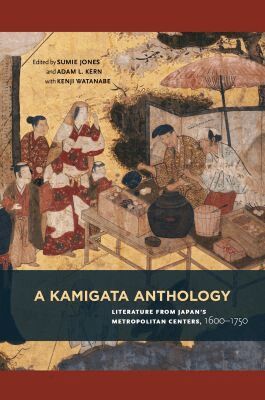
This is the first of a three-volume anthology of Edo- and Meiji-era urban literature that includes An Edo Anthology: Literature from Japan's Mega-City, 1750-1850 and A Tokyo Anthology: Literature from Japan's Modern Metropolis, 1850-1920. The present work focuses on the years in which bourgeois culture first emerged in Japan, telling the story of the rising commoner arts of Kamigata, or the "Upper Regions" of Kyoto and Osaka, which harkened back to the Japan's middle ages even as they rebelled against and competed with that earlier era. Both cities prided themselves on being models and trendsetters in all cultural matters, whether arts, crafts, books, or food. The volume also shows how elements of popular arts that germinated during this period ripened into the full-blown consumer culture of late-Edo. The tendency to imagine Japan's modernity as a creation of Western influence since the mid-nineteenth century is still strong, particularly outside Japan studies. A Kamigata Anthology challenges such assumptions by illustrating the flourishing phenomenon of Japan's movement into its own modernity through a selection of the best examples from the period, including popular genres such as haikai poetry, handmade picture scrolls, travel guidebooks, kabuki and joruri plays, prose narratives of contemporary life, and jokes told by professional entertainers. Well illustrated with prints from popular books of the time and artwork containing poems and commentaries, the volume emphasizes texts currently unavailable in English and translated into entertaining, vibrant prose.