Kennedy Maranga - Böcker
Visar alla böcker från författaren Kennedy Maranga. Handla med fri frakt och snabb leverans.
5 produkter
5 produkter
1 805 kr
Skickas inom 10-15 vardagar
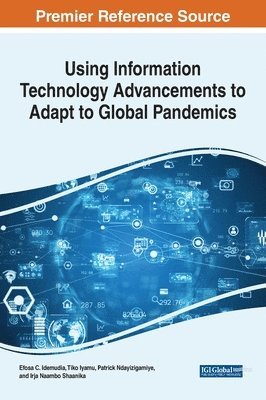
Since 2000, many governments, parliaments, and ministries have worked diligently to define effective guidelines that safeguard both public and private sector information systems, as well as information assets, from unwanted cyberattacks and unauthorized system intrusion. While some countries manage successful cybersecurity public policies that undergo modification and revision annually, other countries struggle to define such policies effectively, because cybersecurity is not a priority within their country. For countries that have begun to define cybersecurity public policy, there remains a need to stay current with trends in cyber defense and information system security, information not necessarily readily available for all countries. This research evaluates 43 countries' cybersecurity public policy utilizing a SWOT analysis; Afghanistan, Australia, Bermuda, Canada, Chili, Croatia, Cyprus, Czech Republic, Dubai, Egypt, Estonia, European Union, Finland, Gambia, Germany, Greece, Hungary, Iceland, Ireland, Italy, Japan, Kenya, Kosovo, Kuwait, Luxemburg, Malaysia, Nepal, Netherlands, New Zealand, Norway, Poland, Samoa, Singapore, Slovakia, South Africa, Sweden, Switzerland, Thailand, Trinidad, Uganda, United Arab Emirates, United Kingdom, and Vietnam; to transparently discuss the strengths, weaknesses, opportunities, and threats encompassing each of these 43 countries' cybersecurity public policies. The primary vision for this title is to create an educational resource that benefits both the public and the private sectors. Without clarity on cybersecurity public policy, there remains a gap in understanding how to meet these needs worldwide. Furthermore, while more than 43 countries have already enacted cybersecurity public policy, many countries neglect translating their policy into English; this impacts the ability of all countries to communicate clearly and collaborate harmoniously on this subject matter. This book works to fill the “gap”, stop the spread of misinformation, and become the gateway to understanding what approaches can best serve the needs of both public and private sectors. Its goals include educating the public, and, in partnership with governments, parliaments, ministries, and cybersecurity public policy analysts, helping mitigate vulnerabilities currently woven into public and private sector information systems, software, hardware, and web interface applications relied upon for daily business activities.
847 kr
Skickas inom 10-15 vardagar
Since 2000, many governments, parliaments, and ministries have worked diligently to define effective guidelines that safeguard both public and private sector information systems, as well as information assets, from unwanted cyberattacks and unauthorized system intrusion. While some countries manage successful cybersecurity public policies that undergo modification and revision annually, other countries struggle to define such policies effectively, because cybersecurity is not a priority within their country. For countries that have begun to define cybersecurity public policy, there remains a need to stay current with trends in cyber defense and information system security, information not necessarily readily available for all countries. This research evaluates 43 countries' cybersecurity public policy utilizing a SWOT analysis; Afghanistan, Australia, Bermuda, Canada, Chili, Croatia, Cyprus, Czech Republic, Dubai, Egypt, Estonia, European Union, Finland, Gambia, Germany, Greece, Hungary, Iceland, Ireland, Italy, Japan, Kenya, Kosovo, Kuwait, Luxemburg, Malaysia, Nepal, Netherlands, New Zealand, Norway, Poland, Samoa, Singapore, Slovakia, South Africa, Sweden, Switzerland, Thailand, Trinidad, Uganda, United Arab Emirates, United Kingdom, and Vietnam; to transparently discuss the strengths, weaknesses, opportunities, and threats encompassing each of these 43 countries' cybersecurity public policies. The primary vision for this title is to create an educational resource that benefits both the public and the private sectors. Without clarity on cybersecurity public policy, there remains a gap in understanding how to meet these needs worldwide. Furthermore, while more than 43 countries have already enacted cybersecurity public policy, many countries neglect translating their policy into English; this impacts the ability of all countries to communicate clearly and collaborate harmoniously on this subject matter. This book works to fill the “gap”, stop the spread of misinformation, and become the gateway to understanding what approaches can best serve the needs of both public and private sectors. Its goals include educating the public, and, in partnership with governments, parliaments, ministries, and cybersecurity public policy analysts, helping mitigate vulnerabilities currently woven into public and private sector information systems, software, hardware, and web interface applications relied upon for daily business activities.
656 kr
Kommande
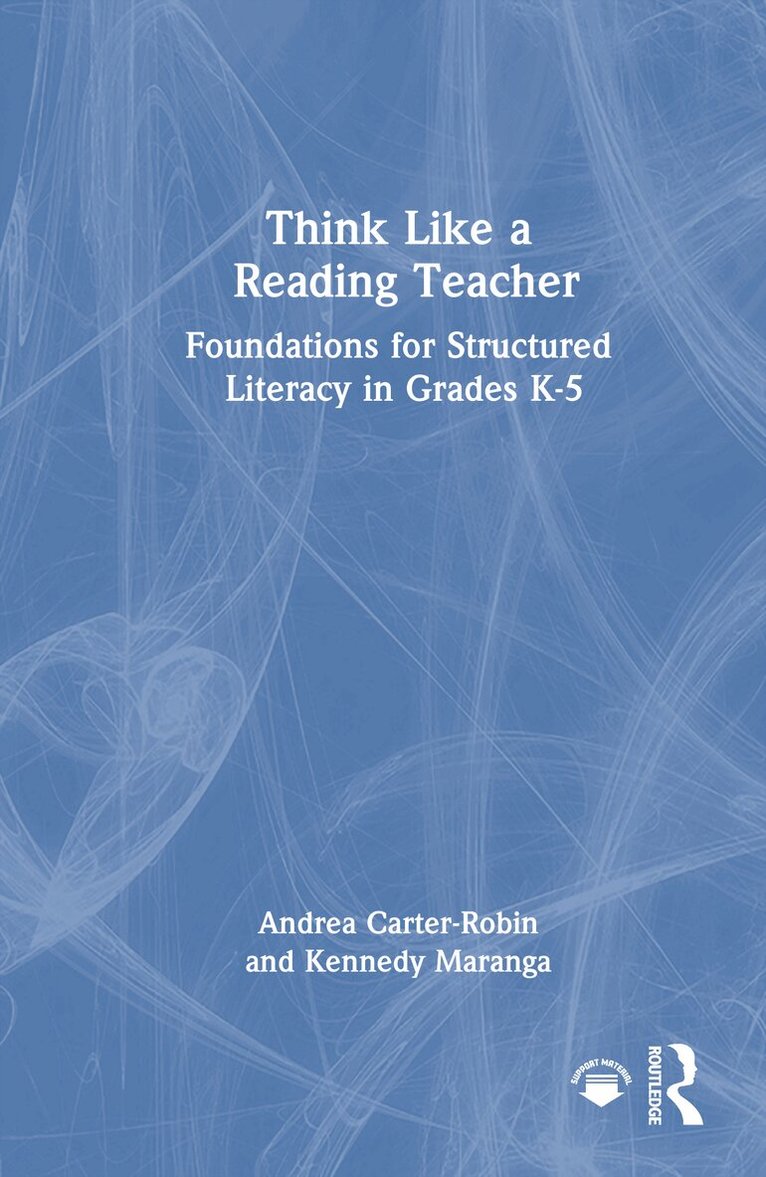
Think Like a Reading Teacher: Foundations for Structured Literacy in Grades K-5 provides a research-based, classroom-tested framework to teach literacy with precision, confidence, and lasting impact. Unlike other books that focus on one piece of the literacy puzzle, this book equips educators with the full system – from structured literacy instruction to data-driven teaching and student motivation – ensuring that every child becomes a successful reader.The book integrates the following reading strategies:The Science of Reading – Research-backed strategies for phonemic awareness, phonics, fluency, vocabulary and comprehensionStructured Literacy – How to teach reading explicitly and systematically so that all students succeedData-Driven Teaching – How to use reading assessments to adjust instruction in real time, ensuring struggling readers don’t slip through the cracksStudent Engagement and Motivation – Proven strategies to create classrooms where students love reading and develop lifelong literacy skillsBuilding on decades of literacy research and practical, actionable strategies, this book equips educators with both the research knowledge and teaching expertise needed to transform reading instruction in their classrooms. Each chapter includes reflective questions that guide teachers to apply the strategies discussed to their own classrooms. These questions encourage educators to consider how they can implement real-time adjustments based on their own assessment data, helping them to personalize instruction and maximize impact.At its core, this book is built on the belief that every child can learn to read when teachers think like readers who are curious, reflective, and responsive to every learner.This is a key text for undergraduate and graduate courses in elementary education and a practical resource for all K-5 teachers committed to strengthening reading instruction.
Think Like a Reading Teacher
Foundations for Structured Literacy in Grades K–5
Inbunden, Engelska, 2026
2 194 kr
Kommande
Think Like a Reading Teacher: Foundations for Structured Literacy in Grades K-5 provides a research-based, classroom-tested framework to teach literacy with precision, confidence, and lasting impact. Unlike other books that focus on one piece of the literacy puzzle, this book equips educators with the full system – from structured literacy instruction to data-driven teaching and student motivation – ensuring that every child becomes a successful reader.The book integrates the following reading strategies:The Science of Reading – Research-backed strategies for phonemic awareness, phonics, fluency, vocabulary and comprehensionStructured Literacy – How to teach reading explicitly and systematically so that all students succeedData-Driven Teaching – How to use reading assessments to adjust instruction in real time, ensuring struggling readers don’t slip through the cracksStudent Engagement and Motivation – Proven strategies to create classrooms where students love reading and develop lifelong literacy skillsBuilding on decades of literacy research and practical, actionable strategies, this book equips educators with both the research knowledge and teaching expertise needed to transform reading instruction in their classrooms. Each chapter includes reflective questions that guide teachers to apply the strategies discussed to their own classrooms. These questions encourage educators to consider how they can implement real-time adjustments based on their own assessment data, helping them to personalize instruction and maximize impact.At its core, this book is built on the belief that every child can learn to read when teachers think like readers who are curious, reflective, and responsive to every learner.This is a key text for undergraduate and graduate courses in elementary education and a practical resource for all K-5 teachers committed to strengthening reading instruction.
3 461 kr
Skickas inom 5-8 vardagar