Kenneth McConkey – författare
Visar alla böcker från författaren Kenneth McConkey. Handla med fri frakt och snabb leverans.
5 produkter
5 produkter
269 kr
Tillfälligt slut
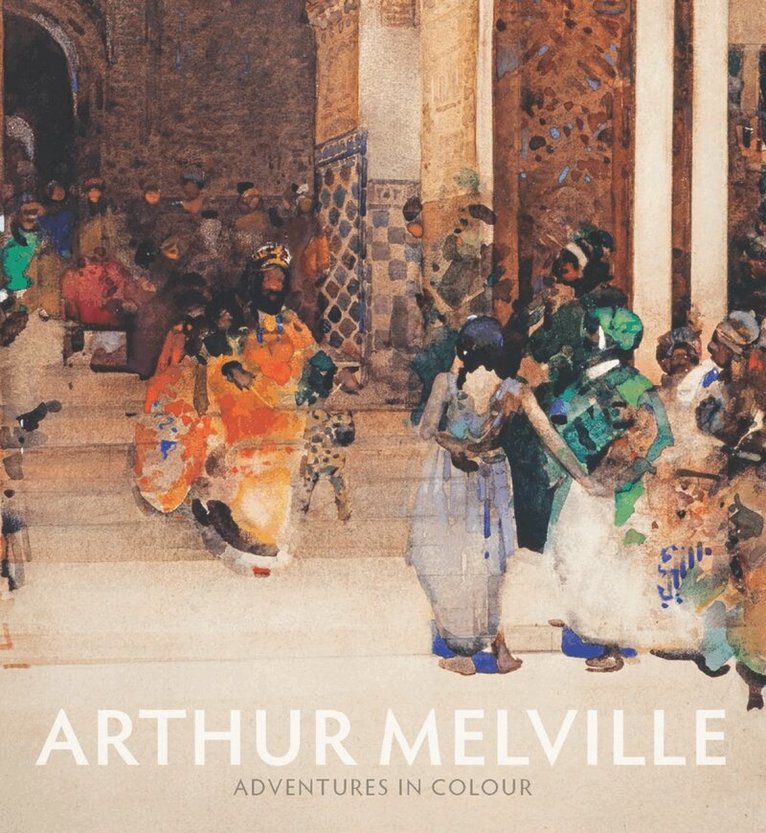
Arthur Melville was arguably the most innovative and modernist Scottish artist of his generation and one of the finest British watercolourists of the nineteenth century, yet he avoided categorisation. In 1943 the Scottish Colourist John Duncan Fergusson confessed that although they never met, "his work opened up to me the way to free painting - not merely freedom in the use of paint, but freedom of outlook". This book offers a comprehensive survey of Arthur Melville's (1855-1904) rich and varied career as artist-adventurer, Orientalist, forerunner of The Glasgow Boys, painter of modern life and re-interpreter of the landscape of Scotland. His travels inspired spectacular watercolours and paintings. This book illustrates around sixty of his works, each with a catalogue entry, and an essay by Kenneth McConkey, which discusses Melville's art and career.
Revival: Memory and Desire (2002)
Painting in Britain and Ireland at the Turn of the Twentieth Century
Häftad, Engelska, 2019
572 kr
Skickas inom 10-15 vardagar
This title was first published in 2002. 'Memory and Desire' is a lavishly illustrated account of the art world in Britain at the turn of the twentieth century. It calls upon rich resources of contemporary diaries, letters and art criticism, as well as the analysis of works of art to answer questions about how and why new artistic tendencies emerged and tastes changed. Eschewing the familiar narrative of an inevitable progress towards modernism, Kenneth McConkey considers a broad range of art and critical thinking in the period. Discussing the market for old master paintings, which rivalled those for modern art, and the question of how and why certain genres of art were particularly successful at the time, McConkey explores the detail and significance of contemporary taste. He draws upon the work of commercially successful painters such as John Singer Sargent, William Orpen, George Clausen, Alfred East, John Lavery and Philip Wilson Steer, and their critic-supporters to throw light upon current arguments about training, aesthetics, visual memory and the creation of new art. 'Memory and Desire' is a major contribution to our knowledge of this important period in British art.
Revival: Memory and Desire (2002)
Painting in Britain and Ireland at the Turn of the Twentieth Century
Inbunden, Engelska, 2017
1 986 kr
Skickas inom 10-15 vardagar
This title was first published in 2002. 'Memory and Desire' is a lavishly illustrated account of the art world in Britain at the turn of the twentieth century. It calls upon rich resources of contemporary diaries, letters and art criticism, as well as the analysis of works of art to answer questions about how and why new artistic tendencies emerged and tastes changed. Eschewing the familiar narrative of an inevitable progress towards modernism, Kenneth McConkey considers a broad range of art and critical thinking in the period. Discussing the market for old master paintings, which rivalled those for modern art, and the question of how and why certain genres of art were particularly successful at the time, McConkey explores the detail and significance of contemporary taste. He draws upon the work of commercially successful painters such as John Singer Sargent, William Orpen, George Clausen, Alfred East, John Lavery and Philip Wilson Steer, and their critic-supporters to throw light upon current arguments about training, aesthetics, visual memory and the creation of new art. 'Memory and Desire' is a major contribution to our knowledge of this important period in British art.
568 kr
Skickas inom 5-8 vardagar
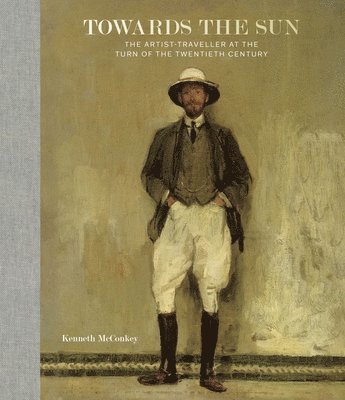
A comprehensive monograph of artistic travel at the height of British imperial power. Kenneth McConkey takes us around the world to show how British travelers, equipped with cameras and canvases, created artworks commemorating scenes and experiences in southern Europe, North Africa, the Middle East, India, and Japan. He introduces us to a generation of painters, trained in academies and artists' colonies in Europe that acted as crèches for those who would go on to explore life and landscape further afield. With rich illustrations, the book explores key sites visited by artist-travelers and investigates a wide range of artists, including Frank Brangwyn, Mary Cameron, Alfred East, John Lavery, Arthur Melville, and Mortimer Menpes, as well as other under-researched British artists. Drawing the strands together, it redefines the picturesque by considering issues of visualization and verisimilitude, dissemination, and aesthetic value.
266 kr
Skickas
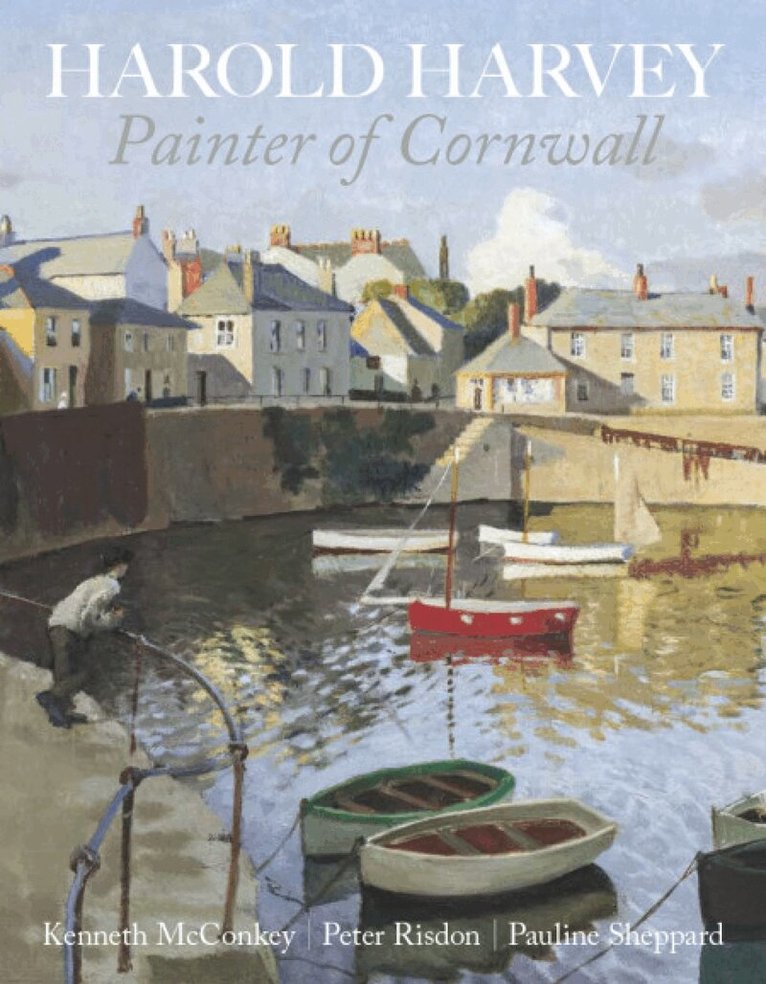
Harold Harvey, a true ‘son of Cornwall’, has been one of the most under-rated and least written about members of the Newlyn ‘School’ of artists which flourished from 1880 to 1930\. The son of a bank manager, he grew up in Penance, and after studying under Norman Garstin and a spell in Paris, he settled to a quiet life in Newlyn with fellow-artist Gertrude, painting The Cornwall he knowS from the inside.In his introductory essay, Professor Kenneth McConkey sets Harvey in the context of the art moments of the time, and shows how his early ‘genre’ paintings of rustic and marine life, so characteristic of the early Newlyn artists, gradually gave way to more sophisticated subject matter – Harvey was noted for his sumptuous interiors – and a flatter and more decorative style of painting. His early work might be compared with that of Stanhope Forbes, while his later paintings show clear affinities with those of fellow painters such as Laura Knight and Dod Procter.Professor McConkey’s essay complements the first significant ‘life’ of Harold Harvey, researched and written by Peter Risdon and Pauline Sheppard, which is in turn illuminated by Peter Risdon’s painstakingly compiled catalogue raisonne of over 600 paintings.Harvey’s painting output was prodigious, and this book includes approximately 100 illustrations of his favoured subjects: the Cornish at work, children at play, and intimate interior scenes and conversation pieces. Many of his contemporaries in Newlyn were visiting ‘observers’, but for Harold Harvey, who rarely went outside the county even though a regular exhibitor at the Royal Academy, painting the Cornish world ‘because it was there’ was his whole life.