Kenneth Mouré - Böcker
Visar alla böcker från författaren Kenneth Mouré. Handla med fri frakt och snabb leverans.
4 produkter
4 produkter
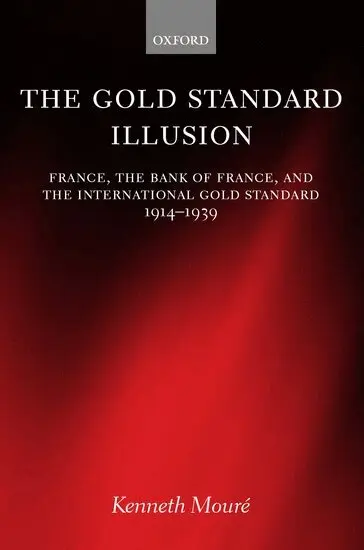
The Gold Standard Illusion
France, the Bank of France, and the International Gold Standard, 1914-1939
Inbunden, Engelska, 2002
2 348 kr
Skickas inom 5-8 vardagar
Economic historians have established a new orthodoxy attributing the onset and severity of the Great Depression to the flawed workings of the international gold standard. This interpretation returns French gold policy to centre stage in understanding the origins of the Depression, its rapid spread, its severity and its duration. The Gold Standard Illusion exploits new archival resources to test how well this gold standard interpretation of the Great Depression is sustained by historical records in France, the country most often criticized for hoarding gold and failure to play by the rules of the gold standard game. The study follows four lines of inquiry, providing a history of French gold policy in its national and international contexts from 1914 to 1939, an analysis of the evolution of the Bank of France during this period and the degree to which gold standard belief retarded the adoption of modern central banking practice, a re-examination of interwar central bank cooperation in the period and its role in the breakdown of the gold standard, and a study of how gold standard rhetoric fostered misperceptions of financial and monetary problems.The French case was exceptional, marked by absolute and tenacious faith in the gold standard, by the import and accumulation of a vast hoard of gold desperately needed as reserves to prevent monetary contraction abroad, and by adamant claims for the need to return to gold after most countries had left the gold standard, which had become, in the words of John Maynard Keynes, 'a curse laid upon the economic life of the world'. The Gold Standard Illusion explains French gold standard belief and policy, the impact of French policy at home and abroad, and reassesses the gold standard interpretation of the Great Depression in the light of French experience.
414 kr
Skickas inom 7-10 vardagar
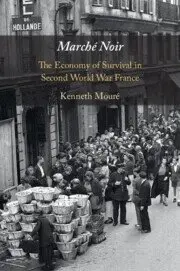
Kenneth Mouré shows how the black market in Vichy France developed not only to serve German exploitation, but also as an essential strategy for survival for commerce and consumers. His analysis explains how and why the black market became so prevalent and powerful in France and remained necessary after Liberation. Marché Noir draws on diverse French archives as well as diaries, memoirs and contemporary fiction, to highlight the importance of the black market in everyday life. Vichy's economic controls set the context for adaptations – by commerce facing economic and political constraints, and by consumers needing essential goods. Vichy collaboration in this realm seriously damaged the regime's legitimacy. Marché Noir offers new insights into the dynamics of black markets in wartime, and how illicit trade in France served not only to exploit consumer needs and increase German power, but also to aid communities in their strategies for survival.
2 014 kr
Skickas inom 3-6 vardagar
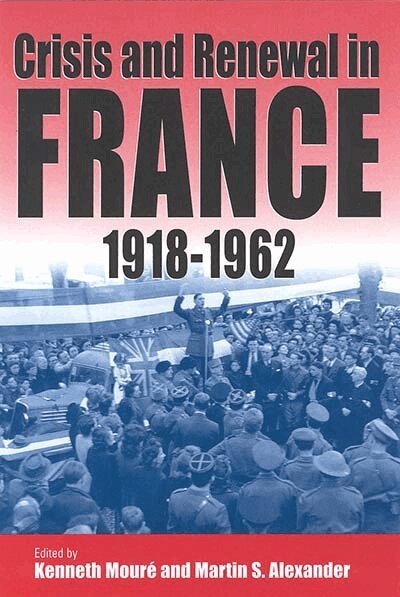
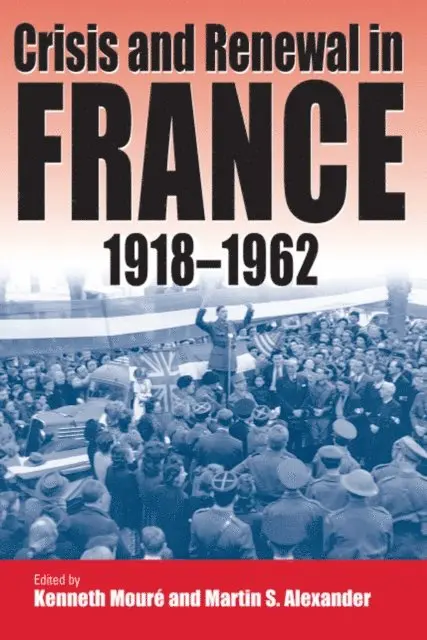
Since 1914, the French state has faced a succession of daunting and at times almost insurmountable crises. The turbulent decades from 1914 to 1969 witnessed near-defeat in 1914, economic and political crisis in 1926, radical political polarization in the 1930s, military conquest in 1940, the deep division of France during the Nazi Occupation, political reconstruction after 1944, de-colonization (with threatening civil war provoked by the Algerian crisis), and dramatic postwar modernization. However, this tumultuous period was not marked just by crises but also by tremendous change. Economic, social and political "modernization" transformed France in the twentieth century, restoring its confidence and its influence as a leader in global economic and political affairs. This combination of crises and renewal has received surprisingly little attention in recent years.The present collection show-cases significant new scholarship, reflecting greater access to French archival sources, and focuses on the role of crises in fostering modernization in areas covering politics, economics, women, diplomacy and war.
583 kr
Skickas inom 3-6 vardagar
Since 1914, the French state has faced a succession of daunting and at times almost insurmountable crises. The turbulent decades from 1914 to 1969 witnessed near-defeat in 1914, economic and political crisis in 1926, radical political polarization in the 1930s, military conquest in 1940, the deep division of France during the Nazi Occupation, political reconstruction after 1944, de-colonization (with threatening civil war provoked by the Algerian crisis), and dramatic postwar modernization. However, this tumultuous period was not marked just by crises but also by tremendous change. Economic, social and political "modernization" transformed France in the twentieth century, restoring its confidence and its influence as a leader in global economic and political affairs. This combination of crises and renewal has received surprisingly little attention in recent years.The present collection show-cases significant new scholarship, reflecting greater access to French archival sources, and focuses on the role of crises in fostering modernization in areas covering politics, economics, women, diplomacy and war.