Kevin Van Bladel – författare
Visar alla böcker från författaren Kevin Van Bladel. Handla med fri frakt och snabb leverans.
3 produkter
3 produkter
Inbunden, Engelska, 2009
1 577 kr
Skickas inom 7-10 vardagar
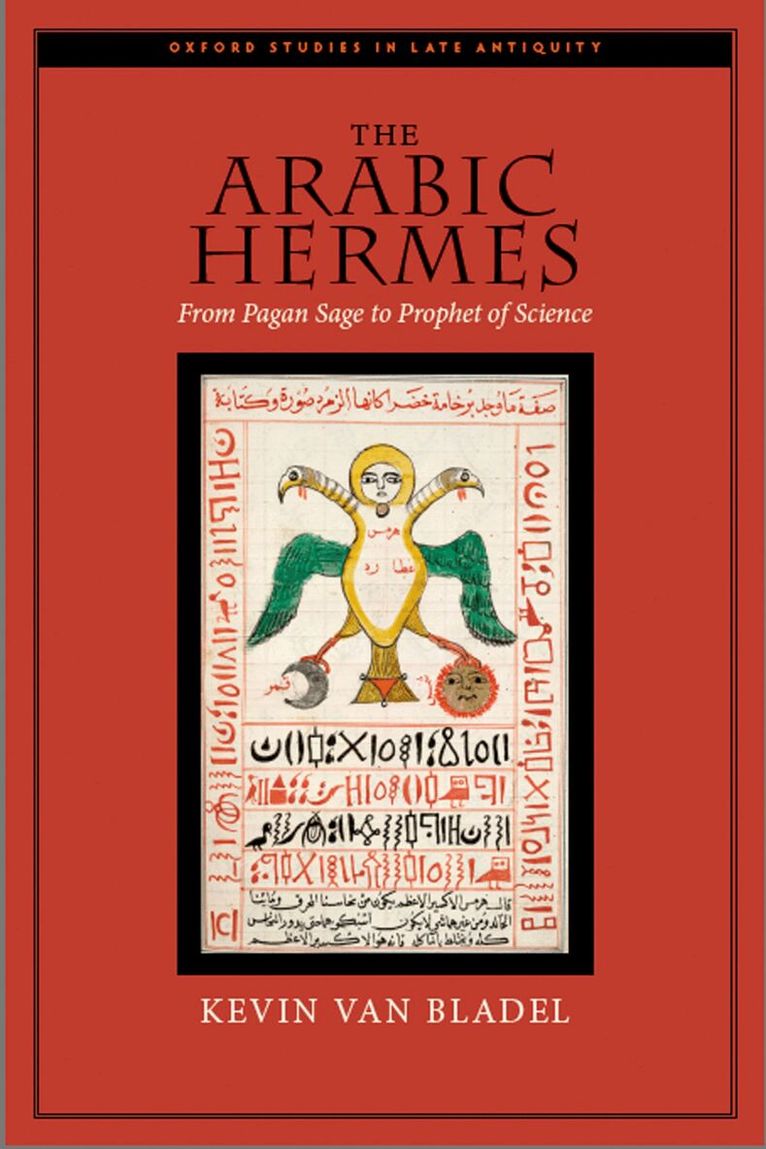
This is the first major study devoted to the early Arabic reception and adaption of the figure of Hermes Trismegistus, the legendary Egyptian sage to whom were ascribed numerous works on astrology, alchemy, talismans, medicine, and philosophy. The ancient Greek Hermetica, with which the tradition begins, are products of Roman Egypt of the second and third century CE. Thereafter, in late antiquity, they found a wide readership, both among pagans and Christians. Their ongoing popularity depended on the notion that Hermes had lived in extremely ancient times, perhaps before the Deluge, and his antiquity endowed him with a pristine intellectual priority and made him attractive as an authority in religious arguments. Early Arabic literature beginning in the eighth century also includes detailed discussions of Hermes Trismegistus, both as a teacher of ancient legend and as the alleged author of works on the apocryphal sciences, especially astrology. Moreover, Hermes is imagined in Arabic as a prophet, lawgiver, and the founder of ancient religion. This book shows how the Arabic Hermes developed out of the earlier Greek and other late antique traditions into something new, which would in turn form the background to the later reception of the Greek Hermetica in the Italian Renaissance. Assembling information in Greek, Arabic, Syriac, and Coptic primary sources, The Arabic Hermes will be of great interest to scholars in many fields, including Classics, Arabic Studies, Iranian Studies, Egyptology, and Medieval Studies.
E-bok
PDF, Engelska, 20091 357 kr
Läs direkt efter köp
This is the first major study devoted to the early Arabic reception and adaption of the figure of Hermes Trismegistus, the legendary Egyptian sage to whom were ascribed numerous works on astrology, alchemy, talismans, medicine, and philosophy. Before the more famous Renaissance European reception of the ancient Greek Hermetica, the Arabic tradition about Hermes and the works under his name had been developing and flourishing for seven hundred years. The legendary Egyptian Hermes Trismegistus was renowned in Roman antiquity as an ancient sage whose teachings were represented in books of philosophy and occult science. The works in his name, written in Greek by Egyptians living under Roman rule, subsequently circulated in many languages and regions of the Roman and Sasanian Persian empires. After the rise of Arabic as a prestigious language of scholarship in the eighth century, accounts of Hermes identity and Hermetic texts were translated into Arabic along with the hundreds of other works translated from Greek, Middle Persian, and other literary languages of antiquity. Hermetica were in fact among the earliest translations into Arabic, appearing already in the eighth century. This book explains the origins of the Arabic myth of Hermes Trismegistus, its sources, the reasons for its peculiar character, and its varied significance for the traditions of Hermetica in Asia and northern Africa as well as Europe. It shows who pre-modern Arabic scholars thought Hermes was and how they came to that view.
E-bok
Engelska, 20091 357 kr
Läs direkt efter köp
This is the first major study devoted to the early Arabic reception and adaption of the figure of Hermes Trismegistus, the legendary Egyptian sage to whom were ascribed numerous works on astrology, alchemy, talismans, medicine, and philosophy. Before the more famous Renaissance European reception of the ancient Greek Hermetica, the Arabic tradition about Hermes and the works under his name had been developing and flourishing for seven hundred years. The legendary Egyptian Hermes Trismegistus was renowned in Roman antiquity as an ancient sage whose teachings were represented in books of philosophy and occult science. The works in his name, written in Greek by Egyptians living under Roman rule, subsequently circulated in many languages and regions of the Roman and Sasanian Persian empires. After the rise of Arabic as a prestigious language of scholarship in the eighth century, accounts of Hermes identity and Hermetic texts were translated into Arabic along with the hundreds of other works translated from Greek, Middle Persian, and other literary languages of antiquity. Hermetica were in fact among the earliest translations into Arabic, appearing already in the eighth century. This book explains the origins of the Arabic myth of Hermes Trismegistus, its sources, the reasons for its peculiar character, and its varied significance for the traditions of Hermetica in Asia and northern Africa as well as Europe. It shows who pre-modern Arabic scholars thought Hermes was and how they came to that view.