Kim Tran – författare
Visar alla böcker från författaren Kim Tran. Handla med fri frakt och snabb leverans.
5 produkter
5 produkter
Inbunden, Engelska, 2026
349 kr
Skickas
Häftad, Engelska, 2025
180 kr
Skickas
E-bok
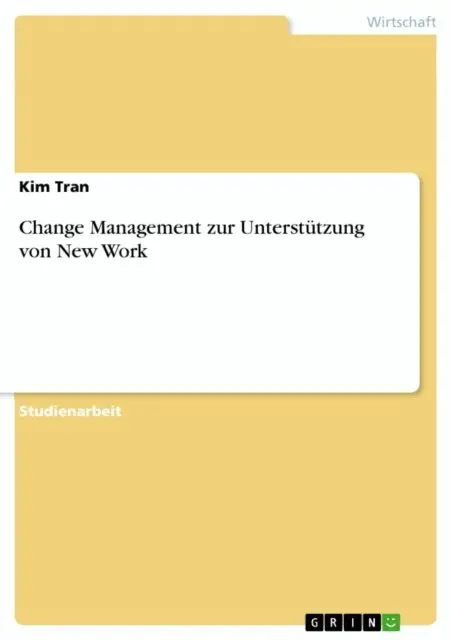
PDF, Tyska, 2021198 kr
Läs direkt efter köp
Studienarbeit aus dem Jahr 2021 im Fachbereich BWL - Unternehmensfuhrung, Management, Organisation, Note: 1,0, , Sprache: Deutsch, Abstract: Das Ziel dieser Arbeit ist es, jene Change Management Manahmen herauszuarbeiten, mit deren Hilfe die Transformation in Richtung New Work, unter Berucksichtigung der Herausforderungen, die bei der Abflachung der Hierarchie entstehen, gelingen kann. Die Auswahl der Manahmen stutzen sich dabei, auf eine zuvor durchgefuhrte fundierte wissenschaftliche Analyse von Konzepten und Modellen aus der einschlagigen Literatur. Es wird untersucht, ob eine Demokratisierung zu einem erfolgreichen New Work unumganglich ist und daruber hinaus werden die Vor- und Nachteile dieser gegenubergestellt und diskutiert. In einer sich durch die Digitalisierung immer schneller verandernden Welt, in der die Vermischung von Freizeit und Arbeit zunimmt und sich gleichzeitig die Anforderungen der Arbeitnehmer verandert, drangt alles zum Wandel. Ebenso stehen die Unternehmen unter dem Druck ihre Rentabilitat und Wettbewerbsfahigkeit zu steigern. Unternehmen, die sich den veranderten Bedingungen bestmoglich anpassen und sich als wandlungsfahig erweisen, werden zukunftig erfolgreich agieren. Diese Prozesse gelingen jedoch nur, wenn sie gut organisiert sind und ihre Auswirkungen bedacht werden.
Häftad, Engelska, 2027
254 kr
Kommande
A clear-eyed reckoning with the failures of the DEI industry, and a case for how its tools can be revived to build powerBefore President Trump gutted federal DEI programs, and a quarter of corporations followed suit, the diversity, equity and inclusion industry was everyone’s favorite political punching bag. The right blamed DEI for everything from plane crashes to making white people feel bad, while some on the left were all too eager to celebrate its corporate demise.In After Diversity,writer, organizer, and former DEI consultant Kim Tran argues that while DEI was never the political horizon, at its core is an essential understanding that workplaces are strategic sites of struggle. Tran takes a hard look at the DEI industry’s fraught history, explaining why, in the decades after the civil rights movement, it failed to deliver on its lofty promises. From union-busting personnel managers to celebrity influencers, DEI has offered feelings of belonging as a distraction from politicization and to encourage company loyalty.Yet the same features that doomed DEI are precisely what makes it useful now. In creating spaces to address political feelings like belonging, and build power along those lines, DEI’s infrastructure can be marshaled in the fight against fascism. It can reach the people who have been overlooked and dismissed, at the exact time we need them the most.
Inbunden, Engelska, 2027
791 kr
Kommande
A clear-eyed reckoning with the failures of the DEI industry, and a case for how its tools can be revived to build powerBefore President Trump gutted federal DEI programs, and a quarter of corporations followed suit, the diversity, equity and inclusion industry was everyone’s favorite political punching bag. The right blamed DEI for everything from plane crashes to making white people feel bad, while some on the left were all too eager to celebrate its corporate demise.In After Diversity,writer, organizer, and former DEI consultant Kim Tran argues that while DEI was never the political horizon, at its core is an essential understanding that workplaces are strategic sites of struggle. Tran takes a hard look at the DEI industry’s fraught history, explaining why, in the decades after the civil rights movement, it failed to deliver on its lofty promises. From union-busting personnel managers to celebrity influencers, DEI has offered feelings of belonging as a distraction from politicization and to encourage company loyalty.Yet the same features that doomed DEI are precisely what makes it useful now. In creating spaces to address political feelings like belonging, and build power along those lines, DEI’s infrastructure can be marshaled in the fight against fascism. It can reach the people who have been overlooked and dismissed, at the exact time we need them the most.