Kimberly Potter - Böcker
Visar alla böcker från författaren Kimberly Potter. Handla med fri frakt och snabb leverans.
2 produkter
2 produkter
927 kr
Skickas inom 5-8 vardagar
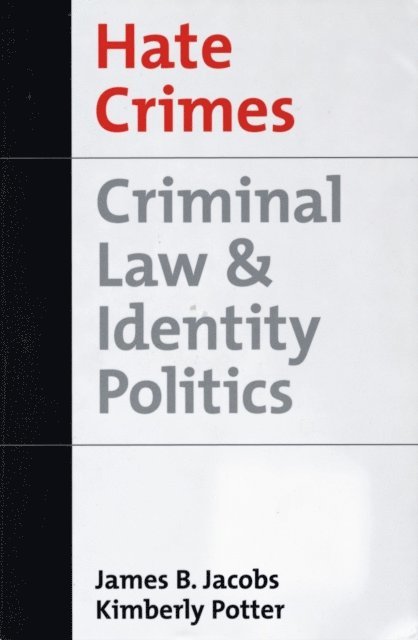
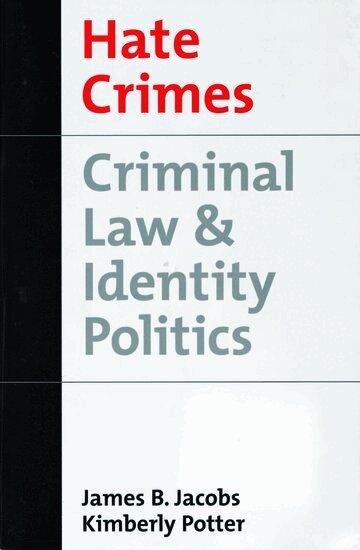
Early in the 1980s, a new category of crime appeared in the criminal law lexicon. In response to what was said to be an epidemic of prejudice-motivated violence, Congress and many state legislatures passed a wave of "hate crime" laws that required the collection of statistics and enhanced the punishment of crimes motivated by certain prejudices. This book places in socio-legal perspective both the hate crime problem and society's response to it. From the outset, Jacobs and Potter adopt a sceptical if not critical stance. They argue that hate crime is a hopelessly muddled concept and that legal definitions of the term are riddled with ambiguity and subjectivity. Moreover, no matter how hate crime is defined, the authors find no evidence to support the claim that the US is experiencing a hate crime epidemic--nor that the number or rate of hate crimes is at an historic zenith. Furthermore, assert the authors, the federal effort to establish a hate crime accounting system has been a failure. The authors argue that hate crime as a socio-legal category represents the elaboration of an identity politics that manifests itself in many areas of the law. However, the attempt to apply the anti-discrimination paradigm to criminal law generates a number of problems and anomalies. The underlying conduct that hate crime law prohibits is already subject to criminal punishment. Jacobs and Potter maintain that there is no persuasive rationale for saying that hate crimes are "worse" or "more serious" than similar crimes attributable to other anti-social motivations. Also, they argue that the effort to single out hate crime for greater punishment, in effect, is an effort to punish some offenders more seriously because of their bad beliefs, opinions, or values, thus implicating the First Amendment. Jabobs and Potter show that the recriminalization of hate crime has little (if any) value with respect to law enforcement or criminal justice. Indeed, enforcement of such laws may in fact exacerbate intergroup tensions rather than eradicate prejudice.
299 kr
Skickas inom 5-8 vardagar
In the early 1980s, a new category of crime appeared in the criminal law lexicon. In response to concerted advocacy-group lobbying, Congress and many state legislatures passed a wave of "hate crime" laws requiring the collection of statistics on, and enhancing the punishment for, crimes motivated by certain prejudices. This book places the evolution of the hate crime concept in socio-legal perspective. James B. Jacobs and Kimberly Potter adopt a skeptical if not critical stance, maintaining that legal definitions of hate crime are riddled with ambiguity and subjectivity. No matter how hate crime is defined, and despite an apparent media consensus to the contrary, the authors find no evidence to support the claim that the United States is experiencing a hate crime epidemic--instead, they cast doubt on whether the number of hate crimes is even increasing. The authors further assert that, while the federal effort to establish a reliable hate crime accounting system has failed, data collected for this purpose have led to widespread misinterpretation of the state of intergroup relations in this country. The book contends that hate crime as a socio-legal category represents the elaboration of an identity politics now manifesting itself in many areas of the law. But the attempt to apply the anti-discrimination paradigm to criminal law generates problems and anomalies. For one thing, members of minority groups are frequently hate crime perpetrators. Moreover, the underlying conduct prohibited by hate crime law is already subject to criminal punishment. Jacobs and Potter question whether hate crimes are worse or more serious than similar crimes attributable to other anti-social motivations. They also argue that the effort to single out hate crime for greater punishment is, in effect, an effort to punish some offenders more seriously simply because of their beliefs, opinions, or values, thus implicating the First Amendment. Advancing a provocative argument in clear and persuasive terms, Jacobs and Potter show how the recriminalization of hate crime has little (if any) value with respect to law enforcement or criminal justice. Indeed, enforcement of such laws may exacerbate intergroup tensions rather than eradicate prejudice.