Kinga Molnár – författare
Visar alla böcker från författaren Kinga Molnár. Handla med fri frakt och snabb leverans.
6 produkter
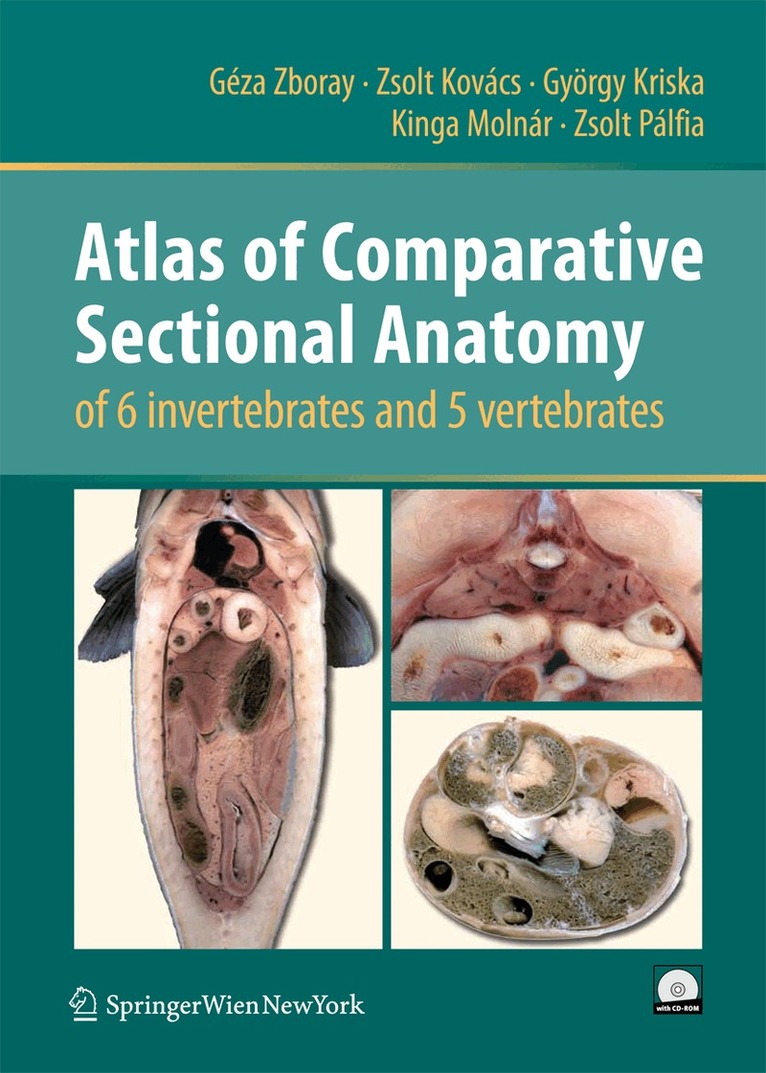
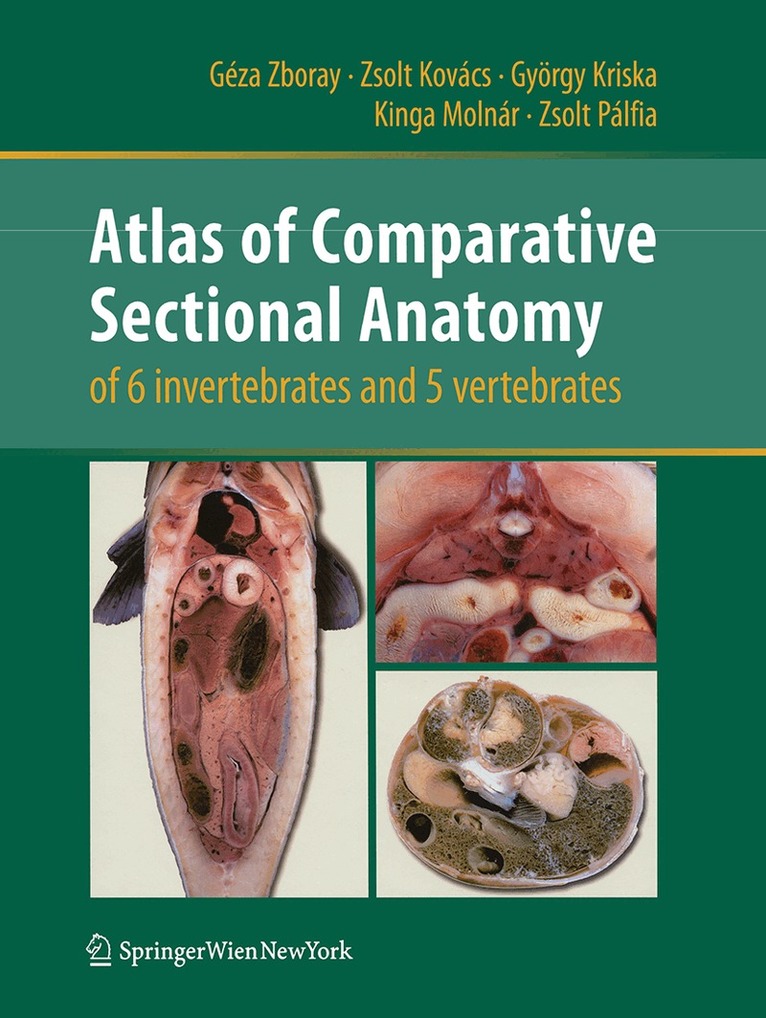
Atlas of Comparative Sectional Anatomy of 6 invertebrates and 5 vertebrates
Av Géza Zboray, Zsolt Kovács m. fl.
Inbunden, 2010
2183 kr
Lägg i varukorg
This atlas contains 189 coloured images taken from transversal, horizontal and sagittal sections of eleven organisms widely used in university teaching. Six invertebrate and five vertebrate species – from the nematode worm (Ascaris suum) to mammals (Rattus norvegicus) – are shown in detailed …
Atlas of Comparative Sectional Anatomy of 6 invertebrates and 5 vertebrates
Av Zsolt Palfia, Kinga Molnar m. fl.
E-bok, 2011
2862 kr
Lägg i varukorg
This atlas contains 189 coloured images taken from transversal, horizontal and sagittal sections of eleven organisms widely used in university teaching. Six invertebrate and five vertebrate species – from the nematode worm (Ascaris suum) to mammals (Rattus norvegicus) – are shown in detailed …
Atlas of Animal Anatomy and Histology
Av Péter Lőw, Kinga Molnár m. fl.
Inbunden, 2016
1966 kr
Lägg i varukorg
This atlas presents the basic concepts and principles of functional animal anatomy and histology thereby furthering our understanding of evolutionary concepts and adaptation to the environment. It provides a step-by-step dissection guide with numerous colour photographs of the animals featured. It …
Atlas of Animal Anatomy and Histology
Av Gyorgy Kriska, Kinga Molnar m. fl.
E-bok, 2016
1785 kr
Lägg i varukorg
This atlas presents the basic concepts and principles of functional animal anatomy and histology thereby furthering our understanding of evolutionary concepts and adaptation to the environment. It provides a step-by-step dissection guide with numerous colour photographs of the animals featured. It …
Atlas of Animal Anatomy and Histology
Av Péter Lőw, Kinga Molnár m. fl.
Häftad, 2018
1425 kr
Lägg i varukorg
This atlas presents the basic concepts and principles of functional animal anatomy and histology thereby furthering our understanding of evolutionary concepts and adaptation to the environment. It provides a step-by-step dissection guide with numerous colour photographs of the animals featured. It …
Atlas of Comparative Sectional Anatomy of 6 invertebrates and 5 vertebrates
Av Géza Zboray, Zsolt Kovács m. fl.
Häftad, 2016
2188 kr
Lägg i varukorg
This atlas contains 189 coloured images taken from transversal, horizontal and sagittal sections of eleven organisms widely used in university teaching. Six invertebrate and five vertebrate species – from the nematode worm (Ascaris suum) to mammals (Rattus norvegicus) – are shown in detailed …