Kiril Avramov – författare
Visar alla böcker från författaren Kiril Avramov. Handla med fri frakt och snabb leverans.
4 produkter
4 produkter
Häftad, Engelska, 2026
591 kr
Kommande
This edited volume develops a comparative theory of post-Cold War intelligence liaison between the US intelligence community and its international counterparts.It presents the US perspective on these liaisons and moves beyond simple ally-adversary classifications, showing how cooperation is influenced by strategic threat perception, material power, access to intelligence, and institutional culture. The core of the book rests on a dual framework that combines neoclassical realism and intelligence studies: states pursue liaison not only due to formal alliances or power but because threat perceptions, institutional culture, and intelligence access interact to create or limit decision advantages. Additionally, the volume advances our understanding of strategic institutional intelligence culture - the patterns through which intelligence agencies influence threat perception, policy interaction, secrecy management, and oversight. It classifies U.S. intelligence relationships along a spectrum: enduring partnerships, wary alliances, and transactional exchanges. The empirical section applies this framework to case studies including British-American and Israeli-American cooperation; Chinese and Russian intelligence under near-peer competition; and Cuban and Iranian systems influenced by regime security, revolutionary ideology, and gray-zone tactics. Examining the nature, type, and quality of interactions with intelligence agencies worldwide, along with an understanding of these interactions, are key to effective and smart intelligence practices.This book will be of much interest to students of intelligence studies, national security, foreign policy, and International Relations, as well as practitioners.
Inbunden, Engelska, 2026
2 163 kr
Kommande
This edited volume develops a comparative theory of post-Cold War intelligence liaison between the US intelligence community and its international counterparts.It presents the US perspective on these liaisons and moves beyond simple ally-adversary classifications, showing how cooperation is influenced by strategic threat perception, material power, access to intelligence, and institutional culture. The core of the book rests on a dual framework that combines neoclassical realism and intelligence studies: states pursue liaison not only due to formal alliances or power but because threat perceptions, institutional culture, and intelligence access interact to create or limit decision advantages. Additionally, the volume advances our understanding of strategic institutional intelligence culture - the patterns through which intelligence agencies influence threat perception, policy interaction, secrecy management, and oversight. It classifies U.S. intelligence relationships along a spectrum: enduring partnerships, wary alliances, and transactional exchanges. The empirical section applies this framework to case studies including British-American and Israeli-American cooperation; Chinese and Russian intelligence under near-peer competition; and Cuban and Iranian systems influenced by regime security, revolutionary ideology, and gray-zone tactics. Examining the nature, type, and quality of interactions with intelligence agencies worldwide, along with an understanding of these interactions, are key to effective and smart intelligence practices.This book will be of much interest to students of intelligence studies, national security, foreign policy, and International Relations, as well as practitioners.
Häftad, Engelska, 2026
491 kr
Skickas inom 10-15 vardagar
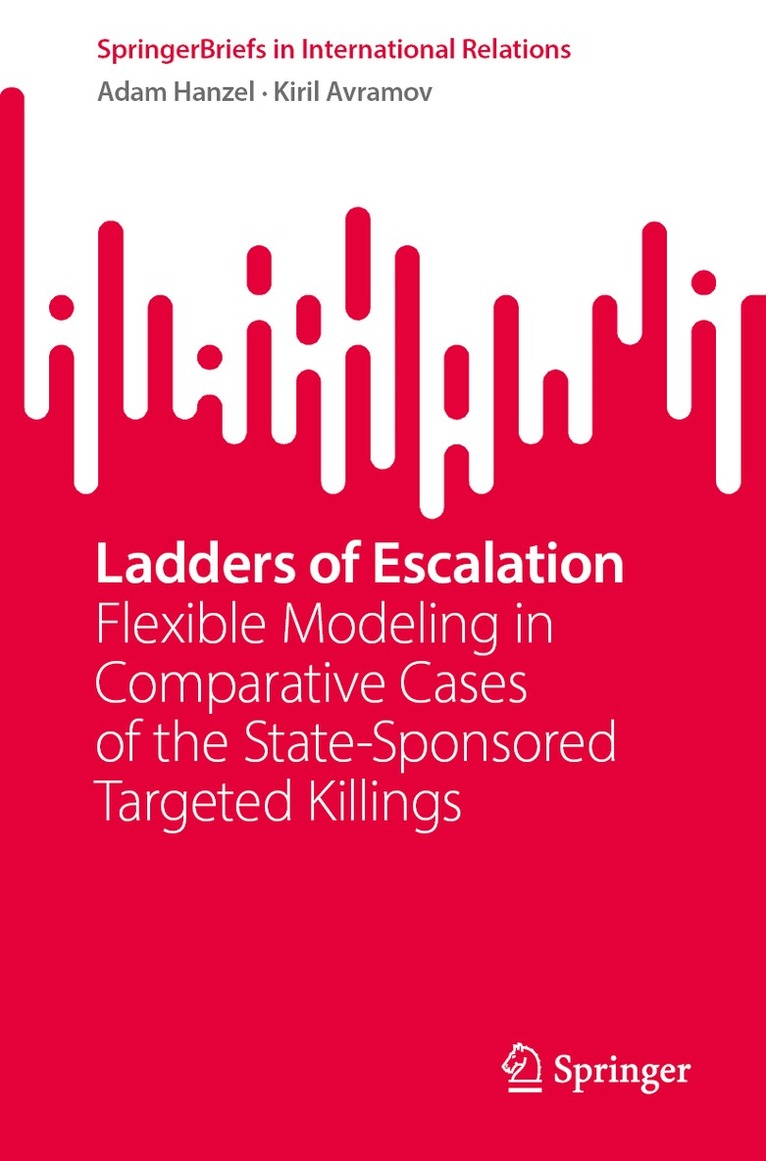
This Brief provides a detailed exploration of a modified “escalation ladders” model as applied to state-sponsored targeted killings in the post-Cold War political landscape. Using a modified version of Herman Kahn's "ladders of escalation," the authors offer a systematic comparison of the components and features of multiple state-sponsored killing programs. The Brief begins with a historical overview of the creation of escalations ladders in the 1950s and 1960s, their original applications in conflicts between nuclear superpowers, and their discontinuation in the wake of the end of the Cold War. The second part illustrates how the modified Ladders of Escalation model can be utilized in various national intelligence agencies, through international case studies: Russia, Israel, the United States, India, and France. In the third section, the authors draw parallels between the models, ending with further discussion on how Ladders of Escalation can support, or even improve, current intelligence practices. Providing a new and valuable theoretical framework for analyzing political violence, this Brief will be of interest to scholars and students of international relations, critical security studies, intelligence studies, as well as intelligence professionals and human rights practitioners.
E-bok
Engelska, 2026611 kr
Läs direkt efter köp
This Brief provides a detailed exploration of a modified "e;escalation ladders"e; model as applied to state-sponsored targeted killings in the post-Cold War political landscape. Using a modified version of Herman Kahn's "ladders of escalation," the authors offer a systematic comparison of the components and features of multiple state-sponsored killing programs. The Brief begins with a historical overview of the creation of escalations ladders in the 1950s and 1960s, their original applications in conflicts between nuclear superpowers, and their discontinuation in the wake of the end of the Cold War. The second part illustrates how the modified Ladders of Escalation model can be utilized in various national intelligence agencies, through international case studies: Russia, Israel, the United States, India, and France. In the third section, the authors draw parallels between the models, ending with further discussion on how Ladders of Escalation can support, or even improve, current intelligence practices. Providing a new and valuable theoretical framework for analyzing political violence, this Brief will be of interest to scholars and students of international relations, critical security studies, intelligence studies, as well as intelligence professionals and human rights practitioners.