Kishor Dandapat – författare
Visar alla böcker från författaren Kishor Dandapat. Handla med fri frakt och snabb leverans.
3 produkter
3 produkter
Inbunden, Engelska, 2026
1 935 kr
Kommande
This book addresses the growing complexity of 21st-century disasters through geospatial AI and intelligent technologies. It demonstrates how AI, machine learning, GIS, remote sensing, and IoT transform disaster risk reduction and resilience building, particularly in the Global South and India. This multidisciplinary approach to disaster studies includes AI-driven damage assessment, machine learning for poverty mapping, deep learning flood classification, predictive modeling of economic impacts, coastal vulnerability assessment, earthquake resilience analysis, glacier monitoring, IoT landslide systems, and AI-enhanced logistics for disaster response.FeaturesExplores how machine learning and artificial intelligence can support disaster resilience for communities.Examines climate change impacts on increasing disaster frequency and societal vulnerability worldwide.Presents IoT-LoRaWAN systems for real-time landslide monitoring in vulnerable mountainous regions.Explores AI-driven last-mile logistics for improving emergency response and supply-chain efficiency.Emphasizes the importance of building resilient communities, a critical factor for long-term sustainability.This book is for emergency management professionals, disaster risk reduction experts, climate change specialists, urban planners and resilience officers, government agencies, NGOs, researchers, academics, and graduate students involved with disaster studies.
Inbunden, Engelska, 2026
1 723 kr
Skickas inom 10-15 vardagar
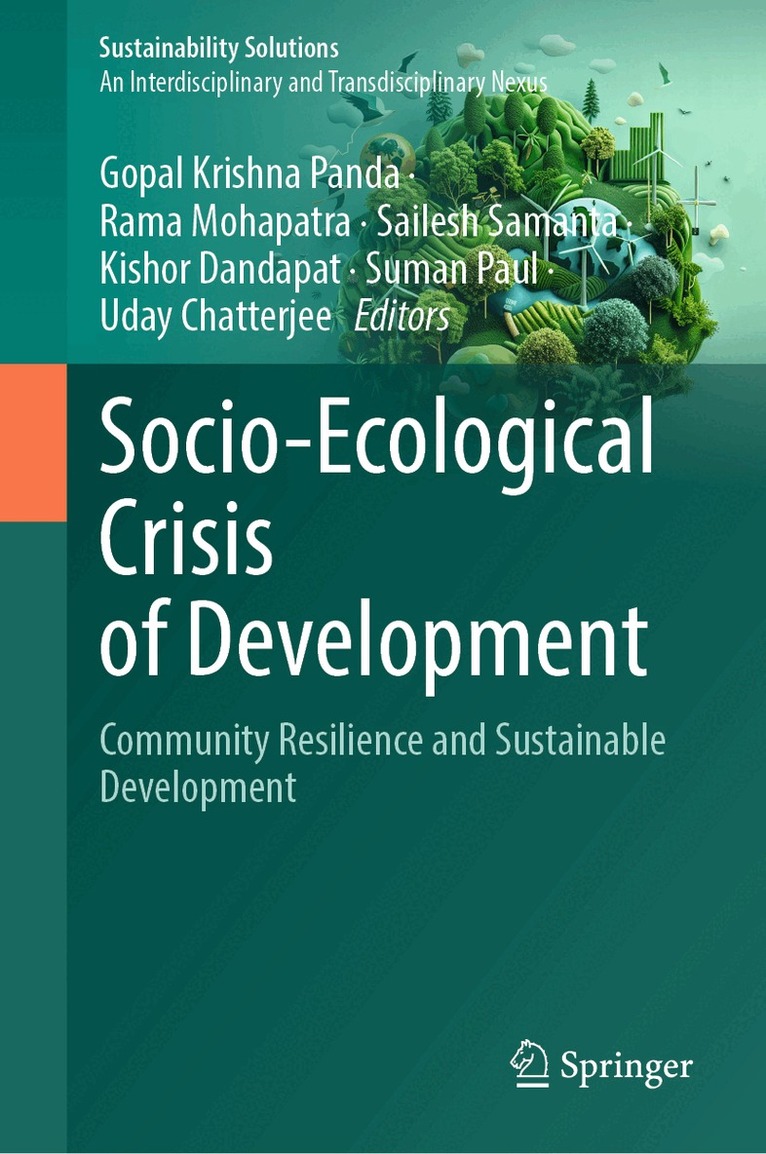
The book presents the shifting environmental trends worldwide in the name of development and offers a harmonious adjustment between development and the natural environment, addressing the intricate complexities in a comprehensive and sustainable manner. In recent times, humanity finds itself in a race against time to tackle the severe environmental crisis we face. Climate change, which is largely attributed to human activity, poses a significant challenge to social, political, and economic systems worldwide. As governments and scientists in the field acknowledge, it is the most pressing environmental threat of the 21st century. The earth's average temperature has risen by approximately 0.60C over the past century due to human activity, and greenhouse gas emissions are likely to cause a temperature increase of between 1.4 and 5.80C this century, depending on the efforts made to address climate change. Environmental problems manifest in various ways in both developed and developing countries, with some issues affecting regions globally while each country also grapples with unique developmental and environmental challenges. Furthermore, regional and local concerns demand immediate attention. The transfer of technology from developed countries to Third World countries has raised environmental concerns, as inadequate management has led to environmental degradation. Although human ingenuity and scientific progress have contributed to advancements in agriculture, irrigation, mining, industries, transportation, forestry, and land management, these pursuits have often disrupted the natural environment. As awareness of the adverse effects of developmental activities grows, people are actively seeking ways to mitigate these effects by adopting methods and technologies that promote sustainable development.
E-bok
Engelska, 20262 207 kr
Läs direkt efter köp
The book presents the shifting environmental trends worldwide in the name of development and offers a harmonious adjustment between development and the natural environment, addressing the intricate complexities in a comprehensive and sustainable manner. In recent times, humanity finds itself in a race against time to tackle the severe environmental crisis we face. Climate change, which is largely attributed to human activity, poses a significant challenge to social, political, and economic systems worldwide. As governments and scientists in the field acknowledge, it is the most pressing environmental threat of the 21st century. The earth's average temperature has risen by approximately 0.60C over the past century due to human activity, and greenhouse gas emissions are likely to cause a temperature increase of between 1.4 and 5.80C this century, depending on the efforts made to address climate change. Environmental problems manifest in various ways in both developed and developing countries, with some issues affecting regions globally while each country also grapples with unique developmental and environmental challenges. Furthermore, regional and local concerns demand immediate attention. The transfer of technology from developed countries to Third World countries has raised environmental concerns, as inadequate management has led to environmental degradation. Although human ingenuity and scientific progress have contributed to advancements in agriculture, irrigation, mining, industries, transportation, forestry, and land management, these pursuits have often disrupted the natural environment. As awareness of the adverse effects of developmental activities grows, people are actively seeking ways to mitigate these effects by adopting methods and technologies that promote sustainable development.