Klaus Jaffe – författare
Visar alla böcker från författaren Klaus Jaffe. Handla med fri frakt och snabb leverans.
8 produkter
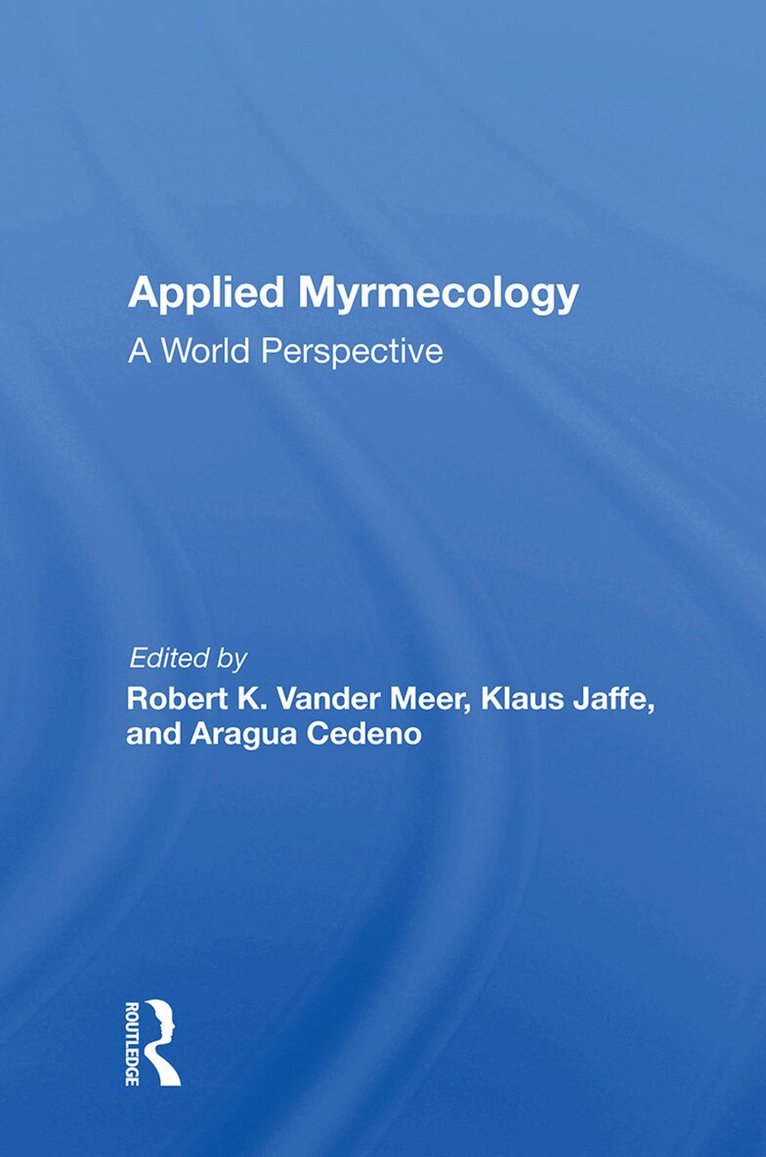
Applied Myrmecology
A World Perspective
Av Robert K Vander Meer, Aragua Cedeno m. fl.
Inbunden, 2019
2786 kr
Lägg i varukorg
Ants have always fascinated the nature observer. Reports from ancient Egypt and Mesopotamia indicate that ants interested humans long ago. Myrmecology as a science had its beginning in the last century with great naturalists like Andre, Darwin, Emery, Escherich, Fabre, Fields, Forel, Janet, …
Applied Myrmecology
A World Perspective
Av Robert K Vander Meer, Robert K Vander Meer m. fl.
Häftad, 2021
769 kr
Lägg i varukorg
This book brings together a broad range of pest ant articles for recognizing that many ant species have an important role in their ecosystems. It permits the separation of myrmecology from the penta- and quadrinomial system.
Applied Myrmecology
A World Perspective
Av Aragua Cedeno, Klaus Jaffe m. fl.
E-bok, 2019
814 kr
Lägg i varukorg
Ants have always fascinated the nature observer. Reports from ancient Egypt and Mesopotamia indicate that ants interested humans long ago. Myrmecology as a science had its beginning in the last century with great naturalists like Andre, Darwin, Emery, Escherich, Fabre, Fields, Forel, Janet, …
Applied Myrmecology
A World Perspective
Av Aragua Cedeno, Klaus Jaffe m. fl.
E-bok, 2019
814 kr
Lägg i varukorg
Ants have always fascinated the nature observer. Reports from ancient Egypt and Mesopotamia indicate that ants interested humans long ago. Myrmecology as a science had its beginning in the last century with great naturalists like Andre, Darwin, Emery, Escherich, Fabre, Fields, Forel, Janet, …
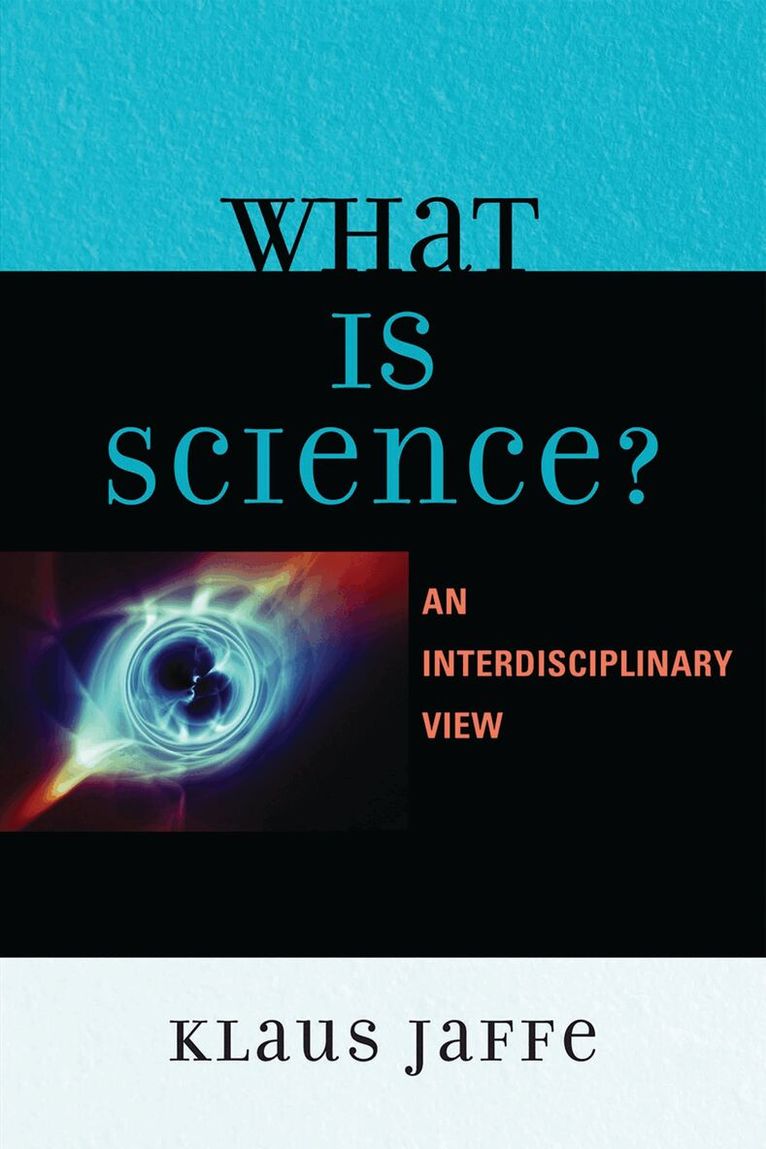
What is Science?
An Interdisciplinary Perspective
Av Klaus Jaffe
Häftad, 2009
514 kr
Lägg i varukorg
In What is Science?, Jaffe seeks to define science conceptually. Understanding our environment and ourselves is and has been the most important intellectual activity of mankind. It was only after the emergence of the empirical science (i.e. experiment philosophy) that humanity achieved accelerated …
What is Science?
An Interdisciplinary Perspective
Av Klaus Jaffe
E-bok, 2009
546 kr
Lägg i varukorg
In What is Science? , Jaffe seeks to define science conceptually. Understanding our environment and ourselves is and has been the most important intellectual activity of mankind. It was only after the emergence of the empirical science (i.e. experiment philosophy) that humanity achieved accelerated …
Infodynamics, Economics, Energy, and Life
An Interdisciplinary Approach
Av Klaus Jaffe
Inbunden, 2026
457 kr
Lägg i varukorg
The scientific understanding of energy, matter, and spacetime has advanced rapidly, whereas the study of information—its properties, behavior, and dynamics—remains underdeveloped. Despite the complexity of knowledge and information, our conceptual and empirical grasp of its evolution lags …
Infodynamics, Economics, Energy, and Life
An Interdisciplinary Approach
Av Klaus Jaffe
E-bok, 2026
575 kr
Lägg i varukorg
The scientific understanding of energy, matter, and spacetime has advanced rapidly, whereas the study of information—its properties, behavior, and dynamics—remains underdeveloped. Despite the complexity of knowledge and information, our conceptual and empirical grasp of its evolution lags …