Klaus Wälde – författare
Visar alla böcker från författaren Klaus Wälde. Handla med fri frakt och snabb leverans.
2 produkter
2 produkter
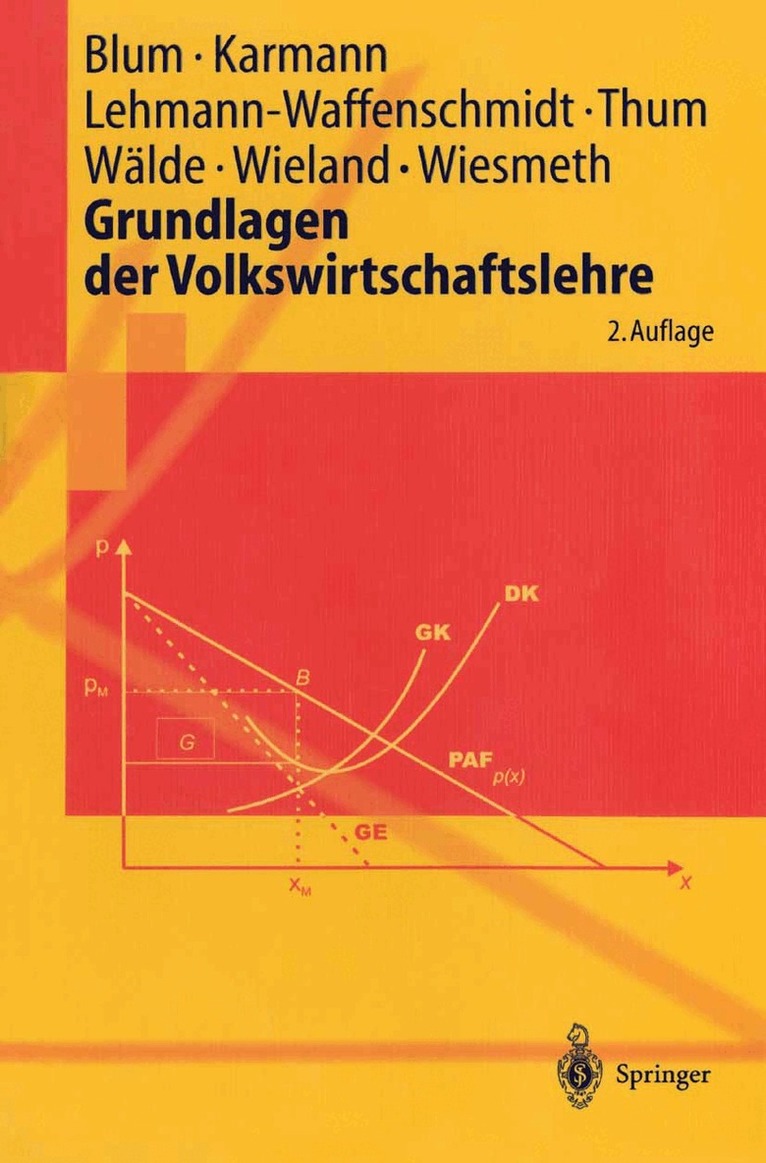
Häftad, Tyska, 2003
351 kr
Skickas inom 10-15 vardagar
Das Lehrbuch bietet eine moderne, breitgefächerte Einführung in die Schwerpunkte der Volkswirtschaftslehre auf dem aktuellen Stand der Wissenschaft: Mikro- und Industrieökonomik, politische und Institutionenökonomie, Geld und Makroökonomik, Außenwirtschaft, Wachstum und Innovation. Durch die Zusammenarbeit der Autorengruppe ist ein konzeptionell einheitliches Buch entstanden, das Studierende des 1. Semesters bestens mit den Grundlagen des Fachgebiets VWL vertraut macht. Die modulare Struktur des Buches unterstützt den Lernprozess und erleichtert auch das Selbststudium.
Häftad, Engelska, 1995
565 kr
Skickas inom 10-15 vardagar
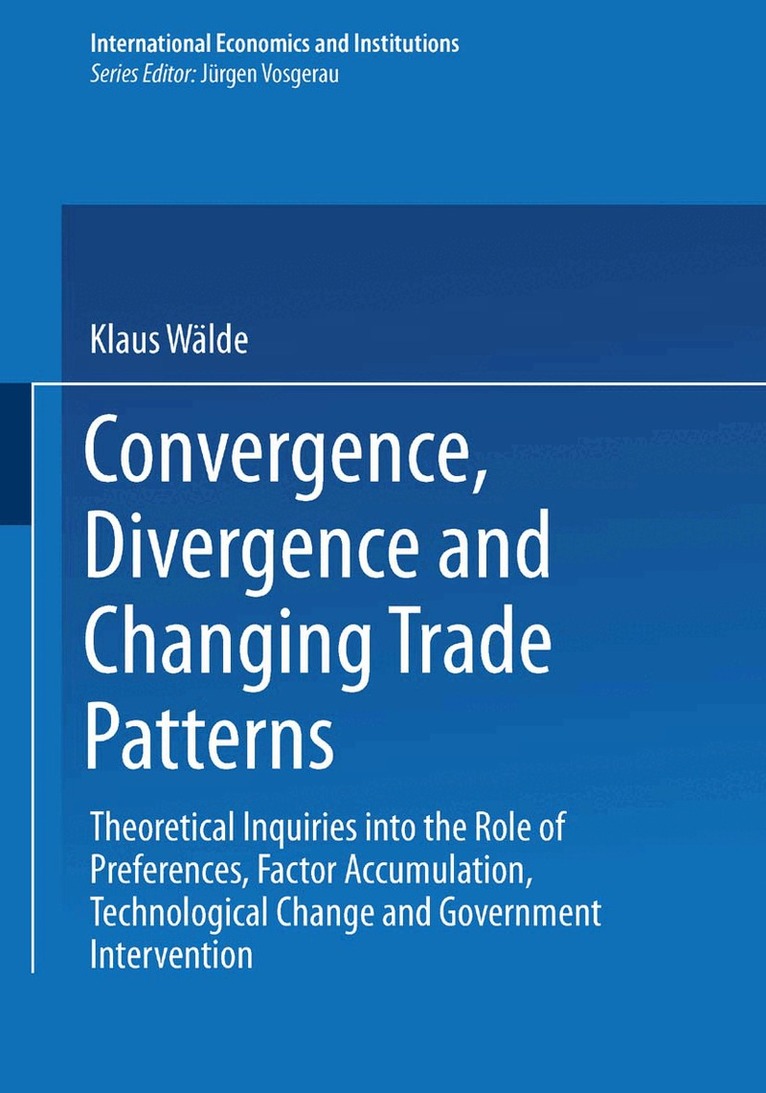
1. Introduction and overview Until still few years ago, economic growth theory (going back to Solow, 1956; for an introduction cf. Burmeister and Dobell, 1970) predicted convergence of both growth rates and level of per capita income of economies which share identical preferences, technologies and same population growth rates, independently of initial conditions. Countries with a low capital stock grow faster than those with a higher capital stock, until, in the long-run, they all converge to a common constant growth rate. This prediction is due to the way how growth is "explained" in models of this kind. Growth of output per capita resulted, in the simplest model, from an exogenous growth oflabour productivity (see e. g. Sala-i-Martin, 1990; Grossman and Helpman, 1991a, ch. 2). Si!1ce this increase of productivity is exogenously given, the model itselfdoes not give any explanation ofits source. The prediction ofconvergence ofgrowth rates, itself, is very doubtful and observations show, that on an international level either convergence is not given at all, or that it takes a very long time. The literature of the "new" theory of growth provides a rich variety of models whose theoretical implications range from divergence to convergence and thus offers much better working tools in order to analyze real world observations. These models (starting with Romer, 1986 and Lucas, 1988) explain growth of GNP or per capita income from within the model by includingexternal effects such as a public stock ofknowledge capital (e. g.