Konrad Eisenbichler - Böcker
Visar alla böcker från författaren Konrad Eisenbichler. Handla med fri frakt och snabb leverans.
10 produkter
10 produkter
440 kr
Skickas inom 10-15 vardagar
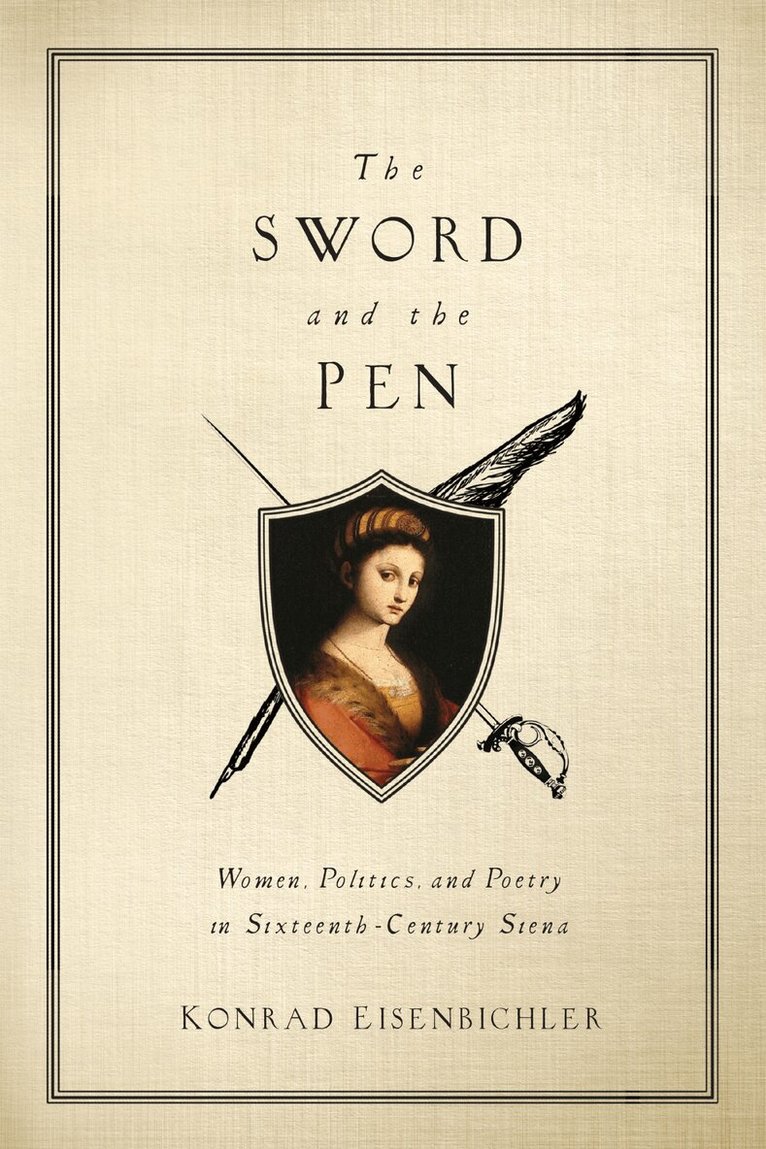
In The Sword and the Pen: Women, Politics, and Poetry in Sixteenth-Century Siena, Konrad Eisenbichler analyzes the work of Sienese women poets, in particular, Aurelia Petrucci, Laudomia Forteguerri, and Virginia Salvi, during the first half of the sixteenth century up to the fall of Siena in 1555. Eisenbichler sets forth a complex and original interpretation of the experiences of these three educated noblewomen and their contributions to contemporary culture in Siena by looking at the emergence of a new lyric tradition and the sonnets they exchanged among themselves and with their male contemporaries. Through the analysis of their poems and various book dedications to them, Eisenbichler reveals the intersection of poetry, politics, and sexuality, as well as the gendered dialogue that characterized Siena's literary environment during the late Renaissance. Eisenbichler also examines other little-known women poets and their relationship to the cultural environment of Siena, underlining the exceptional role of the city of Siena as the most important center of women's writing in the first half of the sixteenth century in Italy, and probably in all of Europe. This innovative contribution to the field of late Renaissance and early modern Italian and women's studies rescues from near oblivion a group of literate women who were celebrated by contemporary scholars but who have been largely ignored today, both because of a dearth of biographical information about them and because of a narrow evaluation of their poetry. Eisenbichler's analysis and reproduction of many of their poems in Italian and modern English translation are an invaluable contribution not only to Italian cultural studies but also to women's studies.
2 448 kr
Skickas inom 10-15 vardagar
When he suddenly came to power in Italy in 1537, the young Duke Cosimo I de' Medici amazed friends and foes alike with his ability to extricate himself from mortal danger, affirm his authority and revive a dying state. He doubled the size of his duchy and established a dynasty that ruled unchallenged for 200 years. This volume is the first book-length study in any language to approach the figure of Duke Cosimo I from the point of view of his cultural agenda. The contributors examine the political, economic, cultural and linguistic strategies that made Cosimo a successful leader, and in the process illuminate the cultural world of mid-sixteenth-century Tuscany.
2 232 kr
Skickas inom 10-15 vardagar
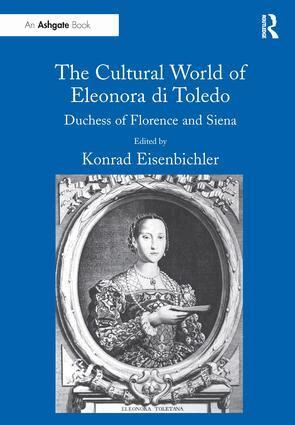
Eleonora di Toledo was a powerful and influential woman who, over the course of nearly a quarter century (1539-62), contributed profoundly to the cultural flowering of ducal Florence. Her patronage of some of the leading artists of the time, her support of newly arrived Jesuit preachers, her involvement in charitable activities, her unfailing devotion to her husband and his policies, not to mention her successful farming and business ventures are only some of the areas where her influence was unambiguously exercised and felt. She also provided the House of Medici with a full stable of children to re-invigorate the failing family line, ensure male succession even in the face of unexpected calamities, and provide enough females to establish marriage connections with a variety of noble and ruling houses in Italy. In spite of all these contributions, Eleonora has attracted little attention from scholars. This apparent disinterest may be a factor of Eleonora's personal style, or of the bad press that, as a Spanish noblewoman, she quickly received from her Florentine subjects, or of modern antipathy for some of the basic characteristics of ducal Florence. An examination of her impact on Tuscany is long overdue. In fact, a fuller, more nuanced understanding of the duchess can shed a more profound light not only on her as a person, or on her impact on Tuscan culture in the sixteenth century, but also on the contribution of female consorts to the vitality of a successful early-modern state. The essays collected here bring together a variety of scholars working in various disciplines. While many of the articles take their cue from art history (a natural reflection of the innovative research recent art historians have carried out on the duchess), they also reach out towards other disciplines - political history, literature, spectacle, and religion to mention just a few. In so doing, they expand our understanding of Eleonora's place in her society and reveal a very complex, determined, and capable woman.
Del 15 - Early Drama, Art, and Music Monograph
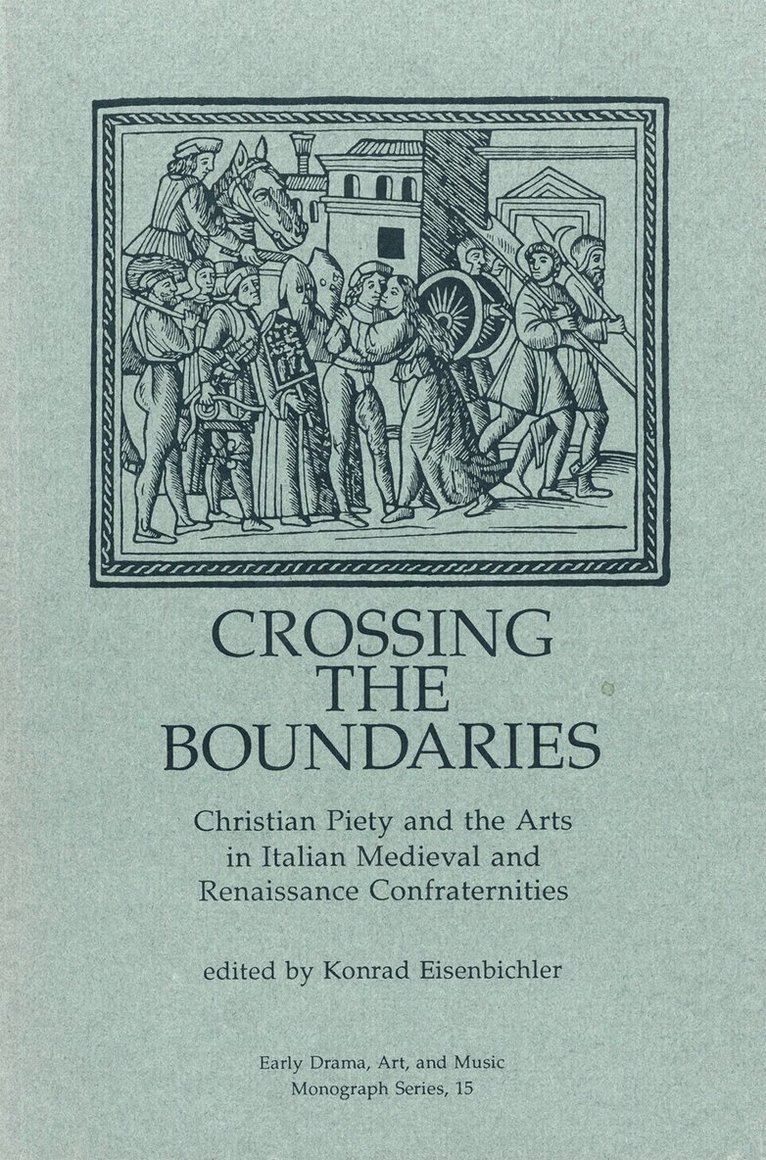
Crossing the Boundaries
Christian Piety and the Arts in Italian Medieval and Renaissance Confraternities
Inbunden, Engelska, 1991
249 kr
Skickas inom 5-8 vardagar
Despite the paramount importance of confraternities (especially to males) in medieval European society, scholars have tended to neglect not only the social role they played but also the influence they had on the art, drama, music, and thinking of the society in which they not only existed but thrived. This collection of essays serves to illuminate this oft-ignored facet of medieval society, and each essay carefully examines some element of the influence of confraternities on society and its products.
851 kr
Skickas inom 10-15 vardagar
Eleonora di Toledo was a powerful and influential woman who, over the course of nearly a quarter century (1539-62), contributed profoundly to the cultural flowering of ducal Florence. Her patronage of some of the leading artists of the time, her support of newly arrived Jesuit preachers, her involvement in charitable activities, her unfailing devotion to her husband and his policies, not to mention her successful farming and business ventures are only some of the areas where her influence was unambiguously exercised and felt. She also provided the House of Medici with a full stable of children to re-invigorate the failing family line, ensure male succession even in the face of unexpected calamities, and provide enough females to establish marriage connections with a variety of noble and ruling houses in Italy. In spite of all these contributions, Eleonora has attracted little attention from scholars. This apparent disinterest may be a factor of Eleonora's personal style, or of the bad press that, as a Spanish noblewoman, she quickly received from her Florentine subjects, or of modern antipathy for some of the basic characteristics of ducal Florence. An examination of her impact on Tuscany is long overdue. In fact, a fuller, more nuanced understanding of the duchess can shed a more profound light not only on her as a person, or on her impact on Tuscan culture in the sixteenth century, but also on the contribution of female consorts to the vitality of a successful early-modern state. The essays collected here bring together a variety of scholars working in various disciplines. While many of the articles take their cue from art history (a natural reflection of the innovative research recent art historians have carried out on the duchess), they also reach out towards other disciplines - political history, literature, spectacle, and religion to mention just a few. In so doing, they expand our understanding of Eleonora's place in her society and reveal a very complex, determined, and capable woman.
488 kr
Skickas inom 10-15 vardagar
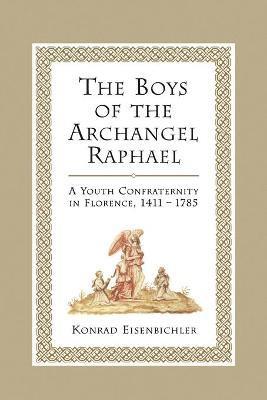
Confraternities and their contribution to the fabric of society have become invisible history for us today. Although their activities began in the Renaissance and continued until the end of the Enlightenment, confraternities have not yet found a place in the standard histories of the period, or even in the histories of religion or of the Church.With The Boys of the Archangel Raphael, Konrad Eisenbichler brings to light the daily life and history of one such organization from its founding in 1411 to its final suppression in 1785. While focusing on the Compagnia dell'Arcangelo Raffaello, the first confraternity to be established in Florence, the author also discusses other, similar organizations. By constantly comparing developments across several confraternities, the book provides us with insight into the entire phenomenon of premodern lay religious associations for youths.The study is firmly grounded on archival and contemporary documents, and covers a variety of fields of interest: social history, church history, the history of childhood, and the history of art, literature, and music. The Boys of the Archangel Raphael will be the authoritative work on youth confraternities for years to come.
810 kr
Skickas inom 7-10 vardagar
Scholarship on Italian emigration has generally omitted the Julian-Dalmatians, a group of Italians from Istria and Dalmatia, two regions that, in the wake of World War Two, were ceded by Italy to Yugoslavia as part of its war reparations to that country. Though Italians by language culture, and traditions, it seems that this group has been conveniently excised from history. And yet, Julian-Dalmatians constitute an important element in twentieth-century Italian history and represent a unique aspect of both Italian culture and emigration.This ground-breaking collection of articles from an international team of scholars opens the discussion on these "forgotten Italians" by briefly reviewing the history of their diaspora and then by examining the literary and artistic works they produced as immigrants to Canada. Forgotten Italians offers new insights into such celebrated authors as Diego Bastianutti, Mario Duliani, Caterina Edwards, and Gianni Angelo Grohovaz, as well as visual artists such as Vittorio Fiorucci and Silvia Pecota. Profoundly marked by the experience of being uprooted and forced into exile, by life in refugee camps, and by the encounter with a new culture, first-generation Julian-Dalmatians in Canada used art and writing to come to terms with their anguished situation and to rediscover their cultural roots.
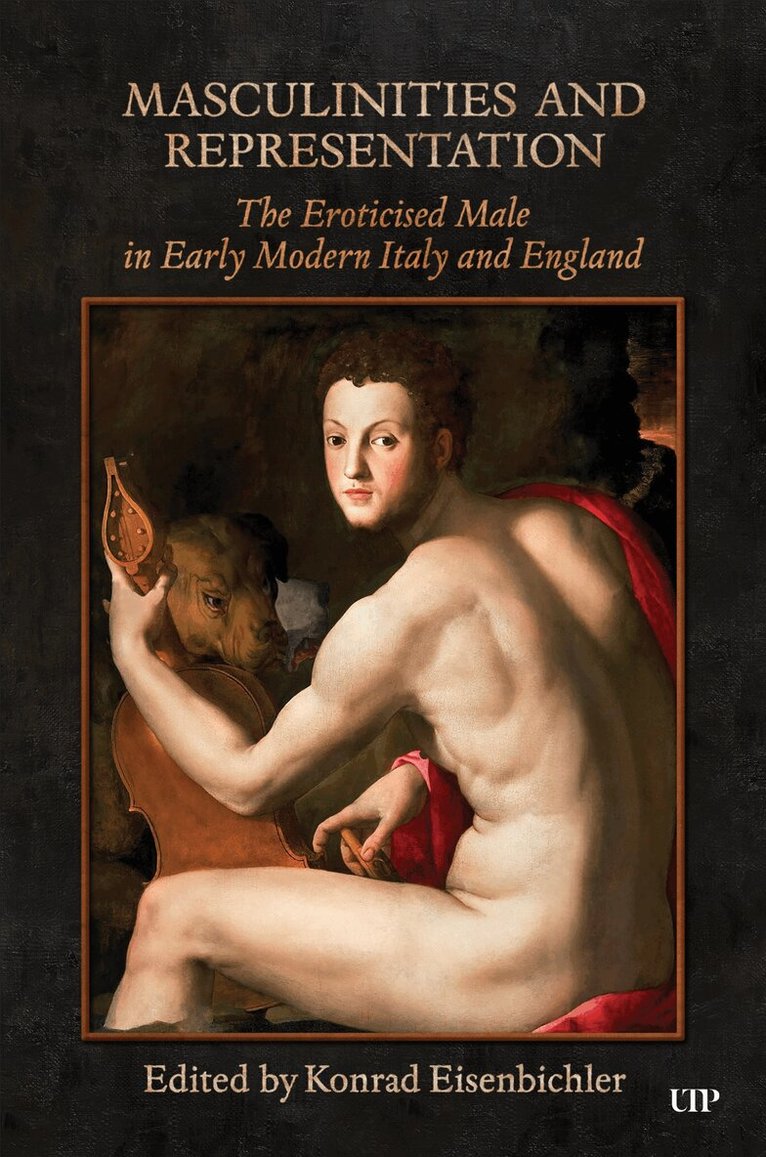
Masculinities and Representation
The Eroticized Male in Early Modern Italy and England
Inbunden, Engelska, 2024
961 kr
Skickas inom 7-10 vardagar
In studies on premodern masculinities that have enriched scholarship in recent years, relatively little attention has been paid to the eroticizing of the male body. Masculinities and Representation seeks to fill this lacuna, illustrating how gender construction served to affirm but also diversify premodern masculinity. In so doing, this collection details how, as a social construct, masculinity was not a single concept, but a dynamic and intricate notion.Focusing on the premodern period, Masculinities and Representation reveals how heteronormative masculinity was affirmed, but also how it was challenged when the male body was eroticized in art, literature, and devotion, or when "masculine" norms were transgressed by the assumption of "feminine" behaviours. Ultimately, the book demonstrates how masculinity itself could be transgressive in its focus of affection or in its inherent ambiguities.
1 203 kr
Skickas inom 7-10 vardagar
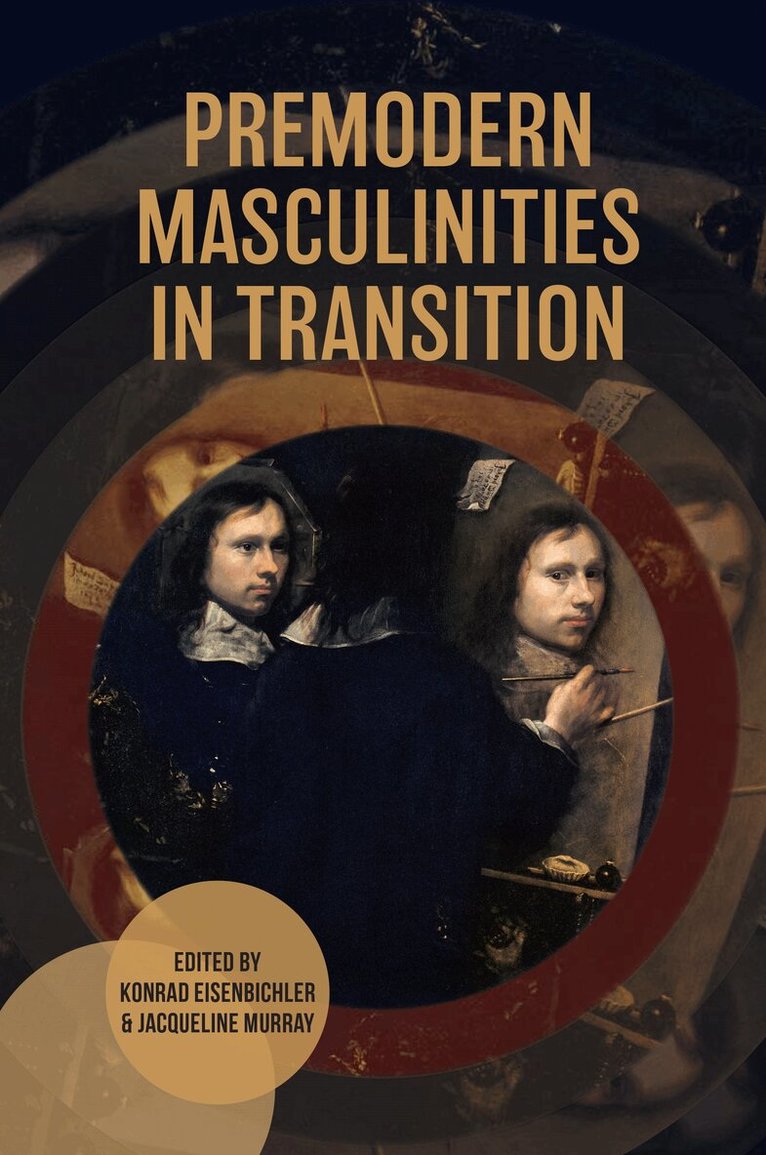
Sheds new light on how masculinity was understood, lived, performed and viewed during a period of huge change. Premodern masculinity was multivalent and dynamic, a series of intersecting, conflicting, and mutating identities that nevertheless were distinct and recognizable to people and their societies. The articles collected here examine a variety of means by which masculinity was constructed, deconstructed, and transformed across time, geographies, and cultures. Articles range across the twelfth to seventeenth century, from western Europe to the Volga-Ural region, from the Christian west to the Muslim east, from Ottomans to Mongols and Persians, from Baudri of Bourgueil to Blaise de Monluc; while topics include the chivalric hero, the effeminate man, beards, and spurs, represented variously in literature, historical documents, and art. Finally, in that period of great transformation that is the sixteenth century, they show how masculinity moved away from the traditional and recognizable to become something different and distinct from its premodern expressions.
Del 83 - Brill's Companions to the Christian Tradition
Companion to Medieval and Early Modern Confraternities
Inbunden, Engelska, 2019
3 984 kr
Skickas inom 5-8 vardagar
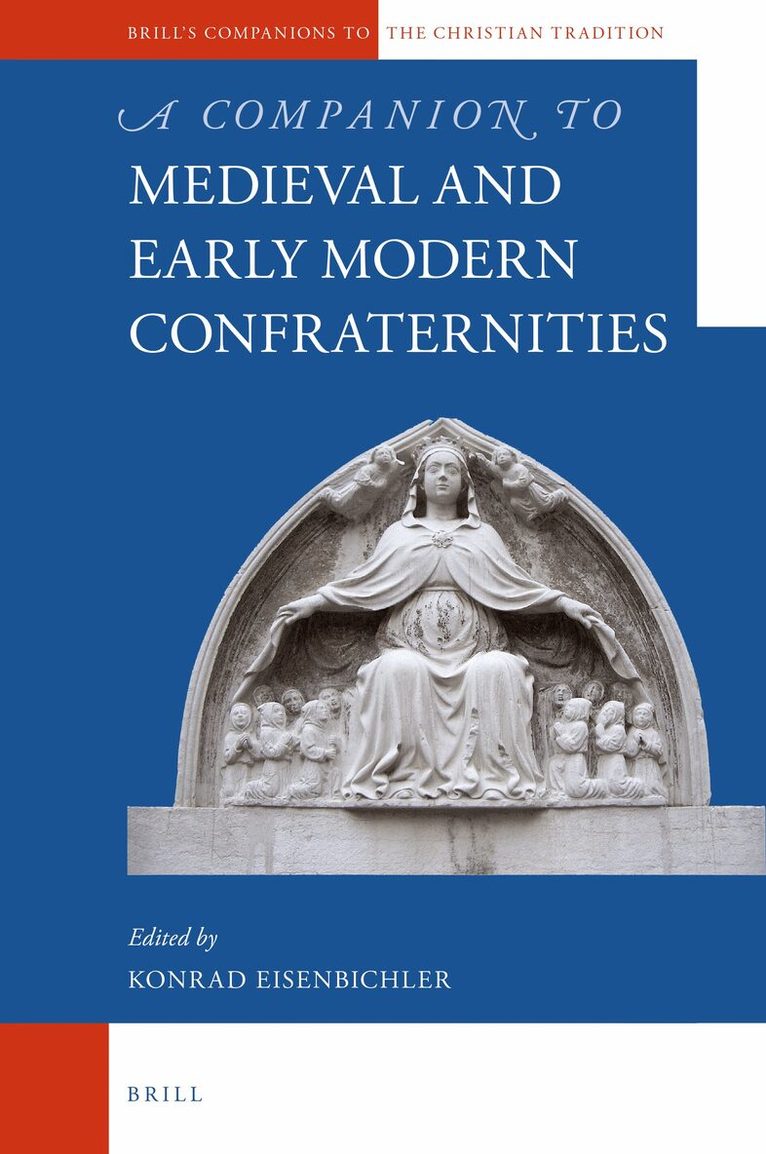
After the State and the Church, the most well organized membership system of medieval and early modern Europe was the confraternity. In cities, towns, and villages it would have been difficult for someone not to be a member of a confraternity, the recipient of its charity, or aware of its presence in the community. In A Companion to Medieval and Early Modern Confraternities, Konrad Eisenbichler brings together an international group of scholars to examine confraternities from various perspectives: their origins and development, their devotional practices, their charitable activities, and their contributions to literature, music, and art. The result is a picture of confraternities as important venues for the acquisition of spiritual riches, material wealth, and social capital.Contributors to this volume: Alyssa Abraham, Davide Adamoli, Christopher F. Black, Dominika Burdzy, David D’Andrea, Konrad Eisenbichler, Anna Esposito, Federica Francesconi, Marina Gazzini, Jonathan Glixon, Colm Lennon, William R. Levin, Murdo J. MacLeod, Nerida Newbigin, Dylan Reid, Gervase Rosser, Nicholas Terpstra, Paul Trio, Anne-Laure Van Bruaene, Beata Wojciechowska, and Danilo Zardin.