Kristin Briney - Böcker
Visar alla böcker från författaren Kristin Briney. Handla med fri frakt och snabb leverans.
4 produkter
4 produkter
766 kr
Skickas inom 7-10 vardagar
Build trust with your library's users by securing their data privacy. Taking a holistic approach, this guide presents practical ways to implement privacy ethics into data practices.Libraries are not exempt from the financial costs of data breaches or leaks, no matter the size. Whether from a library worker unwittingly sharing a patron's address with a perpetrator of domestic violence to leaving sensitive patron data unprotected, patrons can also pay a hefty price when libraries fail to manage patron data securely and ethically. In this guide, readers will learn concrete action steps for putting the ethical management of data into practice, following two common public and academic library cumulative case studies. The authors explore such key topics assuccinct summaries of major U.S. laws and other regulations and standards governing patron data management;information security practices to protect patrons and libraries from common threats;how to navigate barriers in organizational culture when implementing data privacy measures;sources for publicly available, customizable privacy training material for library workers;the data life cycle from planning and collecting to disposal;how to conduct a data inventory;understanding the associated privacy risks of different types of library data;why the current popular model of library assessment can become a huge privacy invasion;addressing key topics while keeping your privacy policy clear and understandable to patrons;anddata privacy and security provisions to look for in vendor contracts.
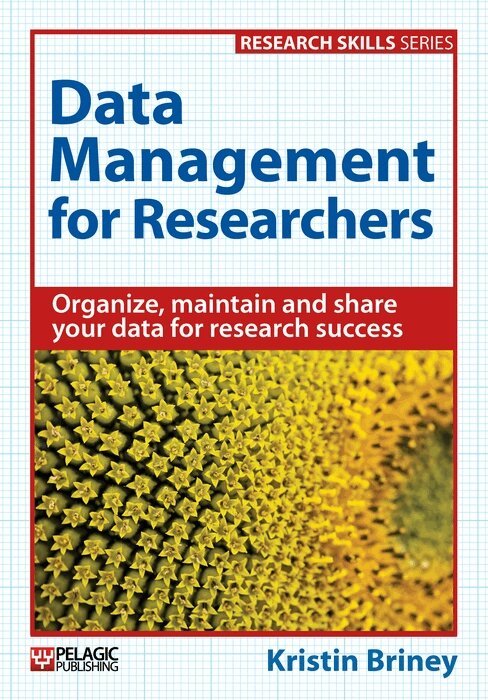
Data Management for Researchers
Organize, maintain and share your data for research success
Häftad, Engelska, 2015
625 kr
Skickas inom 5-8 vardagar
A comprehensive guide to everything scientists need to know about data management, this book is essential for researchers who need to learn how to organize, document and take care of their own data.Researchers in all disciplines are faced with the challenge of managing the growing amounts of digital data that are the foundation of their research. Kristin Briney offers practical advice and clearly explains policies and principles, in an accessible and in-depth text that will allow researchers to understand and achieve the goal of better research data management.Data Management for Researchers includes sections on:* The data problem – an introduction to the growing importance and challenges of using digital data in research. Covers both the inherent problems with managing digital information, as well as how the research landscape is changing to give more value to research datasets and code.* The data lifecycle – a framework for data’s place within the research process and how data’s role is changing. Greater emphasis on data sharing and data reuse will not only change the way we conduct research but also how we manage research data.* Planning for data management – covers the many aspects of data management and how to put them together in a data management plan. This section also includes sample data management plans.* Documenting your data – an often overlooked part of the data management process, but one that is critical to good management; data without documentation are frequently unusable.* Organizing your data – explains how to keep your data in order using organizational systems and file naming conventions. This section also covers using a database to organize and analyze content.* Improving data analysis – covers managing information through the analysis process. This section starts by comparing the management of raw and analyzed data and then describes ways to make analysis easier, such as spreadsheet best practices. It also examines practices for research code, including version control systems.* Managing secure and private data – many researchers are dealing with data that require extra security. This section outlines what data falls into this category and some of the policies that apply, before addressing the best practices for keeping data secure.* Short-term storage – deals with the practical matters of storage and backup and covers the many options available. This section also goes through the best practices to insure that data are not lost.* Preserving and archiving your data – digital data can have a long life if properly cared for. This section covers managing data in the long term including choosing good file formats and media, as well as determining who will manage the data after the end of the project.* Sharing/publishing your data – addresses how to make data sharing across research groups easier, as well as how and why to publicly share data. This section covers intellectual property and licenses for datasets, before ending with the altmetrics that measure the impact of publicly shared data.* Reusing data – as more data are shared, it becomes possible to use outside data in your research. This chapter discusses strategies for finding datasets and lays out how to cite data once you have found it.This book is designed for active scientific researchers but it is useful for anyone who wants to get more from their data: academics, educators, professionals or anyone who teaches data management, sharing and preservation."An excellent practical treatise on the art and practice of data management, this book is essential to any researcher, regardless of subject or discipline." —Robert Buntrock, Chemical Information Bulletin
Data Management for Researchers
Organize, maintain and share your data for research success
Inbunden, Engelska, 2015
1 234 kr
Skickas inom 5-8 vardagar
A comprehensive guide to everything scientists need to know about data management, this book is essential for researchers who need to learn how to organize, document and take care of their own data.Researchers in all disciplines are faced with the challenge of managing the growing amounts of digital data that are the foundation of their research. Kristin Briney offers practical advice and clearly explains policies and principles, in an accessible and in-depth text that will allow researchers to understand and achieve the goal of better research data management.Data Management for Researchers includes sections on:* The data problem – an introduction to the growing importance and challenges of using digital data in research. Covers both the inherent problems with managing digital information, as well as how the research landscape is changing to give more value to research datasets and code.* The data lifecycle – a framework for data’s place within the research process and how data’s role is changing. Greater emphasis on data sharing and data reuse will not only change the way we conduct research but also how we manage research data.* Planning for data management – covers the many aspects of data management and how to put them together in a data management plan. This section also includes sample data management plans.* Documenting your data – an often overlooked part of the data management process, but one that is critical to good management; data without documentation are frequently unusable.* Organizing your data – explains how to keep your data in order using organizational systems and file naming conventions. This section also covers using a database to organize and analyze content.* Improving data analysis – covers managing information through the analysis process. This section starts by comparing the management of raw and analyzed data and then describes ways to make analysis easier, such as spreadsheet best practices. It also examines practices for research code, including version control systems.* Managing secure and private data – many researchers are dealing with data that require extra security. This section outlines what data falls into this category and some of the policies that apply, before addressing the best practices for keeping data secure.* Short-term storage – deals with the practical matters of storage and backup and covers the many options available. This section also goes through the best practices to insure that data are not lost.* Preserving and archiving your data – digital data can have a long life if properly cared for. This section covers managing data in the long term including choosing good file formats and media, as well as determining who will manage the data after the end of the project.* Sharing/publishing your data – addresses how to make data sharing across research groups easier, as well as how and why to publicly share data. This section covers intellectual property and licenses for datasets, before ending with the altmetrics that measure the impact of publicly shared data.* Reusing data – as more data are shared, it becomes possible to use outside data in your research. This chapter discusses strategies for finding datasets and lays out how to cite data once you have found it.This book is designed for active scientific researchers but it is useful for anyone who wants to get more from their data: academics, educators, professionals or anyone who teaches data management, sharing and preservation."An excellent practical treatise on the art and practice of data management, this book is essential to any researcher, regardless of subject or discipline." —Robert Buntrock, Chemical Information Bulletin
Data Management Workbook
Practical Exercises for Better Organization, Storage and Use of Your Research Data
Häftad, Engelska, 2025
410 kr
Skickas inom 5-8 vardagar
If you want to manage your research data better but don’t know where to begin, this short workbook will help you get started!The Data Management Workbook helps researchers design useful data-management plans through a step-by-step series of structured exercises, worksheets and checklists, including: - creating a data dictionary - evaluating a lab notebook - finding the best way to organize your files - setting up useful file naming conventions - writing effective README.txt files - selecting the right data repository - determining data stewardship - preparing data for future useSuitable for researchers working in many different disciplines, this guide also shows how to customize data-management plans to better fit your individual workflows, methodologies, laboratories and datasets. Author Kristin Briney builds on the foundations in her previous book, Data Management for Researchers, to help bridge the gap between understanding the principles and being able to implement data management as part of your research practice.